Write tilt-shift

Seeing this intersting tilt-shift video of a city, I was reminded that scale is a salient issues regarding infrastructure as infrastructural entities often exist in at such massive scale that it is difficult to “humanize” or make it “knowable” to people.

Capture

Similarly:

Regarding numbers, sometimes numbers are so large that their meaning (or reality) is somehow compromised by their sheer size/scale and they are somehow unknowable.

Regarding art, sometimes a painting or sculpture can be so large that it fails to relate to human viewers.

All of this reminds me of the first time I read de Certeau’s “The Practice of Everyday Life” and, in particular, the section on walking in cities. The experience of walking in a city is quite different as compared to maps of the city or arial views. Unlocking the scale issue for infrastructure is quite important, especially emphasis on the massiveness, but, as this video indicates, although only through implication and extension: as scholars, we may need to find a way to write tilt-shift about infrastructure.

How brains work in imaginary worlds

A colleague of mine, Eric Charles (psychology), recently posted some thoughts about how brains work in the world of Marvel X-men. It occurs to me that the modest role of expertise and cognitive psychology that oftentimes make it into our classes on STS might be meaningfully enhanced if we teach a lesson like this about X-men to students.

Explicitly how memory works might be a fruitful avenue, the role of memory and what it means to “know” something, and what expertise might mean if we consider the brain/body relationship, and of course, one gets to talk about Wolverine during class in the process.

"There will be an infrastructure."

Check out this recent video from the FuturICT group in which Paul Lukowicz presents his take on the project from the perspective of a computer scientist.
A lot of the issues we have been discussing come up very explicitly in this bit. Particularly interesting, I think, is how emergent structure on the one hand and purposefully built infrastructure on the other are being renegotiated conceptually, and how both are finally raised to the offer of a platform: “there will be an infrastructure” which all kinds of people may contribute to, may use to run their own projects on, and built their own apps.

A couple of more videos are linked at the site, for example a ten-minute promo of the project.

Specifying infrastructures cont.

I was just revisiting the earlier post about the wikipedia page about infrastructures, and the sentiments expressed in the comments about the missing social science and STS references on that page, impressive and elaborate as it is. As far as this blog is concerned, the issue of specifying a common understanding of infrastructures has so far turned out to be, I think, one of its implicit continuous commitments, and one that perhaps merits re-addressing explicitly from time to time. So, very briefly, and slowly gearing up for the 4S meeting, some thoughts on where we are at this point.
On the one hand, there are lots of ressources and discourses about infrastructures drawing in participants that from all types of sources and disciplines. On the other hand, there is STS as a field in social science with some maturity, and with various kinds of theory able to bring infrastructures under the auspices of their concepts and terminologies. From time to time, STS scholars, like other social and political scientists, feel like intervening into public discourse by offering their own types of expertise about particular cases and problems of infrastructures. So far, we have not been satisfied that the conceptual work required for an appropriate understanding of infrastructures has already been done, and that we would merely need to extend the application of otherwise well-known concepts to the exploration of infrastructures. Infrastructures can clearly become “normal” cases of networks, assemblages, socio-technical orders etc., and there is nothing wrong with analyzing them as such. It may, however, also present a danger of locking analyses of infrastructures into foregone conclusions.
Here are a couple of possible lines for discussing specifications of the concept of infrastructures after taking another look at the wiki entry:
– Infrastructures as supporting something (“a society or enterprise”, “an enconomy” etc.). Clearly, the idea of an assemblage (network etc.) supporting something other than itself is worth noticing. General references to use or purpose are, of course, common when talking about all kinds of artefacts, but to speak of such heterogeneous sets of entities in terms of a general externally given purpose must be puzzling.
– References to a general public. Political issues and the state are very salient on the wiki page despite its focus on economics and engineering, and despite the fact that the definition of infrastructure is given in a way that takes great care to exclude political questions, e.g. speaking of “facilities necessary”, or “services essential” as if these qualifications were unproblematic.
– The differentation of hard vs. soft infrastructure – can we utilize this differentation at all? It rings like hard vs soft facts/science/knowledge, though the implied reference to deconstruction (or rather, the potential ease of it) may be more material, less epistemic in this case – if the connotation is not a straightforward military one. The hard vs soft differentiation clearly expresses a concern about stability and vulnerability but is this concern somewhat specific when worrying about infrastructure (rather than about truth)?
– Topographical references abound. Is infrastructure always about some association of artefacts and territories, or perhaps, more generally, about technology and place? Like the references to politics, the references to geography are ubiquitous in the wiki entry although they are not explicitly part of the definition at the top.
Would any of these aspects warrant a respecification of infrastructures in a way that would constitute them as a generic class of research objects? Would we even want to have such a class?

Job offer: Amherst: Science and Technology Policy

And a job offer that sounds interesting:

The Department of Political Science at the University of Massachusetts Amherst (http://polsci.umass.edu/) seeks to fill a full-time tenure-track position at the rank of Assistant Professor in science and technology politics to start in September 2012. The Department welcomes applications from political science, public policy, public administration, as well as from related disciplines.  Geographic, methodological and
science and technology specializations are open.

In recent years, the Department has nearly doubled in size largely through a Faculty Hiring Initiative. This search continues the department’s efforts to add to the strength of its diverse and growing faculty with scholars whose work addresses broad political
questions arising in one or more of the department’s thematic emphases on a) global forces; b) governance and institutions; and c) democracy, participation and citizenship.

The successful candidate will contribute to this trajectory, adding to our current strengths while broadening our reach into new areas. The faculty hire will teach four courses in the Department’s graduate and undergraduate programs. Successful candidates must have the Ph.D. in hand by September
2012. Salary and credit toward tenure will be commensurate with qualifications and experience.

The deadline for applications is October 15, 2011, but acceptance will continue until the position is filled.  The department strongly prefers that applicants submit their cover letter, curriculum vitae, and writing samples in electronic form through the Academic Jobs Online website athttps://academicjobsonline.org/ajo/jobs/917   and arrange for electronic transmission of three letters of recommendation to the same site.
Alternatively, printed versions of the application materials can be sent to Stephen Marvell, Office Manager, Department of Political Science/UMass, 322 Thompson Tower, Amherst, MA 01003-9277. Those who apply online should not also submit paper materials.  Inquiries about the position may be directed totechnology@polsci.umass.edu.

The University of Massachusetts Amherst is an Affirmative Action/Equal Opportunity employer.  It and the Department are strongly committed to increasing the diversity of faculty, students, and curriculum, and encourage applications from women and minorities

FuturICT – an epistemic infrastructure in the making

An interesting endeavour was recently brought to my attention that, I think, is well worth checking out: the FuturICT project. I will just give you a sample of quotes from the website and you will immediately see that this project in more than one way relates to the topic of this blog:
“FuturICT wants science to catch up with the speed at which new problems and opportunities are arising in our changing world as consequences of globalization, technological, demographic and environmental change, and make a contribution to strengthening our societies’ adaptiveness, resilience, and sustainability.  It will do so by developing new scientific approaches and combining these with the best established methods in areas like multi-scale computer modeling, social supercomputing, large-scale data mining and participatory platforms. (…) The FuturICT Knowledge Accelerator is a previously unseen multidisciplinary international scientific endeavour with focus on techno-socio-economic-environmental systems. (…) Revealing the hidden laws and processes underlying societies probably constitutes the most pressing scientific grand challenge of our century and is equally important for the development of novel robust, trustworthy and adaptive information and communication technologies (ICT), based on socially inspired paradigms. We think that integrating ICT, Complexity Science and the Social Sciences will create a paradigm shift, facilitating a symbiotic co-evolution of ICT and society. Data from our complex globe-spanning ICT system will be leveraged to develop models of techno-socio-economic systems. In turn, insights from these models will inform the development of a new generation of socially adaptive, self-organized ICT systems. (…) The FuturICT flagship proposal intends to unify hundreds of the best scientists in Europe in a 10 year 1 billion EUR program to explore social life on earth and everything it relates to.”
Basically, as it appears to me, the FuturICT is a call to arms of sorts for social scientists of all persuasions to do something with the myriad of data our current ICT systems are producing. The aim is to build an epistemic infrastructure, or rather a range of infrastructures that would put all these data to use. One of the interesting things is that everybody can at this point is invited to join in, though the emphasis is clearly on building a large network of institutions, the current state of which you can see here. It very probably though will not hurt to leave your name, affiliation and expertise, if only to be updated as things progress. Some of the information provided at the website does sound kind of sci-fi, some of it kind of eery, but believe me, as I happen to know some of the people involved, these people are very serious – and they are very capable. So, I am very curious what this will grow into.
One thing this made we wonder about with respect to the exploration of infrastructures in general was whether we have been giving quantity enough thought. The impetus for the FuturICT initiative is the mass of data already available, and the rationale is that the very fact of having these data not only will support an epistemic infrastructure but that is also constitutes an outright demand for it. Is this not something which dintinguishes infrastrutures (e.g. infrastructures for traffic, services or electric power) from other types of networks and socio-technical assemblages: that there is some input or throughput, that it comes in high numbers, and that developer-entrepreneurs try to establish infrastructures as complements or as purpose-giving or profit-generating tools with respect to the throughput?

Innovation in book reviews

A few months ago, Jan-Hendrik and I were discussing the utility of writing book reviews. One concern we had was that book reviews basically do nothing for one’s academic standing, but more than that, in thinking about the book reviews themselves, we were frustrated with them because unlike journal articles, they rarely reference other book reviews for the same book.

So, we wrote a book review that did, to test if there was any value to this. We enlisted a student of mine, Alexander Kinney, and we set to work writing a book review that included other reviews of the same book.

We wrote our editors:

To the editors,

Please see a book review of Latour’s “Reassembling the Social.” While my co-authors realize that the length is somewhat past the desired 1000 words, we hope that you find the document satisfactory. It employs a somewhat unorthodox approach where other book reviews are cited where appropriate so that we can essentially “review what has not yet been sufficiently reviewed by other reviewers.” Additionally, we ask for a small editing consideration for adding a small “box” around a subset of identified text (this mirrors what was done in Latour’s book). I know that this is an unorthodox review, and hope that the innovation is tolerated. Still, we are prepared to make amends if this document does not meet the standards of the journal.

best,
Nicholas J. Rowland

So, it has gone through a couple rounds of editing and is now in the proofs stage (please note that we realize that Latour’s book was written in 2005 [not 2007, as the title currently states]). Also, this new approach to book reviews also requires that one reviews a book a few years after publication rather than soon after publication. This is so that the other reviews can be written and, to some extent, responded to.

Here is the document below, feel free to comment on the approach, style, or content:

Teaching STS: Reinvention and Modification

I saw this in a student presentation yesterday about the role of adaptation in the process of diffusion, where we were discussing matters of re-invention and post-hoc modification/workarounds. I was somewhat stunned and the students in the class were mezmerized:

Capture

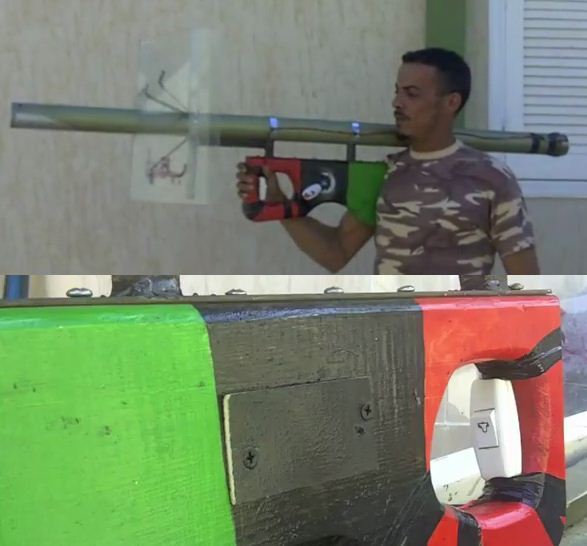
What you see in the image above is a C5 Russian missile launcher removed from its “aircraft source” and then adapted/modified for use on the rollbar of a jeep/truck. There is also a video too, below the image available at reposter here.

Another of these “DIY” wartime inventions is a hand-held grenade launcher modified for individual use (the source being a slew of them mounted on the bed of a truck).

Capture

All of these examples, along with the videos, could be used in lessons about diffusion and re-inventions, of course. My guess, however, is to ask the students: how does this make you rethink some of the ideas scholars have about diffusion and re-invention. Certainly, the old, fun ideas from STS about “using technologies in ways not originally intended by designers” is a good one here, but beyond that one could begin to rethink the, what one might call, “quick and easy” story of diffusion that seems to dominate the basic literature. I’m speaking here about the binary “1 for adopt, 0 for non-adoption” interpretation of spread. It becomes useless to think about C5 missile launchers in this way. Bringing up the old work of Akrich (1995, solar cells) and the newer work of De Laet and Mol (2002, hand-pump) leads to a much more nuanced vision of re-invention, modification, and localizatoin, but is even that enough? The role of “necessity” seems obviously right, but analytically weak as determining “moments of necessity” from conditions of non-necessity is a deadend for research. Taking a Weberian approach and forcing a claim like because of their geopolitical circumstances and cultural approach to the world around them, common Libyans are relatively more “resourceful” than their governmental/military counterparts also seems analytically weak. Is this a classic “drifting edges of global networks come together unintentionally and unexpectedly” making this outcome, as in, Soviet degeneration leading to the global sales of ersatz military resources (that almost nobody can maintain and) which are (therefore) cheap creates the conditions underwhich the only way to get additional utility out of these machines is in remaking their uses. I’m not even sure what one would call that sort of an analysis … “luck theory”? The motivation behind any modification, reinvention or workaround appears to be some combination of the need to localize and/or extend the utility of something (or a portoin of something). Trying to determine the motivation beyond mere “necessity” or “resourcefulness” is difficult to do. In this case, survival plays an obvious motivation factor; however, extending that to a broader framework seems foolhardy too. So, “where does reinvention come from?” ought to be an enduring question for our students and ourselves in STS…

Please note: reposter.net is a resposting site, so the original material comes from somewhere else, always:

Here are the videos, in order and linked to the original posts on alive.in/libya

Teaching STS: Challenging Technological Determinism in Caliente, NV

If you were raised on STS in America, then it is likely that you read about the death of a train town named Caliente, NV. This is:

Death by Dieselization: A Case Study in the Reaction to Technological Change
W. F. Cottrell
American Sociological Review
Vol. 16, No. 3 (Jun., 1951), pp. 358-365
(article consists of 8 pages)
Published by: American Sociological Association
This is not a bad read, and easy for instructors to challenge on the grounds of “technological determinism” on two accounts:
1. the town did not die because of the out-of-control technological advance of locomotives, and instead the government-military complex invested heavily in diesel locomotoves as part of mid-century war time efforts (potentially even linking technological advance with patriotism such that any resistance to the technology was seen as anti-American).


2. the town did not die because of the out-of-control technological advance of locomotives because like so many towns of this age and this sort, it had a uni-dimensional economy such that the town was susceptible to new technology that challenged the source of their economic security.
I like to emphasize on the account during steam train advances, however, as they are even more telling about this “technological determinism” that seems so easy to swallow for students. Sure, Cottrell shows how Caliente, NV, was run asunder by the advent and subsequent quickened spread of diesel trains on the American landscape.


However, during advances to the steam train, and I am referring to low-tensile boilers as compared to high-tensile boilers (and this is somewhat simplistic of train buffs, so please forgive me), it was towns like Caliente, NV, that gained the most! A student and I created this set of PowerPoint slides to explain this (you’ll have to download it to see the animation — the small white dots are “towns” set every 100 miles from the port town): check it out here (note, you’ll have to download it to see the cool animation).


As some of you know, I work in Altoona, PA, which was once a heart of the Pennsylvania Rail Road. Altoona, to some extent, suffered a similar death as Caliente, NV, to use Cottrell’s words.

Call for Papers: Performing ANT ??? Socio-Material Practices of Organizing, 17-18 February 2012, St. Gallen

Just got that a few days ago and forgot to post it here – now as I am preparing for three weeks of “off-time” (meaning: a bit of traveling and weeks of being online only once every few days) I had to post it.

Reading that I thought: what does it mean that workshops that specifically use “ANT” in their title are mostly workshops for younger scholars? Just wonder…

Teaching STS with "A fist full of quarters"

One way I teach students the philosophy of science is by using the documentary “The King of Kong: A fist full of quarters.”

King-of-kong-a-fistful-of-quarters-poster-1

Storyline

In the early 1980s, legendary Billy Mitchell set a Donkey Kong record that stood for almost 25 years. This documentary follows the assault on the record by Steve Wiebe, an earnest teacher from Washington who took up the game while unemployed. The top scores are monitored by a cadre of players and fans associated with Walter Day, an Iowan who runs Funspot, an annual tournament. Wiebe breaks Mitchell’s record in public at Funspot, and Mitchell promptly mails a controversial video tape of himself setting a new record. So Wiebe travels to Florida hoping Mitchell will face him for the 2007 Guinness World Records. Will the mind-game-playing Mitchell engage; who will end up holding the record? Written by <jhailey@hotmail.com>

The film is full of ideas from the philosophy of science. For example, logical positivists were obsessed with (1) establishing theories only from data and (2) considering what evidence either falsifies or verifies a theory. In the film, Steve Weibe, the up and comer in the world of competitive gaming, sends a score into Walter Day, the guy that runs the world record center, but the score is ultimately rejected because while the video tape recording appeared legitimate, the machine he was playing on was questionable. This one is good for the falsificationists too: the score he had could not be verified because of questions concerning the video game machine he used; however, because there was no concrete evidence — merely a hunch — of tampering, the score could not be entirely falsified either. Consensus among a group of experts emerged upon reviewing the evidence of Steve’s claim to have the new highest score on Donkey Kong. This nicely emphasizes the role of experts and how consensus over reality is as important as “reality” itself.

Now, thinking all the way back to Shapin’s work on early laboratories and experiments, Steve is invited to attend an annual competition where he can achieve his highest score “live” so that all the other experts can witness first hand his skill at Donkey Kong. He does, and the entire community of competitive gamers more or less warms to the newcomer. This is not a bad lesson in the role of social connections and acceptance of newcomers in science. This is a place to begin discussions of Merton’s norms of science, and, in particular, disinterestedness. However, there is much more to say about functionalism. His competitor, Billy Mitchell, the previous record holder and longstanding insider, sends in, at the last possible moment, a video tape of a score that beats the score Steve just accomplished in person. Merton reminds us that what is good for science tends to advance it. In this case, what’s good for Walter Day and competitive gaming also happens to be what’s good for Billy Mitchell. Bill’s sketchy video score is accepted and immediately posted on-line for the world of competitive gamers to see. Additionally, and in violation of the norm of communism, Billy’s tape is not shared with Steve, even thought Steve’s original tape, which was rejected, was shared with Billy.

The documentary is also funny in places, and it does a nice job showing how a group of gaming experts arrive at conclusions about the nature of reality through norm following, norm violation, and, importantly, consensus. If you teach STS, check it out; I’ve even got a sheet prepared for students to follow along (write me at njr12@psu.edu if you’d like to see it). Also, if you’re just interested, then check it out too.

One closing remark: those old games like Donkey Kong required a very different skill set as compared to contemporary games like Halo or Neverwinter Nights. It is nice to remind new students that games used to be hard in a much different way.

Personal Health Records and patient- oriented infrastructures

International workshop on Personal Health Record 

Personal Health Records and patient- oriented infrastructures 

Empowering, involving, and enrolling patients through information systems: 

Trento, Faculty of Sociology 

via Verdi, 26 

12-13 December 2011

Deadline for abstracts submission: September 30th 2011

Notification to authors: October 15th 2011

Personal Health Record (PHR) has become a popular label to refer to a wide range of patient-controlled information systems aimed at allowing laypeople to access, manage, share and supplement their medical information. Launched in the US at the beginning of the new millennium, PHRs are spreading in Europe (especially in the UK and Scandinavia), where one witnesses an increasing number of experimental systems that vary to suit the local healthcare context. Nevertheless, these technologies appear to be in their infancy, as clearly demonstrated by the low rate of PHR actually implemented in real-life settings compared with the (relatively) high numbers of trials.

Whilst there is still little evidence that PHRs may affect healthcare, they are regarded by different actors (policymakers, healthcare managers, patients’ association, doctors) as “holding out great promise” to revolutionize it by reducing medical errors, cutting costs, increasing patient awareness and control over their health, and providing physicians with information in emergency situations – to mention only some of the potential benefits. This new ‘patient role’, proactive and characterized by greater control and responsibility over one’s health, is reinforced by the very existence of an electronic tool, suggesting that these new activities require an information system somehow similar to those used by doctors. The name itself, PHR, recalls the acronyms for the standard healthcare systems – EHR (Electronic Health Record) and EPR (Electronic Patient Record) – and thus affirms that it belongs within the semantic space of professional tools.

PHR systems are becoming the point of convergence among different visions concerning the future of healthcare systems characterized by the (desired) emergence of ‘new patients’ willing to share the burden of care and to reshape their relationships with doctors and institutions. Accordingly, PHR can

be considered an interesting lens through which social informatics researchers can examine the tentative transformation of different dimensions of the healthcare sector.

We believe that the time has come to engage in debate on these technologies, which are increasingly presented by policymakers and healthcare systems managers as the “next big thing” in healthcare. It is necessary to move away from a mere technocentric perspective (like the one sometimes provided by medical informatics) in order to bring the actors, their work/daily practices, and the meanings attached to them, back into play.

The purpose of this workshop is to gather together scholars, practitioners and professionals who reflect and work on PHR from different perspectives in different countries. Whilst some interesting socially-informed studies have been already presented and published, to our knowledge no attempt has yet been made to create an opportunity for dialogue among them.

We welcome contributions about, but not limited to, the following themes:

·         the design of patient-centered IS and their integration with professional ones;

·         new forms of computer-mediated doctor-patient or patient-to-patient communication;

·         the evolution of healthcare infrastructures and organizations, and the creation of new representations of health/illness;

·         new forms of alignments and conflicts between self-care practices and institutional treatment;

·         the redefinition of responsibilities and roles within the network of patient-doctors-institution-caregivers.

·         the extent to which patients use PHRs to generate data for use in patient-doctor and patient-patient communication

·         the extent to which health professionals make use of patient-generated data from PHRs

Abstracts (max. 1500 words) should be sent to phr@unitn.it

More information is available at http://events.unitn
.it/en/phr2011
or can be obtained by contacting the organizers at phr@unitn.it

We plan to select the best abstracts and presentations and invite their development into full papers to be submitted for a special issue on the topic. Further information will be given during the workshop or before it on the website.

Organizers:

Silvia Gherardi, Faculty of Sociology silvia.gherardi@unitn.it

Enrico Maria Piras, Fondazione Bruno Kessler piras@fbk.eu

Alberto Zanutto, Faculty of Sociology alberto.zanutto@unitn.it


Teaching STS: Controversies

Teaching controversies is a mainstay of STS; if you need a good film to show, check out “Judgment Day: Intelligent Design on Trial” replete with Steve Fuller weighing-in on intelligent design…

Also, I have a handout already made to help students to navigate the documentary. Write me if you you’d like a copy or if you’ve used this clip for your own courses (send to: njr12 at psu.edu).

Science and Technology Studies: Opening the Black Box

Somatosphere just posted a link to a set of video recordings from the STS – The Next Twenty Years conference in Harvard last April. I would have loved to go there, but unfortunately poor european scholars only have money to travel abroad when they are participating actively. But, luckily, the whole conference was on live-stream back then. I was not able to watch all of it so I am so very happy to be able to watch them now. Trevor Pinch´s “provocations” are STS at its rhetorical best – so watch, laugh and think.