3:1 — Post-Crisis (and back again) — 3 of 3

The notion of “post-crisis” that I opened-up this week with was meant to be a hard press against the post-crisis that I have often heard in discussions about “post-crisis economic planning” — that is, “after a crisis and now things are better” (which likely makes the likes of Naomi Klein retch, as Stef notes in her post). The notion that we are in a semi-permanent state of crisis raised to me the obvious question: does “crisis” really capture anything out of the ordinary? (and so have we exhausted the utility of such a concept?) Continue reading

3:1 Post 2 of 3: Post-crisis and poetry

Dichotomies can be helpful, and Peter Bratsis in his 3:1 on Monday put forth a productive one: Should we think of crisis as a repetition or an exception? I want to take this and riff in a slightly different, but complementary way. For me, thinking about crisis—the ecological one facing the planet—is especially important. The Guardian has recently launched a front-page campaign to bring climate change to the fore in mainstream news coverage.

They are following Naomi Klein’s lead and trying to turn a crisis into an opportunity. This includes calling the Gates Foundation and the Wellcome Trust to divest in fossil fuels and using the recent dip in oil prices to invest in alternative energy. At this point, we are blowing past a 2° C temperature rise (4° C seems likely) and even a 2° C rise will lead to CATASTROPHIC changes in our environment. Prepare for the worst, homo sapiens and all the species we are taking with us. Keeping the coal in the ground and investing in alternative energy is a step to mitigating the damage this economic system has wrought, but the hurt is going to come down. So the question becomes more about how we respond to crisis rather than argue about how we define a crisis, or how we might trace the word back to its true roots, or whether this crisis is quotidian or exceptional. Continue reading

3:1 – Post-Crisis – 1 of 3: (Repetition or Exception?)

At first glance, it would indeed seem to be the case that the constant sequence of crises of the last decade or so points to some loss of meaning and value for the term. However, if we understand ‘crisis’ not as some exceptional moment or state of affairs but rather, closer to its original meaning, as a situation where some action or judgment is needed (‘critical’ as a condition where an active intervention is needed if the system in question, biological or social, is to continue) then things are much more complex. In opposition to some permanent ‘state of exception’, which is indeed a contradictory idea, we are in a continuing ‘crisis’ for some years now if by that we mean that the extended reproduction of western societies (or significant parts of them at least) can no longer be taken as a given.

Here I would say that capitalism as a whole is certainly not in crisis, just the opposite. It is indeed a bit of wishful thinking to declare the crisis of capitalism at a time when concentrations of wealth, corporate profits, and stock prices are all at history making levels (we should keep in mind that, as Marx himself had pointed out, crisis is often the solution, not the problem, for capitalism). Similarly, a great number of capitalist societies, especially many within Asia together with some in Latin America and the Africa, are the in midst of long economic booms with rapidly growing levels of consumption, employment, and economic security. Continue reading

3:1 — Post-Crisis — 0 of 3 (Introduction)

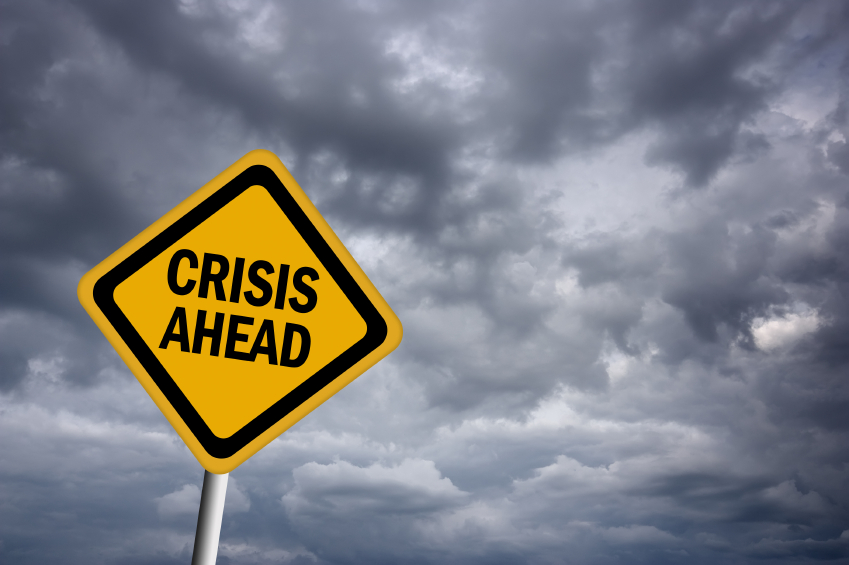
iStock_000013841997Small

Are we, as a global community, living in a post-crisis world? We seem to be in a semi-permanent state of crisis, either in crisis or on the brink of it perpetually, and, in that context, does a concept like crisis really mean anything anymore? By invoking “post-crisis” we are not talking about post-crisis as in “after a crisis” (for example, in stories like this one about “post-crisis economic planning“); for comic-buffs, we are also not talking about the crazy-cool “post-crisis” events in DC Comics’ publishing history following the 1985-86 Crisis on Infinite Earths (discussed here); this is also not the revamped homo ecnonomicus discussion of the “post-crisis consumer.” The bottom-line: as the global community gets more and more intertwined, non-local crises have local implications and impacts, and if there is always a crisis or a looming crisis somewhere, does “crisis” really capture anything out of the ordinary? (given that crisis means an intensification of difficulty or trouble, and, hence, a perpetual state crisis ceases to be a moment of crisis)

It should be recognized that much of this “crisis talk” is sourced by media outlets that thrive on hyperbole, so, possibly, we are making too much of this; however, the roots of a post-crisis society are possibly deeper than just journalistic portrayals in the media (though they are surprisingly powerful in framing global events). These issues, among others, are what we will discuss this week on our 3:1 on Post-Crisis.

maxresdefault

Our guest this week is Peter Bratsis. I know Peter’s work from his outstanding book Everyday Life and the State (for theory buffs, there is a section in this book where Peter claims that Kantorowicz is possibly the greatest state theorist [who wasn’t a state theorist] of all time — a thought which also figures into his new work on corruption). You might also know his other book, with Stanley Aronowitz, Paradigm Lost: State Theory Reconsidered. You can read much of his work here, and perhaps you’ve recently seen him speaking about the rise of the Syriza Party in Greece, for example, on Uprising or on European Ideas.

We welcome him to the blog! 
Infrastructure and Enchantment

01-hidden-usb

A friend recently turned me onto the idea that somebody, somewhere is embedding USB ports into infrastructure in various places around the world — like a treasure hunt (sometimes called a “USB dead drop“). Turns out that some of these early devices were embedded in 2010 by Berlin artist Aram Bartholl. There is even a manifesto — interesting, in my mind. This is part of, I think, the broader DIY culture, and, though it is dated, it is a bit cool.

The idea of inhabiting infrastructure like this — they claim that it is the data equivalent of geo-caching for P2P file sharing, but the implications are bigger — is not merely as an expression of “un-clouding data” or even DIY freedom (from the Borg); the promise of this sort of intervention into infrastructure is “enchantment.” I do mean this, in the Weberian sense of the word, although Weber mainly referred to rationalization and secularization in reference to their de-mystifying or “disenchanting” quality for our world.

The reason I bring this up is that I recently found a documentary film set in San Francisco called “The Institute.” 

The film, for all its flaws, contains something I found powerful about engaging our infrastructure and intervening in it to produce enchantment out of the ordinary. Granted, it is like an artistic way to play in infrastructure, to transform the ordinary world. There is some promise, as idealistic as it might sound, in the logic of these USB dead drops for producing such an effect in our cityscapes. I get the feeling that university settings in urban areas could really make this work.