On Retracting Papers

A

It is bad to demand the retraction non-fraudulent papers. But why? I think the argument rests on three intuitions. First, there is a legal reason. When an editor and publisher accept a paper, they enter into a legal contract. The authors produces the paper and the publisher agrees to publish. To rescind publication of a […]

Dovetails with concerns over peer review in general, related horror stories, and even the outer limits of the practice.

via why is it bad to retract non-fraudulent and non-erroneous papers? — orgtheory.net

* image from here.

Pickering Review … in 2017!?

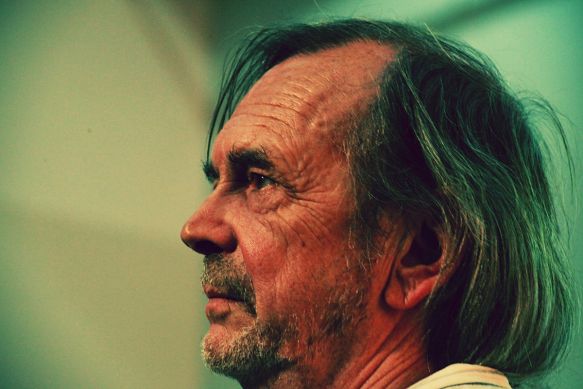
Andrew_Pickering.jpg

25 years after Andrew Pickering’s “Science as Practice and Culture”* was published, it was just reviewed. Helen Verran (History and Philosophy of Science, University of Melbourne) just wrote a retrospective on the book that is worth the time to read and, even better, it is free to one and all: https://sciencetechnologystudies.journal.fi/article/view/65250 

* Casper Bruun Jensen noticed on Twitter that I wrote “Mangle of Practice” in the previous version of this post rather than “Science as Practice and Culture.” I guess I was showing my cards there in terms of preference.

ANT Multiple!?

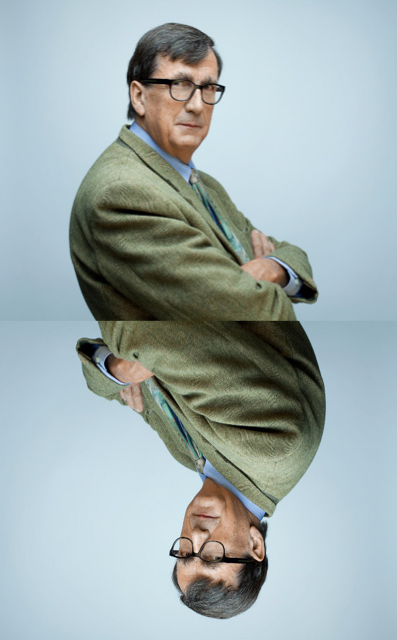
Untitled.jpg

Just out:Mapping “the ANT multiple”: A comparative, critical and reflexive analysis” by Laur Kanger (University of Sussex Science Policy Research Unit Brighton UK; University of Tartu Institute of Social Studies Tartu Estonia) in The Theory of Social Behavior.

Abstract
Despite decades of development, ActorNetwork Theory
(ANT) continues to be characterized by a good deal of
ambiguities and internal tensions. This situation has
led to a suggestion that instead of one ANT it may be
meaningful to speak of the ANT multiple. Following
this line of reasoning, this article aims to create a map
of the variety of positions riding under the ANT banner.
Based on an indepth reading of ANT literature, seven
different interpretations of ANT are identified and sub-
jected to critical analysis; it also accommodates for the
concerns of ANT proponents about the way ANT has
been previously criticized. The results of the analysis
serve to increase the reflexivity of both sides of the
debate about their underlying assumptions, and provide
suggestions how ANT could be employed, developed
and criticized more productively in the future.

This is one of many times we have mentioned and discussed good old ANT and good old Bruno Latour: reflexivity, ANT and Foucaultpost-ANT, even the ANT of ANThow forest think, the Paris attacks.