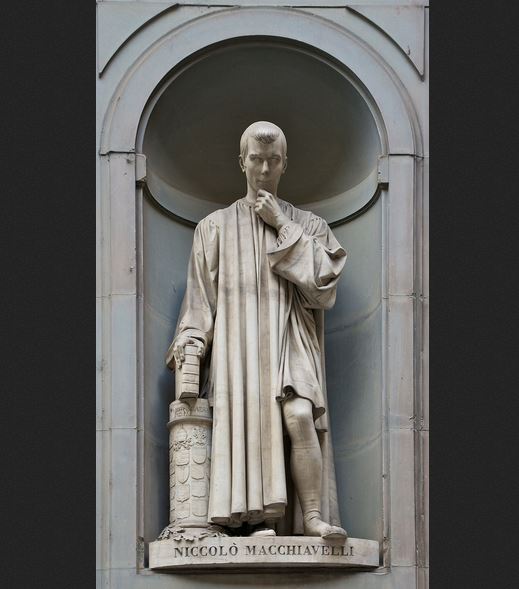
Nick’s previous post about Machiavelli and the homeopathic state got me thinking about different approaches and sources that can inspire and provoke new ways of thinking about old problems or stagnant institutions.
As you know from the last post I wrote, one of the ways I do this in International Relations is by drawing on STS and biology. Microbes, nations, parasites, guts, and bodies became lively containers and contaminated states to better capture the flows, immersions, circuits, and heterogeneities between and amongst a plurality of actors. These are new models of affectivity to provoke and invoke new forms of intelligibility in politics and social life.
To bring this affect based in material entanglement and poetic critique of the status quo to the fore, another place I draw inspiration from is Leaves of Grass, Walt Whitman’s collection of poetry. They provide a productive subtext to the analysis of IR. I draw the insights garnered from Whitman and his poetry into the text and practice of international relations. Whitman penned that poets were best suited to “strengthen and enrich mankind with free flights in all directions not tolerated by ordinary society.” Poets know no laws but the laws of themselves, and are beholden to “mere etiquette.” Whitman said “Often the best service that can be done to the race, is to lift the veil, at least for a time, from these rules and fossil-etiquettes.”
Walt Whitman project’s was one of cultural and literary revision against the prevailing notions of the body and its relation to politics and sociality. Whitman produced texts that extended his reader’s conceptions of the body and the literary, and especially how these categories interact to exceed or overrule the cultural constraints of the time. Through Leaves of Grass, and its many revisions, Whitman joyfully supported the body as a fluid self struggling to negotiate identity and difference while committed to being responsive to as much of the world as possible.
Whitman can speak directly to my conceit of the contaminated state as I defined it my first post. When pondering the strength of America in regards to its relationship to wealth and poverty, Whitman cautions the rich to maintain strong stomachs as the wealth of the civilized world was built from “rapine, murder, outrages, treachery, hoggishness, or hundreds of years ago, and later, so in America.” He continues that it is the working- people, “vast crops of the poor, desperate, dissatisfied, nomadic, and miserably waged populations” that can truly offer a cure to the ills of American democracy.
“Curious as it may seem, it is in what we’d call the poorest, lowest characters you will sometimes, nay, generally find glints of the most sublime virtues, eligibilities, heroisms. Then it is doubtful whether the State is to be saved, either in the monotonous long run, or in tremendous special crises, by its good people only. When the storm is deadliest, and the disease most imminent, help often comes from strange quarters—(the homeopathic motto, you remember, cure the bite with the hair of the same dog.)”
He wrote that the true prosperity of a nation was not demonstrated by the wealth of a special class, or a “vulgar aristocracy,” but by having the bulk of people provided with homes and a fair proportion of the profits. It is this bulk of people denied these where the “glints of the most sublime virtues” will be found in a country. Simonson, a Whitman scholar, writes that Whitman “calls us to develop a democratic ethos directed toward recognizing and finding place for the world’s variety—not just its obvious beauty, but its “terrible rude, forms” as well (2003, 370).
With Whitman as poetic counsel, I approach the global with humbleness and care, but with a conviction that seeing possible alternative global orders is of the utmost importance. I hope to refresh a belief in the importance of plurality and respect for life in International Relations knowing full well that there is no one option that makes right that which is wrong with the world, but nonetheless we must respond. For this, Whitman offers a model for a cosmopolitan and pluralistic society based on complex individualism not dominated by rational choice. This response may not be as an actor who identifies a problem and then “fixes” that problem, but it creates awareness that humans are part of the problem itself, and as individuals we are likely to be party to many of the crises we are responding to globally and locally. Therefore, an ethos of care for the world is crucial.
To nurture this ethos, it remains important to offer creative and disciplined thinking about the relation of life to politics in the international. Too often the discussion in IR theory centers on negative instantiations of biopower, or a “becoming corpse” as Rosi Bradiotti writes. I take life as a creative intensity that can offer new solutions, and new ways of engaging with the world. Placing an idea of life as vital at the center of politics leads to two important implications: a rethinking of ethics and responsibility leading to a, said so beautifully by Bradiotti, “diffuse sort of ontological gratitude is needed in the post-human era, towards the multitude of nonhuman agents” that support us (2006, 270). This diffusing, or flattening, of social action and ties into a continuum of dynamic object interactions, or translations, between humans and nonhumans, states, bacteria, biomes and parasites, made the nested and imbricated nature of politics in the body politic more visible.
Another implication is explicitly political: we will need to organize collectivities and political organizations that reflect these “dreams” of nested subjectivities. As Latour queries, “Once the task of exploring the multiplicity of agencies is completed, another question can be raised: What are the assemblies of those assemblages?” (2005, 260). These discussions should be open, inclusive, and careful to reflect the values and ethics we feel are necessary in creating mutual public space.










 Installing (Social) Order
You must be logged in to post a comment.