I am proud to be able to share an excerpt from a collective contribution to Millennium’s journal born from the annual conference “Failure and Denial in Global Politics” in London last October. In this article, Anthony Burke, Audra Mitchell, Simon Dalby, Daniel Levine and I argue that IR has reached the limits of its intelligibility with coming climate changes. We call for an expanded dialogue both within and beyond our disciplinary boundaries using the polemic and rhetoric of the manifesto to stimulate debate and response.

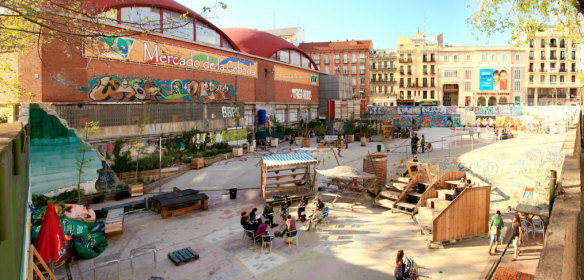
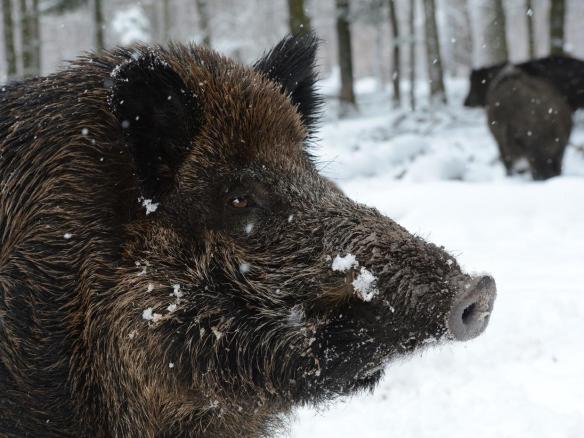
Photo credit: Stefanie Fishel, 2016
***************
A Manifesto from the End of IR
Anthony Burke, Stefanie Fishel, Audra Mitchell, Simon Dalby, Daniel J. Levine
This manifesto is not about politics as usual. We seek political imagination that can rise from the ashes of our canonical texts. It is about meditating on our failures and finding the will needed for our continued survival. Global ecological collapse brings new urgency to the claim that ‘we are all in this together’—humans, animals, ecologies, biosphere. To survive, we must ask questions that are intimately connected to capitalism, modernity, and oppression. We must ensure that our diplomacy, our politics, and our institutions are open to those who will bear the brunt of ecological change.
Planet politics must emerge as an alternative thought and process: a politics to nurture worlds for all humans and species co-living in the biosphere. The local, national, and global no longer define our only spaces of action. The planet has long been that space which bears the scars of human will: in transforming the world into our world, we damaged and transformed it to suit our purposes. It now demands a new kind of responsibility, binding environmental justice and social justice inextricably together.
We need not focus on who is responsible, but we do need to learn to adapt to the world we have created. We can dwell in this time of failure and still long for the surety of a future, a future that allows us all to survive and honours our deep entanglement with the planet. This is why we have chosen the polemic and political format of the manifesto. It aids us in searching through the old, getting rid of what no longer serves, and mixes up the political and personal to combine and confuse our political commitments. We don’t need more reports or policy debates. We need new practices, new ideas, stories, and myths.[1]
We must face the true terror of this moment. Carbon dioxide concentrations in the atmosphere now exceed those experienced for over a million years, and global greenhouse emissions trends show the planet hurtling towards a world, in this century, that is three to five degrees warmer than the preindustrial era.[2] This is a world of melted ice caps and permafrost, flooded cities, oceans so acidic they cannot support life, and the loss of the Amazon’s rainforests. Ocean acidification, pollution, and overfishing may also see the extinction of all marine life by mid-century.[3] At least 617 species of vertebrates have become extinct in the wild since 1500, exceeding the ‘background rate’ of extinction by over a hundred, and half the Earth’s wild animals have disappeared in the last four decades.[4] All this is looming as much of the world suffers under a burden of extreme poverty and inequality, and communities from the Niger Delta to Bangladesh are condemned to live in ‘sacrifice zones’ devastated by oil drilling, mining, fracking, pollution, nuclear testing, and inundation.[5]
The 2015 Paris Agreement gave us hope that international society may yet reverse these trends and prevent dangerous climate change, but provided no firm and enforceable plans to do so. It was a window that magically appeared high on the wall of our prison cell, but the door remains locked.[6]
We agree with Timothy Morton, that the global ecological crisis ‘has torn a giant hole in the fabric of our understanding; that it is a vast ‘tear in the real’.[7] Now our paradigms fail the real. International Relations, as both a system of knowledge and institutional practice, is undone by the reality of the planet. We must be in tension with status-quo struggles within our disciplines, and transgress academic boundaries to create conversations with activist networks and movements engaged in struggle against oppressive regimes and systems.
If the biosphere is collapsing, and if International Relations has always presented itself as that discourse which takes the global as its point of departure, how it is it that we—IR’s scholars, diplomats and leaders—have not engaged with the planetary real? We contend that International Relations has failed because the planet does not match and cannot be clearly seen by its institutional and disciplinary frameworks. Institutionally and legally, it is organised around a managed anarchy of nation-states, not the collective human interaction with the biosphere. Intellectually, the IR discipline is organized sociologically around established paradigms and research programs likewise focused on states and the forms of international organisation they will tolerate; it is not organized to value or create the conceptual and analytical changes that are needed. The problems lie in the way we think and are trained; in the subjects and approaches our discipline values and rewards. Yet at the edges of IR—in NGOs, in critical geography, posthuman IR, global governance and ecological politics—a new consciousness is visible.[8] That work cannot languish in dissidence, as so many earlier interventions have done.[9]
In our debates about the efficacy of the state, or the effects of globalization, we have missed what we were making: an era now termed the Anthropocene. This term represents an unprecedented change in the continued livability of planet Earth caused by the rapacious use of natural resources with no thought for current and future generations of humans, and of the millions of other species affected by changing climatic conditions and ecosystem damage. It is the power of human labour that freed carbon, and this element, once taken out of its molecular flows has created a metabolic rift, as McKenzie Wark writes, where the waste products of carbon’s extraction cannot be returned to a cycle that can renew itself. It is global in scope and new agendas must be designed to mitigate this rift.[10]
The Anthropocene represents a new kind of power—‘social nature’—that is now turning on us. This power challenges our categories and methodologies. It demands we find accomplices in our discipline and beyond it. It demands a new global political project: to end human-caused extinctions, prevent dangerous climate change, save the oceans, support vulnerable multi-species populations, and restore social justice.
Action from this perspective is both more modest and yet more vital. Communicative, anthropocentric, and rights-based ethics can only guide and inform the discussion so far in understanding the challenges and opportunities in the Anthropocene.
Security comes from being more connected, not less. Gone are the days of billiard ball states and national security based on keeping the Other out or deterred. The Other is always already inside, so bound up with us in a common process that it no longer makes sense to speak of inside and outside. We cannot survive without accepting the cosmopolitan and enmeshed nature of this world. We are an array of bodies connected and interconnected in complex ways that have little to do with nationality. States will wither in the coming heat, freeze in the prolonged winters, and be lost under the rising oceans. We will not survive without the biggest and most complex system we know: the biosphere. This may finally be the death of Man,[11]but what will come next if this face is lost in the rising tides?
Trying to write from within IR, we find ourselves prisoners in our own vocation. We are speechless, or even worse, cannot find words to represent the world and those within it.
We do not hope that politics will suddenly change—but it must change. There is no magic bullet, no sudden realization, and no single policy that will ‘fix’ the damage done. The naysayers will stand in the ruins and tell us we are dreaming; that a new world is not of our making. Grudging admissions that climate change has been both long understood and actively denied do little; they cannot turn back the clock. Rather, we must embrace a multi-species, multi-disciplinary action plan. And we must do it now. We cannot unravel time and restore lost species to life, but we can fight for this planet we call a home.
What other choice do we have?
And so, knowing that even a ruined planet is worth fighting for, we declare our intentions for facing our discipline with delicate hope and a desire to face the planetary real with an unflinching gaze.
***********************
*The full Manifesto can be found here* Please use this version for all citing and scholarly purposes.
[1 ]Roy Scranton, Learning to Die in the Anthropocene (San Francisco: City Light Books, 2015).
[2] Global carbon budget project. Available at:http://www.globalcarbonproject.org/carbonbudget/14/hl-full.htm. Last accessed 16 November 2015.
[3] Boris Worm, Edward B. Barbier, Nicola Beaumont, J. Emmett Duffy, Carl Folke, Benjamin S. Halpern, Jeremy B.C. Jackson, Heike K. Lotze, Fiorenza Micheli, Stephen R. Palumbi, Enric Sala, Kimberley A. Selkoe, John J. Stachowicz, Reg Watson, ‘Impacts of Biodiversity Loss on Ocean Ecosystem Services.’ Science 314, no. 5800 (2006): 787-790. doi: 10.1126/science.1132294
[4] Gerardo Ceballos, Paul R. Ehrlich, Anthony D. Barnosky, Andrés García, Robert M. Pringle and Todd M. Palmer, ‘Accelerated modern human−induced species losses: Entering the sixth mass extinction’, Science Advances, 5, no.1 (2015). doi: 10.1126/sciadv.1400253; Damian Carrington, ‘Earth has lost half of its wildlife in the past 40 years, says WWF’, The Guardian, 1 October 2014. Available at: http://www.theguardian.com/environment/2014/sep/29/earth-lost-50-wildlife-in-40-years-wwf?CMP=share_btn_fb. Last accessed 29 January 2016.
[5] Naomi Klein, This Changes Everything: Capitalism vs. the Climate (London and New York: Penguin), 169.
[6] Bill McKibben, ‘Climate deal: the pistol has fired, so why aren’t we running?’, The Guardian, 14 December 2015. Available at:http://www.theguardian.com/commentisfree/2015/dec/13/paris-climate-talks-15c-marathon-negotiating-physics. Last accessed 15 December 2015.
[7] Timothy Morton, The Ecological Thought (Cambridge Mass. Harvard University Press, 2010), Kindle edition, loc. 203, 412.
[8] A brief sample of disciplinary work in international studies showing such awareness includes Simon Dalby, ‘Environmental Geopolitics in the Twenty First Century’, Alternatives: Global, Local, Political 39, no.1 (2014): 1-14; Erika Cudworth and Stephen Hobden, Posthuman International Relations: Complexity, Ecologism and Global Politics (London and New York: Zed Books, 2013); Rafi Youatt, ‘Interspecies Relations, International Relations: Rethinking Anthropocentric Politics’, Millennium: Journal of International Studies, 43, no.1 (2014): 207-223; Lorraine Elliott, ‘Cosmopolitan Environmental Harm Conventions’, Global Society 20 no.3 (2006): 346-363; Andrew Hurrell, ‘The State’, in Andrew Dobson and Robyn Eckersley eds.Political Theory and the Ecological Challenge (Cambridge and London: Cambridge University Press, 2006): 165-182; Robyn Eckersley, The Green State (Cambridge Mass. The MIT Press, 2004); Robyn Eckersley, ‘Deliberative Democracy, Representation and Risk’, in M. Saward ed.Democratic Innovation (London: Routledge, 2000); Hayley Stevenson, Institutionalizing Unsustainability: The Paradox of Global Climate Governance (Berkeley and London: University of California Press, 2012).
[9] Viz., Inanna Hamati-Ataya, ‘Contemporary ‘Dissidence’ in American IR: The New Structure of Anti-Mainstream Scholarship?’ International Studies Perspectives 12 (2011), 362-98; Richard A. Falk, A Study of Future Worlds (Free Press, 1975).
[10] McKenzie Wark, Molecular Red: Theory for the Anthropocene (London: Verso, 2015), xiii-xvi.

 Installing (Social) Order
You must be logged in to post a comment.