Unknown's avatar

About Nicholas

Professor of Sociology, Environmental Studies, and Science and Technology Studies at Penn State, Nicholas writes about scientific study of states and the future.

Great Book on Infrastructure — Jo Guldi’s "Roads to Power: Britain Invents the Infrastructure State"

I don’t know how this book was not on my “to read” list until now, but it is a fabously written book: Jo Guldi’s Roads to Power: Britain Invents the Infrastructure State.

Roadstopowerjacket

Guldi does a first-rate STS analysis; this primarily historical work is peppered with sociological and political insights, none more important, to my mind, than the idea that large-scale infrastructural investments cause conflict (it seems no matter what) and have the potential to transform a nation (ironically, from within). As it happens, Britain was the first nation to be united by (albeit primitive) highways connecting nearly every town and village. For those of us in love with blueprint images, the book has a couple that I would like to have full-sized, framed, and mounted on my office wall. One of the take-aways from this historical analysis is a fresh look at the now old insight that we are growing increasingly isolated, and that one of the core causes is technological in nature. Instead of focusing on cellular phones or social networking media, the book draws our attention to roads, specifically, how roads bring us together on the roads but utlimately isolate us from the people we are now in contact with more often. Still, perhaps the author could have said something more about the role of signs and the innumeration of places. However, the section devoted to how Britain was even colonizing its own people, through the elaboration of roads at home, rings an appropriate bell for scholars that like a little humor in their science.

NOTE: Joanna Guldi is Mellon Postdoctoral Fellow in Digital History, University of Chicago, and a Junior Fellow at the Society of Fellows, Harvard University. She also runs the Landscape Studies Podcast.

Teaching STS: Leap Seconds and the social construction of time?

This year is a great year to teach STS because we have a leap year, and students can learn alot about STS by studying time.

Istockphoto_3153865-stop-watch

As many of you know, “time” is a social construction, and it makes for a great topic to teach students about standards, units of reality, and the basic infrastructure that makes “modern” life possible. What also makes time such a great topic is how seemingly “naturalized” it has become (or been packaged to be). Time corresponds with the predictability of the Earth’s revolutions; times is, ironically, one student said, “in synch with natural rhythms.”

Leap years remind us where all that went wrong. It is important to convey to students one idea above all: the second has changed duration over time.

When early numerized “time” was being developed under the sexigecimal system (system of count according to measures of 60) by Egyptians and Bablyonians, the whole day was being “diced” into smaller and smaller units, down to the second. And this lasted for a long time, although the second was occasionally refined, it was not until 1954 that the International Committee for Weights and Measures redefined the duration of the second, this time in fairly scientific terms. Six years later, in light of the advent of the atomic clock, the second was redefined once again. Suddenly, the accounting for time started with smallest unit and “days” where built from there (rather than the inverse process, where the day was the unit to dice-up into smaller units).

Now, what’s interesting about this, in light of the leap year, is that there is now a rogue second that must be accounted for:

The International Telecommunication Union’s Radiocommunication Assembly, otherwise known as the international authority that keeps close tabs on time, will debate a philosophical question this week: They will decide whether to eliminate the leap second and in doing so break its tie to astronomical time.

Leap seconds

are added occasionally to synchronise ultra-accurate atomic clocks with the real length of the day, which varies slightly because of irregularities in Earth’s rotation around its own axis.

What is so nice about this example is that it will be though scientific consensus that we determine whether or not the, and I love the irony here,

The world’s timekeepers will decide … to break the age-old link between their official clocks and astronomical time based on Earth’s rotation.

This is a great lesson for social construction of science, philosophy of science, the role of induction, and a good, basic lesson (if properly fleshed-out) on challenging taken-for-grantedness in our daily lives (a good follow-up too: check out how the weight of the gram has transformed in light of radiation; both are good examples about how the units of measure that “make reality” are themselves far from uniform and stable).

Panels approved for 4S/EASST Copenhagen meeting

Annual Meeting of the Society for Social Studies of Science (4S) 2012: Copenhagen

.

October 17-20, 2012, Copenhagen Business School, Frederiksberg, Denmark

Sessions: On states, stateness and STS: Government(ality) with a small “g”?

Organizers: Jan-HendrikPassoth, jan.passoth@unibielefeld.de, Bielefeld University + Nicholas J. Rowland, Penn State, PA, USA

Description: The relationship between science, technology, and governance shapes and is shaped by states. While it has been influential in STS research on how modes of governance influence scientific practice and technological innovations, the converse question of the influence of both on governance is underrepresented.

This panel explores the inter-play between this relationship and its depiction in social/political theory. We engage and question well-trodden artifacts of social and political theory such as state entitivity, state materiality, and the much distributed Foucauldian model of stateness. What does STS have to offer broader social and political theory devoted to the depiction and performance of political action? Likewise, what can STS learn from these traditions that have shaped previous research on state formation, degradation, and revision? Hence, we explore empirically and conceptually the possibilities of research based on an STS approach to politics, states and stateness, governance and governmentality. Just like early lab-studies came back from the lab to inform us empirically about science with a small “s”, an STS approach to states and stateness would be the attempt to study govern(mentality) with a small “g”: It looks at the many interwoven processes of designing, planning, maintaining and displacing the infrastructural setting of modern political practice as well as the re-assembling of the respective actors and entities.

We propose an open panel, and anticipate two to three related sessions: we anticipate that one session focuses on conceptualization and theoretical approaches, dealing with the mechanisms and techniques of creating, maintaining and shifting the multiple ontologies of stateness. We also imagine that the additional sessions be devoted to papers that deliver a diverse set of case studies with empirical support on topics related to state ontology, state infrastructure, and techniques or practices of self-regulation under political (perhaps neoliberal) conditions.

"politics from below" vs. the "politics from the side" in infrastructure studies

For many of us, the “infra” in infrastructure denotes a relatively straightforward image of “something below,” in this case, a structure below, which is usually conceptualized as a supporting or facilitating structure that allows other practices, events, etc. to “happen” or “take place.” Hence, infra equates to below, if sensitized to issues of hiearchy (rather than, say, scale or functionality). I wrote about this here.

The problem is, many of us are, as Hendrik put it, “flat-earthers,” meaning that we have adopted a lateral perspective in our research, mainly, as a matter of principle. Latour is probably one of the most famous proponents of this “view” that challenges hierarchy at every turn, and this argument is made well enough in his 2005 book.Hence, “flat-earthers” reject issues of hierarchy as being in any way hierarchical.

I present these choices as binary, meaning if you elect one you cannot select the other. You must choose either a hiearchical or laternal perspective. To some extent, they are contradictory comments on reality (or perspectives) because “politics from the side” (i.e., assuming a lateral world) rejects any preordained notions of hierarchy, above as well as below (i.e., “politics from below” or assuming a hierarchical world). The only alternative, I posited, “would be a position where one argues that infrastructure is “made to be below” through lateral practices.”

This solution, which I posted moments ago on Hendrik’s post, was that we could turn “politics from below” into the research question for a scholar committed to “politics from the side” and turn hierarchy in to what has to be explained instead of what we assume a priori. This is one way to change the view of “politics from below” vs. the “politics from the side” into “politics from below” as the “politics from the side” in infrastructure studies

Teaching STS: Where iPhones come from…

Iphone4_2up_front_side-420-90

Anyone teaching STS or related areas knows that a good reading is sometimes hard to find, especially if you’re not teaching graduate classes. Let’s face it, while you or I might love to discuss Law’s Portuguese ships or Akrich’s photovoltaic cells, students probably would rather hear about cell phones or electric cars (although, probably not Callon’s 1987 paper about them).

One solution I’ve come to is the “listening assignment” and here is why: readings in STS are geared almost entirely to advanced students, hence, we need more introductory materials that are direct, dynamic, and, per my preference, not second-hand regurgitation of more complex materials (even thought that is valuable for other reasons), and so I’ve started to incorporate “listening assignments” in place of a few reading assignments. Surely, students do read in my courses, but I’ve been trying this out for the last few semesters, and it has been sort of neat.

In listening assignments, students listen to a radio show or a pod cast, and that becomes the “baseline” for the day’s lesson and discussion.

I just found this about where iPhones come from, which will make a great listening assignment given that its well done and that students have an almost unending curiosity about (and attention span for) phones. This opens the door for discussion about the ethics of consumption, multinational corporations, conflict minerals, etc.

If you use it or try out a listening assignment, let me know, I’d love to discuss it over e-mail: njr12@psu.edu

Infrastructure at the crossroads of speed and scale

We’ve discussed scale quite often in this blog. I recently watched this clip, and suddenly scale seemed to matter even more when matters of speed figured in.

Check this out: a 30 story hotel in China (Hunan) built in 15 days.

Certainly, a hotel is not necessarily “infrastructure” (although, we could debate that), but the intersection of speed and scale seems like a very promising research site for infrastructure development (especially because it might be a way out of purely ideographic case studies toward more quantitative work in STS).

the vagaries of studying the state

Bartleson, in The Critique of the State, makes a great point about the current state of state theory. One camp, which we’ll call the contextual historians, views the state as something “essentially relative, historically variable, and contextual.” Hence, there is no such thing as “the state” but there are states operating in historic relief and we can observe them. Another camp, which we’ll call abstract philosophers, views the state as something of an object or a thing, and thus ontologize the state to be more of a “transcendental [idea] … with invariable content.”

That established, one of the foundational problems in state theory has to do with criticisms between these perspectives. Scholars, such as Bevir in The Logic of History of Ideas, have attempted to reconcile these seemingly incommensurate, if not opposing approaches to the state. However, and this is crucial, it does us no good. We cannot criticize historians for their committment to historical contingency any more than you can criticize philosophers for their committment to abstract systematizations. Without a committment to contexutality, historians would not be historians. Without a committment to abstract systematizations, philosophers would not longer be philosophers.These camps are at loggerheads.

The solution, Jens claims, is conceptual autonomy from the vantage point of logical constructivism. Here’s why: in principle, we cannot assume the stability and coherence of the state (theoretically and ontologically) in research when the stability and coherence of the state (theoretically and ontologically) are what are in question. Next, even if we could get past that, standards of stability and coherence “do indeed vary across time and context by virtue of the simple fact that they themselves are conceptual in chatacter” too, and hence we would need the tools of logical constructivism to uncover these conceptual shifts as well (even if we did assume the state into existance). Lastly, by selecting conceptual autonomy as a tool, Jens is essentially agreeing with the abstract philosophers that the state is unquestionably foundational to political discourse, because only conceptual autonomy puts the analyst in a position verify if the state concept is unquestionably foundational to political discourse because its conceptual stability and coherence are precisely what he intends to examine.

The state (or the state hypothesis) is an assumption from one perspective, and an open empirical question from another.

Thanks to Kathryn, and welcome to Govind!

Kathryn Furlong has been contributing to the blog for the last month and shared a number of updates on her emerging work as well as some wonderful photographs of “science in action” (if I may). Thanks, Kathryn for all you contributions.

That said, Govind Gopakumar, whose book I just reviewed for Social Studies of Science, and which Mike Lynch just told me would appear in an April or June edition of the journal devoted to water issues (I think the special edition is called “Water Worlds”). Welcome to Govind!

New article on Twitter

Happiness is trending downward, globally, according to a new study about Twitter using an “hedonometer” to assess tweets.

Capture

The paper is interesting material, although a challenge to fully appreciate in places (given that this study could have been book-length).

Here are their opening remarks:

One of the great modern scientific challenges we face lies in understanding macroscale sociotechnical phenomena–i.e., the behavior of decentralized, networked systems inextricably involving people, information, and machine algorithms–such as global economic crashes and the spreading of ideas and beliefs [1]. Accurate description through quantitative measurement is essential to the advancement of any scientific field, and the shift from being data scarce to data rich has revolutionized many areas [2][5] ranging from astronomy [6][8] to ecology and biology [9] to particle physics [10]. For the social sciences, the now widespread usage of the Internet has led to a collective, open recording of an enormous number of transactions, interactions, and expressions, marking a clear transition in our ability to quantitatively characterize, and thereby potentially understand, previously hidden as well as novel microscale mechanisms underlying sociotechnical systems [11].

What’s the upshot for infrastructure folks? Check out the first line above:

One of the great modern scientific challenges we face lies in understanding macroscale sociotechnical phenomena–i.e., the behavior of decentralized, networked systems inextricably involving people, information, and machine algorithms–such as global economic crashes and the spreading of ideas and beliefs…

This is something of our challenge in research too. However, even this huge, abstract portrayal of the problem — as being about people, info, and algorithms that bind them — happens somewhere. It is the sum of microscale sociotechnical phenomenoa, no doubt, but, of course, that does not make these trends “macro” out of hand (other than in the constructivist’s sense that we literally “make” them macro). So, there is a matter of scale (thanks again, Kathryn, for all your thoughts on scalar issues), and I wonder if the solution, a la Tom Gieryn, is to reduce our concerns over scale and instead focus on topographical depictions/conceptualizations (?).

In closing, and I have no real explanation ready-at-hand, what is are the “algorithms that bind” people and information (or resources) in infrastructure studies? This might unlock some new territory for case study experts and more quantitative types (like the authors cited above) to work together in future research…

Infrastructure, sunk costs and scale

In my first post, I said that I would take a look at issues of scale and the idea of infrastructure as “sunk cost” versus infrastructure as “base”. In this, my last post, I would like to explore how these issues might be related.  That is, on the one hand, how our conceptions of scale may to some extent predetermine our view of infrastructure as a “sunk cost”; and, on the other hand, what a view of infrastructure as “base” might imply for how we approach scale.

These are very much ideas in development, so please weigh in!

The concept of geographical scale generally focuses on delineations of territorial organization (e.g., local, national, global). Although seemingly durable, these are taken as constructed and thus transitory. This observation is meant to draw attention away from scale to the production of scale. Despite this critical approach to scale, certain seemingly self-imposed limits to analysis persist. As Marston (2000) points out, scale in geography overemphasizes processes of capitalist production while ‘ignoring social reproduction and consumption’.

The tendency then, when thinking of networked infrastructure, is to examine it at the scale at which investments and decisions about investments (or the lack thereof) are made. In most instances, this is the municipal scale. In a multi-scalar approach you would include higher scale actors that may regulate issues that influence investments, such as service quality. In the case of water, this would imply some level of senior government. When the focus is placed on these actors, to the neglect of consumers and households, it is easy to interpret infrastructure though the metaphor of the sunk cost. But what if a more relational perspective that would include “social reproduction and consumption” were applied?

In such a case, the metaphor of infrastructure as base, as opposed to sunk cost would (I argue) have more to offer. The concept of “base” comes from Stephen Gudeman’s work in economic anthropology.  Gudeman takes the concept of the base from rural subsistence farmers in Colombia. For the farmers and their families the base is “the wealth of the house” on which it can draw the necessary materials for work and subsistence and to generate some gain to expand the base. It is the safety net and the means of building and enhancing economic security and wealth over time. In a neoclassical model, the firm invests in infrastructure to create profit; in the household model, one invests in the base to build the base, which provides security and steady improvements in livelihoods. Whereas for the households that Gudeman studies, the base consist of land, tools, seed etc. If one were to apply the base concept to a community, its base should include various elements of public infrastructure.

What would it mean to understand infrastructure as base? And what does in mean for scale in relation to infrastructure? First, understanding infrastructure as base as opposed to a sunk cost, moves it from a firm model to a community model of analysis. Infrastructure in this sense is part of the community’s base, which is developed and sustained through collective community funds. On the other hand, this infrastructure enables individual households and users greater opportunity to build their own base at the household scale. This is because it is a fundamental element of what they need to engage in manifold forms of social and economic activity.

Second, in terms of scale, it would mean trying to work with Marston’s critique. Could scalar approaches in STS help to do this? In STS, scale is approached through the theory of Multi Level Transitions (MLT), which arranges scales around the development, deployment, uptake, and function of technology. The focus on deployment and uptake brings users into the analysis of how scale might be applied to infrastructure. But I wonder if the nested and hierarchical images that are inherent in scale can capture what would be a web of social relations in an extended base model for infrastructure. Should we scale across rather than up to understand how infrastructure might relate to dispersed users and not just those who build it ? This would seemingly bring us to a Latourian model, but with significant amounts of repetition in the network. Moreover, this repetition of households in the network is cumulative. That is, while they may relate to infrastructure individually, their collective relationship is significant and implies important influence on the municipal scale and its investments in the “base”.

A big thanks to Nicholas for introducing me to Installing (social) Order and for inviting me to participate. I’ve gotten a lot of food for thought from your comments and posts and look forward to continuing to follow the blog. Kathyn


Law and infrastructure

After reading this news article, which suggests that Jakarta needs an “infrastructure upgrade,” I am convinced that law-based infrastructure studies would be quite interesting to read.

Capture

The article states:

“The law will smooth the development of public infrastructure,” said lawmaker Daryatmo Mardiyanto, who chaired the special committee that drafted the bill. “It will provide legal certainty and fairness for the people.”

While Indonesia, Southeast Asia’s largest economy, could be the next Asian economy to take off, analysts say it has to address its overburdened infrastructure if it wants double-digit growth. Gross domestic product is projected to grow about 6.5% this year,

The interaction between law, economics, and state development seems like an obviously good vantage point for future scholarship. In fact, this might be a good way to get at the “infrastructure sector” that Hendrik mentioned a while back, and maybe a way to rethink the role of venture capitalists in infrastructure.

Freakonomics on the rocks?

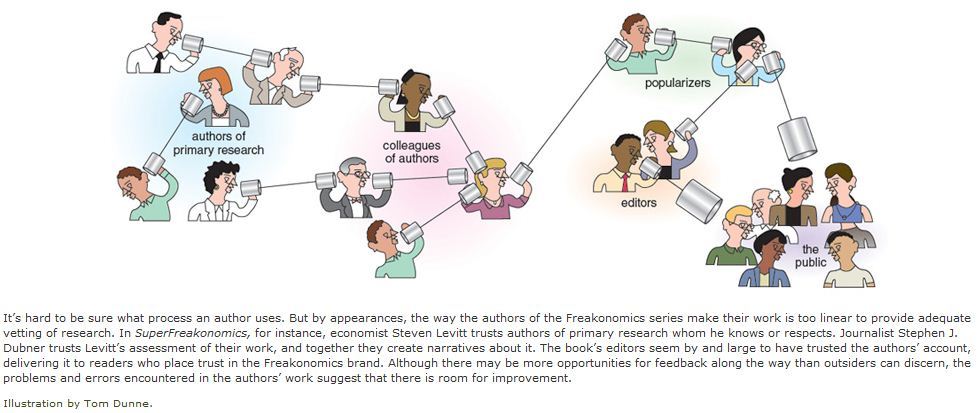
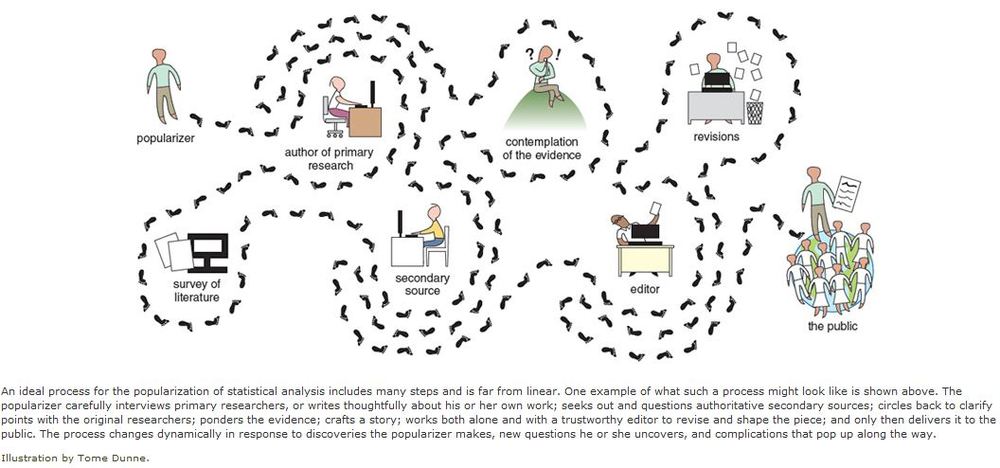
As it happens, Freakonomics is being taken-on by Andrew Gelman and Kaiser Fung in this new post.

Oh, I just realized: this is a great way to teach students about scientific communication (and, perhaps, even touches on ideas related to the public understanding of science, only science means economics here [peppered with a good bit of sociology for garnish]).

And, there are even some cool pics to help visualize the “problem” as it were.

Here is the way that it goes (especially in SuperFreakonomics):

Capture

Here is how it might work better:

Capture

Jens Bartelson

Capture

Jens Bartelson is blowing my mind; his Critique of the state is a great book, and surprisingly concise.

What I like the most out of this book is that it manages to do what so many other books about the state do not or cannot, and that is that it links our conceptual ideas about states and statehood to the question of pondering an alternative to state authority or practical alternatives for the role of the state in contemporary society. Of course, the author shifts seamlessly between discussion of political theory, international relations, and even political philosophy, but the real value in this book (apart from being a great tour through the halls of state theory wherein Jens is its careful curator and our guide) is the shift from theory to pratical matters.

The closest thing to getting us to a theory on political performativity that I have seen…

Forthcoming book "Man, Agency, and Beyond" and a sneak peek…

Edited by Daniel Jacobi & Annette Freyberg???Inan, Man, Agency, and Beyond: The Evolution of Human Nature in International Relations will soon go to print at Cambridge. The editors have, in all honesty, willed this book along; they were able to provide two rounds of reviews in two months! The book is built from earlier discussions from a 2011 Catalytic Workshop, which even has some good notes available on-line — interesting stuff.

Jan and I are contributing a chapter that draws on our interests in state theory (mainly from social theory and political theory, but also, with encouragement from the editors, literature from international relations too).

We ask a deceptively simple question: during international relations, who or what acts?

Here is an excerpt:

TITLE: Acting in International Relations? Political Agency in State Theory and Actor-Networks  

AUTHORS: Jan-H. Passoth, Department of Sociology, Bielefeld University; Nicholas J. Rowland, Department of Sociology, Pennsylvania State University

Introduction

Who acts in international relations? From state theory generally, and the field of International Relations specifically, the readymade answer is: ‘states do’ – so long as we assume states to be the high-modern regime of nation-states that so dominantly sorted-out conceptual possibilities of political agency during the 20th century. An alternative approach to global politics, in contrast, searches for political power beyond the state. Contemporary shifts toward neo-liberal and other transnational regimes are reshaping the political landscape to enable entities beyond the state to gain importance in governance. We are, thus, left with two options: We see states as entities capable of acting on the stage of global politics, or we see states as one of many patterns through which political activity is enacted. This dichotomy neatly parallels how agency has been conceptualized in social theory: Either we swallow the bitter pill of essentializing a high-modern model of human nature to understand how actors establish, maintain, and transform political order, or we join the deconstruction camp and dissect the mechanisms, techniques, and discursive patterns that surround this model of human nature, which will then one day probably be ‘erased, like a face drawn in the sand at the edge of the sea.’[1] We develop this tension in our paper about who or what acts during international relations.


[1] Michel Foucault, The Order of Things (New York: Pantheon, 1970), p. 387.

Early draft of review: Gopakumar’s *Transforming Urban Water Supplies in India*

Review of: Gopakumar, Govind. 2012. Transforming Urban Water Supply in India The Role of Reform and Partnerships in Globalization (Routledge Contemporary South Asia Series). London/New York: Routledge; $140.00/£85.00 hrdbk.

10584661

Here are the introduction and conclusion:

                This is a book about infrastructure. Author of Water Resources (Raju et a. 2004), Govind Gopakumar’s new book Transforming Urban Water Supplies in India is a welcome title from the Routledge Contemporary South Asia Series, especially for science and technology studies because of its empirical and analytical emphasis on what I will call here the ‘state-infrastructure’ relationship. In introducing the core topic of the book, infrastructure, Gopakumar (2012: p, 1) invites nearly every discipline to the table, from ‘engineers and technologists’, ‘historians, geographers, sociologists, and anthropologists’ to ‘urban technological historians’, ‘sociologists of utility networks’, urban geographers’ and ‘technology studies scholars.’ And rightly so; infrastructures studies are complex and complicated precisely because they defy straightforward explanation by any disciplinary jurisdiction; in infrastructure, geographic issues are political, social issues are technical, and so on. And yet, infrastructure often drifts from our conscious view as citizens. Building on Graham and Marvin’s (2001:181) works, Gopakumar shows us that infrastructures might be ‘banal constructions’ that fade into taken-for-grantedness, but they tell us a lot about the formation and consequence of their governance, especially regarding public and private partnerships to enhance or expand infrastructure and the relationship between infrastructural development and states (as well as subnational states, in India’s case). In all, the book takes an historical-comparative approach with the unit of analysis being the city. Gopakumar expertly selects three cities to compare, and the selection process appears to be based on differing relationship between the subnational state, within which the city is embedded, and the broader Indian (federal) state and variations in how each city, responding to global and federal pressures, establishes public-private partnerships thus forming urban water supply regimes.

                <….>

                Where does this book land on the shelf? Certainly, it is a great fit with the Routledge Contemporary South Asia Series. The book is also a more cohesive statement replete with future directions for research, which is missing in Gopakumar’s (2011, 2010a, 2010b) individual research articles on water infrastructure. Patrick Carroll’s (2011) recent work on water infrastructure in California pairs nicely with where Gopakumar (2011) is going in his recent and future research wherein he more explicitly conceptualizes states, stateness, and governmentality, unsurprisingly, using some of Carroll’s (2006) previous research as a touch point and some of my work regarding an actor-network model of states (Passoth and Rowland 2010). In closing, Govind’s book is somewhat bigger than it appears; literally, as the book is only 176 pages long, but also theoretically and empirically because the long-term potential of studying state-infrastructure relations seems so promising.

Busch on "Standards"

Lawrence Busch’s new book Standards has just been added to the list competing for the Merton book award!

9780262016384-f30

Standards are the means by which we construct realities. There are established standards for professional accreditation, the environment, consumer products, animal welfare, the acceptable stress for highway bridges, healthcare, education–for almost everything. We are surrounded by a vast array of standards, many of which we take for granted but each of which has been and continues to be the subject of intense negotiation. In this book, Lawrence Busch investigates standards as “recipes for reality.” Standards, he argues, shape not only the physical world around us but also our social lives and even our selves.  

Busch shows how standards are intimately connected to power–that they often serve to empower some and disempower others. He outlines the history of formal standards and describes how modern science came to be associated with the moral-technical project of standardization of both people and things. He examines the use of standards to differentiate and how this affects our perceptions; he discusses the creation of a global system of audits, certifications, and accreditations; and he considers issues of trust, honesty, and risk. After exploring the troubled coexistence of standards and democracy, Busch suggests guidelines for developing fair, equitable, and effective standards. Taking a uniquely integrated and comprehensive view of the subject, Busch shows how standards for people and things are inextricably linked, how standards are always layered (even if often addressed serially), and how standards are simultaneously technical, social, moral, legal, and ontological devices.

Relevance of Theory in STS

On friday and saturday I participated at a small, well organised STS-workshop on „(In)Stabilities – Processuality in STS“ in Darmstadt/Germany. Participants came from cultural anthropology and ethnology, sociology, English and American Studies. The papers presented were all really interesting, but in my opinion most of them shared one crucial problem: a lack of theory or, at least, they lacked a connection of empirical research with theory. One of the papers even addressed the question, if it is even helpful to ‘superimpose’ theoretical terms and concepts on empirical research/findings. And that really made me think: What relevance has theory in/for STS? What function does theory have in STS? Is STS more about „thick descriptions“ than on theorizing about empirical phenomena? And how do you get a description of empirical findings that is more than just renarration, without using theoretical terms and concepts? What is the additional benefit of renarrating? So, once again: A naive newcomer to STS ‘lost in translation’…Please help.

More on water infrastructure in India

This is a follow-up on the review of Govind Gopakumar‘s new book on water infrastructure in India named Transforming Urban Water Supply in India.

I am now convinced, after reading the first few chapters, that India is a near perfect setting to study water infrastructure as it matters for states (both federal and subnational) — in a post-colonial period, deep democratic roots were fashioned from a doctrine of subnational state autonomy and a federal polity; water, thus, becomes a state and federal issue, but states are mainly left to the task of organizating, implementing, and maintaining water supplies, cleanliness, etc. All this complexity withstanding, urban infrastructure reform is beset by relatively low levels of urbanization, neoliberal urban reform policies, and genearlized global pressures and opportunities.

Using a multi-method and multi-site approach, Gopakumar takes us to three metropolitan areas in three subnational states: the city of Bengaluru in Karnataka, the city of Chennai in Tamil Nadu, and the city of Kochi in Kerala. Each case is carefully selected for their differing response to reform, mainly, in the form of resistance or acquiescence, and the relative autonomy of the subnational state from the federalized state of India.

If that were not enough, the case of India is a great one for state theory, and Gopakumar covers a lot of this territory in his review of the literature. India is presented as both a strong and weak state; strong enough to keep boarders and avoid decay, but weak enough that it failed to promote massive economic and social development. Additionally, even as India began to fortify its infrastructure, social interests co-opted the state aparatus thus making it increasing an “embedded” state too soft to enforce regulation and became overly accomodating to its many and diverse state stake holders. In this way, India was overloaded by engaging in too many endeavors, without delegating enough of these responsibilities to local, subnational states. As Sinha (2005) argued, the developmental state suffers not just practically, but also conceptually, and Gopakumar (2012:18) suggests that we must transcend ‘inherited scholarly barriers and mental containers that have prevented disaggregation of the state in critical analysis”! The problem he identifies, echoing Sinha, is that the overarching theme of state action overwhelmingly adopt a state-as-an-actor metaphor, as either a benevolent state aiding in the development of the country or a malevolent state preying on its people and resources.

The role of states in infrastructure studies seems nearly unquestionable at this point in research.

Update on the Merton book award of the Science, Knowledge and Technology section of the ASA.

We are still accepting nominations   for the Merton book award of the Science, Knowledge and Technology section of the ASA.

What book(s) do you think might have a chance at the Merton award?

Write the Merton book award committee with your nomination, or just write me and I’ll pass it along to the committee.

So far, we have two strong nominations, which are:

  1. Gil Eyal, Brendan Hart, Emine Onculer, Neta Oren and Natasha Rossi, The Autism Matrix: The Social Origins of the Autism Epidemic. (Cambridge: Polity, 2010).
    Capture_1
  2. Cyrus C. M. Mody, Instrumental Community: Probe Microscopy and the Path to Nanotechnology. (Cambridge: MIT Press, 2011).
    Capture_2


Respecifying infrastructures politically and economically

As the British government is getting ready to announce a commitment of £5bn of public funding to a massive investment plan in infrastructures over the next couple of days, I am wondering how infrastructures sometimes are respecified in the redistribution of collective resources. The British government has been cutting back on public sector expenditures in almost all areas, including many types of support that would, I think, be included in sociological notions of infrastructure (like subsidies in transport, communication, education etc.). Now the rationale appears to be that some of that spending has to be redirected in order to attract private investment in infrastructures – while most of the cuts of course have remain as they were (and one immediately suspects more cuts will be forthcoming in order to support the “infrastructure boost”).

This is obviously another demonstration of how the scope of what is deemed a collectively indispensable infrastructure is subject of political spin and generally, I suspect, in any case much narrower than an exploration of instructures in terms of hybrid assemblages (or more broadly in STS terms) would have it. In this case, roads and energy are apparently deemed more essential than the “soft” human infrastructures within the collective, even in a service econony like the UK. Still, there is some discretion taken by policy-makers apparent here in defining the scope of the collectively indispensable more or less broadly. It may be worthwhile in exploring states’ contribution to the maintenance of infrastructures to look specifically at the fringes or gray areas where infrastructure policies are regularly accommodated. Political respecifications are also visible in attempts by interested private actors (investors, entrepreneurs, lobbyists etc.) to accommodate this scope, e.g. in the areas of housing and water mentioned in recent postings, particularly in Kathryn’s Medellín reports.

Conversely, there is also the question of how infrastructures are respecified economically in creating something like an infrastructure sector (as mentioned in the article from the Guardian linked above), i.e. as a type of aggregate market.

What are we to make of such political or economic respecifications (or re-assemblings) of infrastructures? Is it a reasonable strategy of sociological exploration confronting such respecifications be to go for the broadest possible understanding of infrastructures in order to effectively re-frame these more specific remediations? At the moment I feel tempted to say yes – but such a strategy would really beg for at least some kind of respecification that is genuinely sociological – if that can (or should?) indeed be re-assembled.

On "re-assembling" more than just the social…

Jan and I, and student of mine, Alexander B. Kinney, wrote a book review of Latour’s “introduction that is not an introduction” to ANT, Reassembling the Social, for Spontaneous Generations.

I was reminded of this earlier today, about reassembling more than just the social, and so I reread this passage:

Even with these newly crafted tools fresh from the ANT workshop, Latour
has still not gone far enough. If we have to Reassemble the Social, then why
not Politics or Economics too? Why not the Law or the State or other modes of
existence Latour simply allows to stand un-reassembled? As an analytical strategy,
dropping the Social as a category of things is a good idea. But if we decide to take
Latour seriously, then we must be equally suspicious of the “political arena” or
“economic climate” too, and it surely does not mean that we empirically ignore
the onto-politics of Law, Politics, Economics, etc., if these are all just ways to
“arrange the collective.” What is missing is an idea of how to draw distinctions
between them analytically without reifying them in the process. The way that
“modes of existences” and “arrange the collective” are introduced in this book
leaves an aftertaste of bitter reification. How are we to distinguish between ways
of juridical, economic or scientific assembling? We are left without an answer,
just with the hint that this would need another book to reassemble each (Latour,
forthcoming). It is a good thing that the book ends trying to be constructive
and not merely de(con)structive; however, if we buy the ticket (the book) and
take the ride (read it), then we deserve more—we must either deconstruct more
in order to rebuild everything as a mere matter of associations or we must
say that anything made of “invisible” “matter” like markets, lawsuits, incentives,
management techniques, etc. is just as guilty as “the social” created by sociologists.

If sociology is now about tracing association, which I consider quite fun, then what is, for example, Political Science about, if properly reassembled?

I am really racking my brain about this and am not sure that reassembling gets us very far outside of sociology. Still, I refuse to say that Geography, for example, is not in need of some reassembling. The key might be “the social” versus sociology in general, hence, “the political” is what is in need of reassembling, or perhaps “the geographic” … hmmm, this is quite messy.

A good case, and the role of compatibility in theory selection

All, as promised, I would reveal some early review document about Govind Gopakumar‘s new book on water infrastructure in India named Transforming Urban Water Supply in India.

First, the book’s case selection is quite smart. India has a historical legacy of democratic social involvement of the public (a promise perhaps, between state and society) during the post-independence period. This context emerges, however, beset by global opportunities for growth and supra-state pressures for change. Infrastructure, fittingly, is stuck in the middle, especially when it comes to developing it, expanding it, and restructuring it. The case selection, therefore, becomes a good case to estimate, per the insights gathered by geographers and others interested in the expansion of neoliberal globalizaiton, whether or not the changes taking place in Indian urban infrastructure follow the trend toward “pervasive depoliticalization of public life” (Gopakumar 2012:4). Or, put another way,

Do global efforts erase existing political underpinnings and re-inscribe a fundamentally new political basis, or does the existing social and political environment continue to influence infrastructures in the face of global pressures? (Gopakumar 2012:5).

The question fits quite nicely with what Jan and I were thinking about as the new infrastructuralism. Govind’s research hints in many places, perhaps intentionally or perhaps he’s just feeling his way toward this or another new idea, of a broader theoretical contribution than is presented in the book. In this way, Govind’s book is somewhat bigger than it appears, both theoretically, but also literally, as the book is only 124 pages long.

Second, and here is a little more critique and a little less review, the book draws on David Harvey’s work, the Marxist geographer, Feenberg’s insights about technologies being designed to promote the interests of the powerful/influential, and Winner’s old (but still good) insight that technology shapes political life/reality in a way akin to how legislation does. What is sort of odd is that Pinch and Bijker’s piece on the social construction of technology (SCOT) plays a pivotal role in the theoretical build-up, especially insights about “relevant groups.” Now, SCOT has often been criticized for being apolitical or for ignoring issues related to power and politics (mainly, who is powerful enough to be “relevant,” if we must use the term power). For Govind, SCOT is nice because it allows him to distance himself from explaining infrastructural development and revision as merely moves toward purely technological or economic efficiency. However, this become a bridge to Winner, and wasn’t it Winner who wrote, famously, about the third step in SCOT analysis, of “opening the black and finding it empty” …

Govind Gopakumar on Water Infrastructure

At the 4S meeting, Jan and I met Govind Gopakumar, who recently published a book on water infrastructure in India named Transforming Urban Water Supply in India.

The abstract:

The absence of water supply infrastructure is a critical issue that affects the sustainability of cities in the developing world and the quality of life of millions of people living in these cities. Urban India has probably the largest concentration of people in the world lacking safe access to these infrastructures.

This book is a unique study of the politics of water supply infrastructures in three metropolitan cities in contemporary India – Bangalore, Chennai and Kochi. It examines the process of change in water supply infrastructure initiated by notable Public Private Partnership’s efforts in these three cities to reveal the complexity of state-society relations in India at multiple levels – at the state, city and neighbourhood levels. Using a comparative methodology, the book develops as understanding of the changes in the production of reform water policy in contemporary India and its reception at the sub-national (state) level. It goes on to examine the governance of regimes of water supply in Bangalore, Chennai and Kochi, and evaluates the role of the partnerships in reforming water supply. The book is a useful contribution to studies on Urban Development and South Asian Politics.

I’ve made arrangements to review the book for the Social Studies of Science, and I’ll post some preliminary comments here on the blog. Welcome aboard, Govind…

What behaviorism might tell us about Post-Foucauldian or "New" Suveillance Studies

I once asked what the “knowledge myth” might mean for STS, but this was really just a ploy to raise the issue of what it would take to generate a post-humanist form of behaviorism in STS.

How might we talk about the behavior of humans and non-humans parsimoniously without getting too bogged-down with endless debates of “who/what is congizant?” and “what role do intentions play?” This well-drodden issue was raised once again during our 4S sessions on the state.

One of the primary issues in behaviorism regarding the knowledge myth is “do you need to know how to do something to do it?” with the important follow-up that “if you do it, then you have shown (a) that you know how to do it, by benefit of doing it, or, if not that, (b) then knowing and doing are not nearly as related as we might otherwise demand in our social science accounts.”

Gary Marx, who wrote a great paper in Surveillance & Society, insists that surveillance in our high-tech age is different in non-trivial ways from traditional Foucauldian imagery of the somewhat distant past of “white hot pincers” during torture or the grand Panopticon. In particular, Marx’s analysis focuses on “unintended” data collection that is likely to be amassed by automated machines; think: data about data, for example, the location of a purchase, or the time stamp of a facebook post (Marx 2002:15). He goes into a, upon first glance, cool example: there is suspicion that a university building was going to fall prey to arson after a gatorade bottle full of explosive material was found on site. By cross-listing the keycard entry registries and the shipping code on the gatorade bottle, the culprit was found, and upon being found, s/he confessed. This seems like a straightforward case where data was collected and then used to capture a miscreant, but these data were never collected with the direct and explicit intention to be used for the purpose of catching criminals or criminal acts. These data were not intended to result in this end (I’d prefer a different term than “unintended,” but that will be another post).

Drawing on these materials liberally is Michalis Lianos (2003:412), in another paper in the same journal about Post-Foucauldian studies, who adopts and develops the idea that diverse technologies at “points of use” (let’s call them) result in data, which then contributes to what is referred to as “unintended control” which is not really intended to promote any values in particular, but that can be used in matters of control after collected.

The technologies so often utilized in Post-Foucauldian analyses are many and diffuse, but they rarely have any intentional politics, according to Lianos.This was quite a surprise, as I had always read these Post-Foucauldians as having an almost unanimous position that armies of little technologies were “out there” doing the dirty work of making neoliberalism a reality.

Back to Lianos: The data these automated machines collect might be used in political ways, big and small, but in a shrewd move, Lianos demands that in studies of control and surveillance, we must “break this correspondence between motive and outcome” or, put more exactly, “the intention to control is not a necessary precondition for effectively producing serious consequences for the sphere of control” (424). And, thus, we are left with an odd behaviorial post-humanist vision of technology where the “intentions” of the designer or user drift from primacy in analysis, and instead we observe what is collected or made, what is done with it, and what this contributes to  local levels and beyond.

Bravo, Lianos.

For us in STS, I have always been concerned that Foucauldians place so much emphasis on dispotif and governmentality when their analyses so often hinge on diffuse, micro-levels of technological use for the purpose of voluntary self-regulation. I am not referring to micro-physics or the art of government either. Instead, we get a nuanced view from Lianos of how the, to borrow a beloved phrase from Bruno, the “missing masses” do all the hard work in Post-Foucauldian Governmentality studies … although not intentionally.

Thank you, Endre Dányi Welcome Karthryn Furlong!

Endre Dányi, a student of Lucy Suchman and John Law at Lancaster University’s Department of Sociology, joined the blog for the month of October into November wherein he shared six great posts about what I suppose we could call “the Parliament multiple.” A real highlight for me was Endre’s point about Parliamentary efficiency: “There’s a double demand here: the legislative machine should operate smoothly, but not too smoothly.” That is an idea worth developing in this age of hyper-efficiency and transparency! Bravo!

So, from Installing (Social) Order, thank you for your detailed and throught-provoking posts, and we hope you stay engaged in the discussions here on the blog.

Kathryn Furlong is the project director the “Water, Urban, and Utility Goverance” and assistant professor in geography at University of Montreal. She was first mentioned on the blog as a “new scholar to watch” because of her paper “Small technologies, big change: Rethinking infrastructure through STS and geography” published in Progress in Human Geography. The paper illuminates a few ways that STS might learn from geography, and the inverse is also presented. After our meeting at 4S a few days back, I am not convinced that STS has a ton to learn from geography on the topic of infrastructure. She is currently attending a conference, and will hopefully tell us a little about it and other topics over the next month or so.

Karthryn, welcome aboard!

Jan-Hendrik Passoth and I’s (Nicholas Rowland’s) comments at 4S

Jan and I organized Sessions 201 and 222 back-to-back on the topic of states, state measurement, and state theory. These talks and our comments were presented at the Annual Meeting of the Social Studies of Science in Cleveland, OH, November 05, 2011.

Session 201: Counting and Measuring

The relationship between science, technology, and governance is a relationship that shapes and is shaped by contemporary states. While this relationship has been influential in STS research on how contemporary modes of governance influence scientific practice and technological innovations, the converse question of the influence of both on governance is relatively underrepresented.

These sessions, therefore, take-up the task and explore this relationship and its depiction in history and social and political theory. The first session (session 201) is presenting a series of five case studies on the role of conflict, measurement and performativity for the enactment of stateness, drawing from rich empirical projects. The second session (session 222) is focusing on conceptualization and theoretical approaches, dealing mostly with the mechanisms and techniques of creating, maintaining and shifting the multiple ontologies of stateness.

Anat Leibler will show us the traditional science-state relationship, but from a new angle wherein the science of population measurement is embedded in states of conflict, in this case, being Israel and the Occupied Territories.

Hector Vera also emphasizes the central role of measurement, in his case; however, it is about measurement standards adopted by Mexico and the US, in a historical comparative case study approach.

Michael Rodriguez brings together the dual-tasks of counting and countings of populations, but on the level of micro-practices in his work on the role of “partnerships” with Latino communities that are often “undercounted” by traditional census techniques.

Keith Guzik returns our attention back to Mexico where rather than counting techniques or practices, he emphases the role of techno-infrastructure in his historical account of national security programs.

Daniel Barber also provides a historical view, but one more fine grained, drilling-deeply into the 1940s US Department of the Interior where two models of future energy use were evaluated quite openly; however, as we can all see, one of these methods has obviously become taken-for-granted.


Session 222: Theory and Ontology

Patrick Carroll shows us, through a detailed but theoretically oriented case study, how diverse, seemingly unrelated issues of water and water infrastructure became a – read, grouped or combined – political object of state governing.

Hendrik Vollmer describes another transformation which invokes the state; this time, however, through micro-measurement for sake of global comparison and regulation.

Erich Schienke grounds his paper in the fertile fodder of Ecocities in China, which do not yet fully exist (other than in discourse), showing how aggregated environmental indicators will be used, we think/he thinks, to re-position the Chinese state as an ecological civilization in the global theater of political action.

Kelly Moore’s (not in attendance) work challenges us to say “how does the state get into our bodies?” the answer to which turns out be a neoliberal story of government intervention into bodies through what she calls the promulgation of “pleasured self-discipline.”


Concluding Comments (once presentations end, and before questions):

All of the papers tackle the crucial, which we will crudely frame here as the classical concern over the relation between micro processes and macro entities. For example, the micro processes seen in Michael Rodriguez’s work on the day-to-day, on-the-ground counting of the undercounted, or Patrick Carroll’s work on water infrastructure where many seemingly distinct matters relating to people, land, and water where lashed-together and inverted to become one concern over water for some manner of macro entity usually referred to as the state. The relation between micro processes and macro entities is a debate worth studying.

And these presenters do much justice to this enduring debate by taking much more nuanced interpretations into their analyses, especially of counting practices, and their theoretical approaches to understanding where the state is and is not, and its multiple purported effects.

We observe empirically, and we all have seen this here today, that there are important similarities too between what we “see” on-the-ground and the conceptual tools we have inherited from our respective disciplines in sociology, history, geography, political science, and the like. The perhaps surprising link we speak of is between (a) the historically-embedded, highly-contingent, ongoing-accomplishments that we observe in our empirical investigations and (b) the conceptual apparatus that we invoke, as scholars.

To our minds, and this is our closing remark, which is perhaps c
ontroversial: it is of the utmost importance for scholars to remember that the concepts we make and their appearance and use in our field-sites are linked together. These are not merely opportunities to verify or reject our theories. Instead, they are valuable analytical opportunities to critically and empirically engage them.

Whether or not “the state” exists is a waste of our time; rather, it is precisely these ephemeral moments when, by whom, and how the state is brought into existence or invoked as a partner that we should direct our analytical and empirical attention to …  as we consider this a fertile site for STS’s group contribution to state theory.

ANT and Ethnography

Michael Rodríguez-Muñiz just alerted me to the fact that Qualitative Sociology is going to host a special issue on ANT and ethnography called “Reassembling Ethnography: ANT beyond the
Laboratory“!

Details:

Deadline for submissions: March 31, 2012 submitted directly to the journal.
Word Limits: 10,000 words (maximum) including bibliography
Queries: Gianpaolo Baiocchi (Gianpaolo_Baiocchi@Brown.edu), Diana Graizbord
(Diana_Graizbord@Brown.edu), and Michael Rodríguez-Muñiz
(Michael_Rodriguez@Brown.edu).

Check out the full solicitation here:

4S in Cleveland, a first couple of notes

Since I am the only one of our little outfit to be still left in Cleveland I might just as well start off reporting from the 4S meeting with a couple of quick Sunday morning impressions.
As usual, the meeting as a whole was well attended, and the organizers did a good job of providing a well-balanced mix of themes and issues.
Before I get to the sessions organized by Nicholas and Jan, I should say that the “author meets critics” panel with Marion Fourcade and with Daniel Breslau, Mary Morgan, and Ted Porter discussing Fourcade’s book about “Economists and Societies” somewhat stood out for me. For one thing, the discussants provided excellent commentary, but more generally speaking, I just love this format. Rather than having four+ different papers cramped into 90 minutes, you actually get a couple of very smart people discussing the same piece of work. Maybe the organizers could think about making this format a still bigger part of the overall schedule.
Then, of course, the two sessions about “Seeing states and state theory in STS”, organized and hosted by Nicholas and Jan, were surely the place where things were happening with respect to the interests represented in this blog. The powers that be provided one of the finer rooms and a good crowd of people was present, despite the fact that it was Saturday afternoon. If I should pick a presentation that impressed me the most, it was the presentation by MIchael Rodriguez-Mu??iz. He is studying the work of census representatives in getting the cooperation of people whose data have to be collected. What I liked so much about this study is that it nicely illustrates the work that has to be done at the periphery to make a technology that is historically highly crucial for establishing state power work in actual practice. It turns out that sometimes, rather than the state being summoned as an authority to implement a certain obligation, the actual exercise of state power benefits from being dissimulated. Fascinating stuff right there.
Thanks to Nicholas and Jan for making it all happen! I sense an STS field in the making here and maybe a continuous series of sessions for future 4S meetings. And one more reason to look forward to next year’s 4S in Copenhagen.

Imagining infrastructures the corporate IT way

A couple of days ago a video made by RIM (the manufacturer of blackberry) cropped up on youtube. It shows RIM’s vision of the future of work and, of course, of its own role in it. The two videos which you can see here and here were supposedly leaked from within RIM. Surprisingly though, they are still on youtube for anybody to see, so RIM does probably not feel shamed by them (to say the least). Some of the blogosphere has already been reacting, calling the video, for example, “depressing as hell”.
The insight the videos provide into imaginations of future infrastructures probably informing the setting of corporate strategies in the development of communication devices is interesting – and transcends the character of this particular video as a somewhat desperate life sign of a company currently under some pressure to make a show of itself. About time for the role of fantasies in the development of infrastructure to move up a bit on our list of research topics?

Teaching STS: Geographic Diffusion of Facebook

The diffusion of innovations is a common topic worth discussing in basic courses in sociology, usually on the topic of cultural diffusion, as well as STS courses. While it is often not a problem to spread the good word about diffusion, a contemporary example, the spread of facebook, provides some interesting fodder for in-class discussion and student exploration.

2004-12

Here is a website, inside facebook, with some interesting images that students, in my experience, will be interested in using, discussing, and perhaps hazarding a few hypotheses. The images are US-focused, which is not ideal; however, explanations for some of the geographic distribution of facebook will help students to really understand how ideas like this spread.

What’s nice about it, in my opinion, is that it provides some opportunitites to discuss the various explanations for diffusion. For example, was facebook expensive to adopt early on as compared to later on? Was facebook an obvious improvement on technologies that preceded it? How did one “adopt” facebook? Do people “use” facebook differently? Is it analytically meaningful to count every “personal facebook page” as an adoption, even if it is rarely or never used? Why did facebook spread geographically first and then how do we explain further developments in adoption patterns?

I am contemplating an in-class assignment where students break into groups, assess the images and then present their conceivably competing understandings of why facebook spread the way it did, and, importantly, not the way it didn’t…

First book available from "The MIT Press Infrastructure Series"

This is a great future publishing series for folks interested in infrastructure:

Check it out: Geoffrey C. Bowker and Paul N. Edwards, Associate Series Editors

In recent years, awareness of infrastructures has been building to a remarkable degree in virtually every area. The information infrastructure which subtends the revolutionary new forms of sociability, science, scholarship and business is one example. A second is the state of roads, bridges, dams, and other large, expensive, long-term investments as our national and international infrastructures fall into disrepair. A third is the energy infrastructures, both old (fossil fuels) and new (renewables), that subtend the world economy.

A few centers of important scholarship on infrastructures have emerged, such as large technical systems theory (history of technology), urban infrastructures (urban planning, geography), and information infrastructures (information studies, computer-supported cooperative work). Yet too much of this work has been siloed, focusing only a particular system or scale, and with few exceptions it has remained sequestered within some of the smaller academic fields. Finally, remarkably little work has been done on the comparative study of infrastructures: taking lessons from one field and modifying it for another.

The first book in the series is “Standards: Recipes for Reality”

Capture

Standards
Recipes for Reality
Lawrence Busch

Standards are the means by which we construct realities. There are established standards for professional accreditation, the environment, consumer products, animal welfare, the acceptable stress for highway bridges, healthcare, education–for almost everything. We are surrounded by a vast array of standards, many of which we take for granted but each of which has been and continues to be the subject of intense negotiation. In this book, Lawrence Busch investigates standards as “recipes for reality.” Standards, he argues, shape not only the physical world around us but also our social lives and even our selves.  

Busch shows how standards are intimately connected to power–that they often serve to empower some and disempower others. He outlines the history of formal standards and describes how modern science came to be associated with the moral-technical project of standardization of both people and things. He examines the use of standards to differentiate and how this affects our perceptions; he discusses the creation of a global system of audits, certifications, and accreditations; and he considers issues of trust, honesty, and risk. After exploring the troubled coexistence of standards and democracy, Busch suggests guidelines for developing fair, equitable, and effective standards. Taking a uniquely integrated and comprehensive view of the subject, Busch shows how standards for people and things are inextricably linked, how standards are always layered (even if often addressed serially), and how standards are simultaneously technical, social, moral, legal, and ontological devices.

About the Author

Lawrence Busch is University Distinguished Professor in the Center for the Study of Standards in Society in the Department of Sociology at Michigan State University and Professor of Standards and Society in the Centre for Economic and Social Aspects of Genomics at Lancaster University, U.K.

Endorsements

“Lawrence Busch’s book, Standards: Recipes for Reality, illustrates with vivid clarity the ubiquity and importance of these ‘things’ called standards. Rather than present a dry economic text, or a singular discipline’s focus, Busch has proposed a ‘Unified Field Theory’ for standards—a multidisciplinary view of standardization. For anyone interested in standardization from a policy, technical, or social perspective, this volume is absolutely essential.”
Carl Cargill, Principal Scientist of Standards, Adobe Systems; author of Open Systems Standardization: A Business Approach

“With enviable style and impeccable clarity, Busch shines a bright beam into the anonymous, invisible world of standards to reveal how these commonplace instruments order the messy world we live in. This deeply thoughtful work of political sociology is a must-read for anyone concerned with the hidden dynamics of power in contemporary industrial democracies.”
Sheila Jasanoff, Pforzheimer Professor of Science and Technology Studies, Harvard Kennedy School; author of Designs on Nature

“This book demonstrates that Lawrence Busch is not only an outstanding expert and even connoisseur of the subtle nuances of the world of standards that are used to make and unmake the world; he is also a critical analyst of their political and moral significance. Deeply informed by debates in the social sciences, economics, and even analytical philosophy, the book combines a rigorous examination with a great sense of humor in a journey that leads the reader from Harlequin romances to the auditable firm.”
Laurent Thévenot, Professor, École des Hautes Études en Sciences Sociales, Paris

2012 Digital Government Society Conference

Preparations for the 2012 Digital Government Society Conference (dg.o 2012) are underway, and we would welcome your participation in the conference. This marks the 13th annual conference, demonstrating a strong and vibrant international community of research and practice. Taking place at the University of Maryland College Park June 4-7, 2012, the conference will bring together e-Government researchers and practitioners to explore cutting edge research and best practices regarding e-Government initiatives.  Accepted papers are published in the ACM Proceedings Digital Library. 

Each year the conference combines:

  • Presentations of effective partnerships and collaborations among government professionals and agencies, university researchers, relevant businesses, and NGOs, as well as grassroots citizen groups, to advance the practice of e-Government.
  • Presentations and discussions on new research on e-Government as an interdisciplinary domain that lies at the intersections of information technology research, social and behavioral science research, and the challenges and missions of government.
  • Practice regarding e-Government projects, implementations, and initiatives that bring together the research and practitioner communities, demonstrate the effectiveness and/or challenges of e-Government, and offer best practices.  

Governments today face unprecedented opportunities and challenges. New technologies provide governments with the opportunity to redefine the relationship between government and the public that they serve, create innovative public services, provide customer-focused services, encourage transparency, promote participatory democracy, facilitate the co-design of services, form new partnerships in service delivery, streamline operations and reduce costs, and build trust in government. But harnessing and implementing technologies effectively raise a number of policy, technology, and governance challenges. This year, the conference program will focus on the ways governments and the e-Government research community can work collaboratively to leverage information and communication technologies as part of innovative and dynamic approaches to creating and implementing high quality, efficient, and effective e-Government.

Research, practice, and collaboration submissions addressing this theme could include but are not limited to: social media and public participation in digital government; effective use of social media by governments; crowd sourcing for government decision making; transformative government; open and transparent government; models of collaboration among government, industry, NGOs, and citizens; data  integration, visualizations, and analytics for government decision making; agile and flexible government; financial/economic/social policy making; government productivity and effectiveness; service quality and customer-centric e-Government; social and health infrastructure; global  government collaboration models and practices; infrastructure for data sharing among government agencies; computing infrastructure models,  cyber-security and project management; IT-enabled government management and operations, and interest in program execution; IT and tools to support government security; and methods to measure and evaluate success in e-Government.

In addition, we welcome submissions from the broader domain of e-Government research. We invite completed research papers, papers describing management and practice, policy, and case studies, student research papers, on-going research posters, and live demonstrations that demonstrate the use of technology to promote innovative e-Government services. We particularly encourage submissions on interdisciplinary and crosscutting topics. We also encourage the submission of suggestions for panels, and pre-conference tutorials and workshops.

More specific conference details are below. 


Kind regards,

John Carlo Bertot, President-Elect and Conference Chair
Hans Jochen Scholl, President

13th Annual International Conference on Digital Government Research (dg.o 2012)
Bridging Research and Practice
University of Maryland, College ParkMD
Monday– Thursday, June 4-7, 2012
Website: http://dgo2012.dgsna.org
General inquiries: dgo2012@easychair.org
Paper submissions: http://www.easychair.org/conferences/?conf=dgo2012


Important Dates:

Jan 22, 2012               Papers, doctoral colloquium papers, workshop, tutorial, and panel proposals due 
March 7, 2012            Paper, doctoral colloquium, workshop, tutorial, and panel acceptance notifications
Mar 16, 2012             Poster and demo proposals due 
Mar 30, 2012            Camera-ready manuscripts due
April 6, 2012              Poster and demo acceptance notifications

May 4, 2012               Early registration closes
Jun 4-7, 2012             dg.o 2012 conference


Special Issue on "Online Collective Action and Policy Change"

Call for Papers

Policy and Internet  
Special Issue on “Online Collective Action and Policy Change”

Guest Editors 
Andrea Calderaro (PhD, European University Institute)
Anastasia Kavada (PhD,  University of Westminster)

Policy and Internet, the first major peer-reviewed multi-disciplinary journal investigating the impact of the internet on public policy, is inviting submissions for a special issue on ‘Online Collective Action and Policy Change’, to be published in January 2013 (paper deadline: 31 March 2012). The journal is edited by the Oxford Internet Institute (University of Oxford) for the Policy Studies Organization (PSO). Please find more at:&nbsp! ;http://www.oii.ox.ac.uk/news/?id=595

The Internet has created a new interface between collective action and policy making: it opens new channels for social coordination and mobilisation, and it offers multiple platforms from where to influence public opinion and policy makers. The recent wave of protests that has swept authoritarian regimes like Tunisia, Egypt, and Libya, but also western liberal democracies like Greece, Spain, and the UK, offers new empirical evidence of the impact that online interactions and information exchange can have on policy making.

In addition to these recent instances of contentious politics, advocacy and grassroots groups are increasingly using online technologies to empower local communities and direct change in the policies that most affect them. And issues at the heart of online governance, like Internet regulation, are motivating many collec! tive efforts directed to shaping file-sharing policies, free software, or digital communication rights.

This special issue calls for academic papers reporting novel empirical research on how online collective action drives policy change, in any of its ramifications. This includes topics such as:

– The coordination of protests and mobilisations using online technologies, and their impact on public opinion and policy making.
– The mechanisms through which online collective action grows and diffuses, and how or when they trigger a policy reaction.
– The impact of online activity on issue salience, and the responsiveness of policy makers.
– The interplay between online collective action and the offline policy cycle, or how policy makers deal with new sources of instability and disruption.

This list of topics is not exhaustive, and other questions related to online collective action and its impact on policy making will be considered. Please cont! act the editors (policyandinternet@oii.ox.ac.uk) if you have any queries about how your paper might fit in the issue.

Paper Submissions

The online submission deadline for papers is 31 March 2012. Please indicate in the cover letter that the paper is intended for the special issue ‘Online Collective Action and Policy Change’. Authors are advised to consult the journal’s Guide for Authors before submitting their paper. Please feel free to contact the guest editors Andrea Calderaro (andrea.calderaro@eui.eu) and Anastasia Kavada (a.kavada@westminster.ac.uk) for any inquires about the special issue.

_________________________________
Andrea Calderaro, PhD
Department of Social and Political Sciences – European University Institute

Visiting Researcher
Department of Media and Communication – University of Oslo
———————————————–
PERSONAL PAGE: www.eui.eu/Personal/Researchers/calderaro/

Job Posting: Digital Humanities

The College of Social Sciences and Humanities at Northeastern University invites applications and nominations for an open rank position (assistant/associate/full professor) in the field of Digital Humanities to begin fall 2012. The successful candidate will have expertise in new computational approaches that help distill meaning from texts and artifacts, and in new modes of presenting these in electronic formats. Examples include but are not limited to text-mining, geo! graphic information systems, natural language processing, visualization, or complex network analysis. He or she will be familiar with the theoretical challenges implicit in this emerging field, will have an interest in translating knowledge within and between disciplines and for a broader public, and will help to build new expertise in Digital Humanities at Northeastern. The position will complement existing University strengths in the related areas of network science and computational social science. Applications are invited from any discipline that contributes to the Digital Humanities. The appointment will be made in an appropriate department in the College of Social Sciences and Humanities and a cross-departmental or cross-college appointment (such as with the College of Computer and Information Science) is also possible. Candidates must have a PhD at the beginning of the appointment and a record of scholarship and teaching commensurate with rank.


Northeastern University in Boston is a nationally-ranked research university with a strong urban mission, a global perspective, and an emphasis on interdisciplinary scholarship. Its signature Cooperative Education Program and study-abroad opportunities such as Dialogues of Civilization provide experiential learning opportunities for its 19,000 undergraduate and graduate students. The newly founded College of Social Sciences and Humanities incorporates the departments of African-American Studies; Economics; English; History; Languages, Literatures and Cultures; Philosophy and Religion; Political Science; and Sociology and Anthropology. The College is home to the School of Crimi! nology and Criminal Justice and the School of Public Policy and Urban Affairs. Its eight interdisciplinary programs include International Affairs; Law and Public Policy; East Asian Studies; Women, Gender and Sexuality Studies; and Jewish Studies.


Applications will only be accepted through the College of Social Sciences and Humanities website. To apply, please go tohttp://www.northeastern.edu/cssh/, and click on the Faculty Positions link. Applicants already holding tenure should upload a letter of application, CV, a statement of current and future research interests, a writing sample of no more than 50 pages, and the names of three referees. Untenured applicants should upload a letter of application, CV, a statement of current and future research interests, a writing sample of no more than fifty pages, and should have three references submitted via the Fac! ulty Positions site. Review of applications will begin October 20, 2011 and will continue until the position is filled. Questions about the position may be directed to the Chair of the Search Committee, David Lazer, or to Co-Chair, Elizabeth Maddock Dillon at dighumsearch@neu.edu.


Northeastern University is an Equal Opportunity, Affirmative Action Educational Institution and Employer, Title IX University. Northeastern University particularly welcomes applications from minorities, women, and persons with disabilities.

David Lazer (www.davidlazer.com)

Associate Professor of Political Science and Computer Science
Northeastern University &
Director, Program on Networked Governance
Harvard Kennedy School
Harvard University
The netgov blog: http://www.iq.harvard.edu/blog/netgov/

Job offers: Post Doc and Visiting Fellowships in Darmstadt

The interdisciplinary graduate program “Topology of Technology” at the Darmstadt University of Technology, Germany, announces 1 postdoctoral fellowship and 4 visiting fellowships. The postdoc stipend runs for two years, preferably starting Jan. 1, 2012; the guest stipends are offered for three-month periods throughout 2012.

The program is organized by teachers from the subjects of history, sociology, philosophy, literary criticism, mechanical engineering, informatics, and the planning sciences. It focuses on the relationship between technology and space-at present, in history, and in a possible future. It has four thematic foci:

  • The Persistence and Routinization of Daily Life in Technical Surroundings
  • The Formation and Limitations of Action in Spatial-Technological Settings
  • The Planning and Design of Technologies in Spatial Contexts
  • The Modeling and Simulation of Spatial Relations by Technological Means 

The program is primarily financed by the German Research Council (DFG); see www.dfg.de.

Monthly stipends range between 1,468 and 1,570 euros (parents receive additional child allowances). There are no tax reductions; however, fellows have to finance their own health insurance.

Applicants for the postdoc fellowship need to have a doctoral degree (or at least to have submitted their dissertation). Since course work and seminars are carried out in both German and English, it is expected that applicants are able to read and understand German.

The visiting fellowships are offered to graduate candidates or recent PhDs interested in intensifying their own work on the relationship between technology and space during a three-month stay in Darmstadt. Applicants are asked to indicate in what way they expect to profit from intensified contacts with our graduate program.

Fellows are expected to work together in our beautifully situated villa downtown Darmstadt and thus need to take up their residence in the city or the vicinity.

Applications are only accepted in electronic form. They should include (1) a CV,

(2) copies of academic diplomas,

(3) a short description (max. 5 pages) of the planned postdoc project and doctoral dissertation, respectively, as well as

(4) the names and addresses of two university professors who are willing to act as reference persons. Please send your application no later than

15 November, 2011

to topologie@ifs.tu-darmstadt.de. Please make sure that it includes a personally formulated explanation why you are particularly interested in the topic of the program and to which thematic focus your research will, in the first instance, contribute. If you have any questions, do not hesitate to contact one of the directors: Petra Gehring (gehring@phil.tu-darmstadt.de) or Mikael Hård (hard@ifs.tu-darmstadt.de).

More information about the research and teaching program of the post-graduate college / graduate school may be found under http://www.ifs.tu-darmstadt.de/index.php?id=1921&L=2


What’s the next great infrastructure study?

One of the common topics of discussion between Jan-Hendrik and I is “What’s the next great infrastructure study?”

Patrick Carroll is writing about bogs and water infrastructure again, only this time in California rather than Ireland.

Anique Hommels is writing about re-building and unbuilding cities.

David Ribes is writing about cyberinfrastructure (in a paper worth reviewing).

A long time ago, to some, Tom Hughes wrote on the electricity infrastructure in Networks of Power.

What are some of the other classic infrastructure studies, and if we review enough of them, what stones seem obviously unturned? (that might become the next great infrastructure study)

NSF meeting at 4S in a few weeks

STS Events

Interested in funding from the National Science Foundation?

November 05 2011 | Social Studies of Science annual meeting

http://www.nsf.gov/funding/pgm_summ.jsp?pims_id=5324

Hear about important changes to the Science, Technology and Society Program solicitation coming on or about November 1, 2011, new STS-related funding opportunities at NSF, and requirements for data management plans. Saturday, November 5, 12:15-1:15, Crowne Plaza, Owens. To schedule an individual meeting or phone call, contact me at kmoore@nsf.gov .

Computers, infrastructure, and recent obituaries

How is it that Steve Jobs can die and people mourn the man as if he were a family member, and Dennis Ritchie dies and there is hardly a blip on mainstream media?

I realize that many people spend more time with their iPhone than any family member or friend, but try living in our digital age without C programming, windows, or linux.

Thoughts?

A thought for Endre, courtesy of Tom Gieryn

I’ve been thinking about the link between “what buildings do” and our current exploration of the “multiplicity” of things. One of the concerns Endre raised was the idea that saying that Parliments “do” anything is hard to say with a straight face in STS because there are so few Parliments that what happens in one may not be altogether instructive about the goings-on in another. I agree with this point or insight, mainly, because the space is at once two things from the perspective of the analyst. That is the focus of this blog post: the position or perspective of the analyst must come into play to fully appreciate your point.

The fodder from which I make this claim is Tom Gieryn’s work on Chicago as a “truth spot” wherein he claims that the Chicago School of sociology and urban studies drew credibility for their claims by demanding that the city was at once two cities; an ethnographic field-site untouched and unknown wherein the analysts had to take their analyses “to the streets” AND a laboratory setting controlled and thus knowable as any city wherein the analysts were required to maintain an objective distance as they solved, one by one, the problems of urban life. Check out Tom’s paper here.

Parliment, thus, is both a place of detailed ethnographic work where you take your analysis to the fine-grained detail associated with urban studies, and credibility stems from your closeness to the action (both now, but also historically, with enough original documentation).

Parliment, however, is also another place of distanced analysis — and this is a slight point of departure for your work, because you are not capable of tinkering with the inner workings of Parliment — so instead of the analyst being the one who claims the Hungarian Parliment is like any Parliment (i.e., a lab-like setting), the claims to gather are ones from the inside, from its members (the members of Parliment) about the ability to see “this” Parliment like or unlike others. This is a twist on the credibility statements or strategies Tom describes.

The ground gained, thus, is in seeing credibility of claims or their legitimacy from a different register. Now that we focus on the members of Parliment (but we could go way beyond that), then we can see this shifting register (i.e., a continuum of sorts) between (a) the credibility of claims based on the locality or uniqueness of Hungarian Parliment and associated practices, and (b) the credibility of claims based on the non-local or generic qualities of, lets say, all Parliments. The notion of “claim” is also incredibly flexible, such that you could capture “political” claims, “architectural” claims, etc. This draws, of course, liberally from anthemista’s ideas/comments from the last post. I just find that multiplicity, for it to really capture something, needs an anchor beit credibility, in this case, or the assumption that the body is really one thing seen many ways, in Mol’s case, or some other place to pindown from what angle we assume there is one in many (or a oneness to many).

Plug for ANTHEM

A fellow named “Peter” recently commented on Endre’s first post; turns out, he’s the long-time maintainer of content at ANTHEM, which is a blog originally formed to be:

… the public face of ANTHEM, the “Actor-Network Theory — Heidegger Meeting,” a gathering of human and nonhuman actors that are interested in both actor-network theory and the work of Martin Heidegger, as well as the relationship and controversies between the two. Our primary focus is the question of technology. We are interested not only in the philosophy of technology but also in the empirical issues pertaining to the social study of technology.

However, those meetings appear to be over, but the blog lives on … still nutured by Peter and readers.

Check it out — I am and now I’m getting turned-onto Princes, Wolves, and quadruple objects … oh yeah, Peter, what about quadruple “things”!?

"Hollow" infrastructure?

I’m just starting to get turned-onto this line of research on “hollow states,” which is about the decreasing duties associated with state enterprise and how to manage the relations between states and non-state entities as they adopt a greater number of previously-state, now-outsourced duties related to governance.

This paper on infrastructure caught my attention. It is written by Georgia’s O’Toole.

Citation:

Laurence J. O’Toole, Jr.

Hollowing the Infrastructure: Revolving Loan Programs and Network Dynamics in the American States

J Public Adm Res Theory (1996) 6(2): 225242

Abstract:

Trends toward more complex intergovernmental programs and greater use of public-private arrangements carry implications for public management, since these developments signify challenges for administrators called upon to manage within hollowed institutional settings: interorganizational networks for effectuating policy. The implications of such shifts are explored by examining one important program change of the last decade: the move away from federal grant support for municipal wastewater treatment infrastructure and toward the creation of separate state revolving-loan funds (SRFs). National regulatory standards remain, but the central place of the EPA in the infrastructure effort has shifted largely into other hands, with consequences for the implementation of policy. Altered policy instruments stimulate the formation of more complex network patterns involving new actors who offer needed technologies. These changes carry implications for program operations and results. Evidence from the operations of SRFs suggests that these developments are significant and also that public management has become, if anything, even more consequential in such networked contexts.

Intrastructure — before and under?

Do infrastructure studies suffer from a before-and-under bias?

The term infrastucture, per my understandings of the term, but also reflected in the wiki site, takes on two basic meanings.

First, infrastructure gets one of its meanings, which also double as conceptualizations, by being what precedes whatever system it supports, hence, infrastructure comes before the system it facilitates. This might be called “infrastructure as antecedent” (or pre-structure).

Second, infrastructure, perhaps this time in a more etymological sense, is also meant to denote the undergird that holds a system in place, for example, the layers of earth, sand, and rocks which create the bed under which roadways can be built and, hence, the interlinking arteries of transit can be laid. This might be called “infrastructure as support” (like a craddle, or sub-structure).

Of course, the notion of “sub-structure” is not foreign territory for sociologists. In fact, in numerous lines of scholarship far outside of sociology, there is a belief that something “real” or “raw” maybe even primordial can be discovered in the depths or beneath. Likewise, there is precedent in nearly any historical analysis, some being executed better than others on this measure, that that which occurs before a given event in need of explanation is often seen as powerfully influencing its later form. In this sense, infrastructrure almost becomes akin to “pre-structure.”

These are sometimes used in infrastructure studies to justify their reason for being done in the first place; some version of “it came before and powerfully shaped X” or “it is beneath and powerfully supports X”. Sometimes these claims are explicit, but often they are more implicit such that were the author, one would imagine, to get a review who writes “why study this at all?” the author would be almost dumbfounded as if to say “duh.”

Now, infrastructure that comes before the system/material it supports, I suspect, operates according to different dynamics as compared to (a) infrastructure that comes after the system/material it supports (i.e., a system that is imposed on pre-existing materials such as security infrastructure developed in response to and not before serial crimes) or (b) infrastructure that support from above rather than below (i.e., a system that is not under us, but on us, although an obvious infrastructureal equivalent of this illudes me now — imagine the infrastructural equivalent of glasses on a human face, which does not support from below, and instead supports on top of or above the person).

Do infrastructure studies suffer from a before-and-under bias? This might be a nice empirical question.

Guest Blogger: Endre Danyi

Endre Dányi is going to join the blog for the month of October. He is the student of Lucy Suchman and John Law at Lancaster University’s Department of Sociology, and he writes on what I shall dare say “the parliment multiple.” Like Anna Marie Mol’s work on the “body multiple,” Endre’s work aims to capture the ontologies of parliment, and he does this with some attention to the interface of the future and the past.

Join me in welcoming Endre Danyi to installing social order!

NOTE: A short snippet about his Ph.D. work:

What is a parliament? And how does it work? In order to answer these questions I suggest that we consider ‘the parliament’ not as a general metaphor for democratic politics, but a specific site that lies at the intersection of distinct political imaginaries. Following a material semiotic approach my research focuses on the Hungarian Parliament – a hundred-year-old socio-technical assemblage that at the time of its opening was the largest parliament in the world. Building upon recent works in science and technology studies (STS) and cultural anthropology that conceive of politics as a set of located material practices, I argue that this seemingly singular iconic site in Budapest sometimes functions as an historical monument, sometimes as a professional organisation, and sometimes as an elaborate set for politicians. Based mainly on ethnographic and archival research, I examine the ways in which versions of a national past, the workings of a political regime, and acts of decision-making get materialised in the Hungarian Parliament, and the political futures that these narratives render real(istic) while keeping others invisible.

Kathryn Furlong on infrastructure

A new paper by Kathryn Furlong is out in Sage’s “Progress in Human Geography” titled “Small technologies, big change: Rethinking infrastructure through STS and geography

The abstract reads:

Infrastructure tends to be conceived as stabilized and ‘black-boxed’ with little interaction from users. This fixity is in flux in ways not yet fully considered in either geography or science and technology studies (STS). Driven by environmental and economic concerns, water utilities are increasingly introducing efficiency technologies into infrastructure networks. These, I argue, serve as ‘mediating technologies’ shifting long-accepted socio-technical and environmental relationships in cities. The essay argues for a new approach to infrastructure that, by integrating insights from STS and geography, highlights its malleability and offers conceptual tools to consider how this malleability might be fostered.

While the author might be a little hard on STS, stating:

STS tends to privilege the technical and thus often exhibits less refined approaches to social, political, and economic processes, has little to say on the production of nature, and exhibits ‘a rather generic notion of space’ and place (Truffer, 2008: 978)

It is still well worth the read, especially given the necessity to consider geographic issues, which might be a way to consider the matters of scale we so recently discussed here.

States in the news

This morning’s New York Times on-line features an article titled “New State Laws Are Limiting Access for Voters” and it presents or conceptualizes the infrastructural entitiy of “the state” in a couple of interesting ways.

On the one hand, states are presented in the journalist protrayal as active agents, in this case, passing laws.

Five states passed laws this year scaling back programs allowing voters to cast their ballots before Election Day, the Brennan Center found.

On the other hand, this hard work was the networked outcome of competing representatives with diverse interests.

Republicans, who have passed almost all of the new election laws, say they are necessary to prevent voter fraud, and question why photo identification should be routinely required at airports but not at polling sites. Democrats counter that the new laws are a solution in search of a problem, since voter fraud is rare. They worry that the laws will discourage, or even block, eligible voters — especially poor voters, young voters and African-American voters, who tend to vote for Democrats.

More in the middle, we see “the state” as both an actor, capable of passing laws, but also an effect of networked practices and representations, as evidenced by the now law-enforced presentation of government-issued identification cards at voting booths (the state being more like the effect, rather than the cause).

The biggest impact, the Brennan Center said, will be from laws requiring people to show government-issued photo identification to vote. This year, 34 states introduced legislation to require it — a flurry of activity that Jennie Bowser, a senior fellow at the National Conference of State Legislatures, called “pretty unusual.”

In reflecting on these issues, I am reminded of a dichotomy in the literature about states and statehood. Sometimes the state is presented as an empty signifier capable of action, as evidenced in their ability “pass laws this year.” In contrast, sometimes states are defined by their effect, as evidenced by the now law-enforced presentation of government-issued identification cards at voting booths. In our final example, we see one of two things: either an actor-network (where the state is conceptualized as an actor because it is a network) or a register-shift, meaning that the state registers as an actor during certain actions as a shortcut in presenting ideas, but also as an networked entity composed of competing actors incapable of concerted effort that might otherwise be called “state action.”

There will be an infrastructure.

Check out this recent video from the FuturICT group in which Paul Lukowicz presents his take on the project from the perspective of a computer scientist.
A lot of the issues we have been discussing come up very explicitly in this bit. Particularly interesting, I think, is how emergent structures on the one hand and purposefully built infrastructure on the other are being renegotiated conceptually, and how both are finally associated with the use of a platform by an potentially infinite and yet unkown set of users: “there will be an infrastructure” which all kinds of people may contribute to, may use to run their own projects on, built their own apps, and so on. This particular aspect of infrastructure as platform may be worth exploring further, as it has all kinds of conceptual implications, and an interesting political undertone.

A couple of more videos are linked at the site, for example a ten-minute promo of the project.

Coordination as an enduring infrastructure problem

Many thanks to my mentor, Alice Robbin of Indiana University’s School of Library Sciences, for turning me onto this interesting new paper by Nancy C. Roberts.

Beyond Smokestacks and Silos: Open-Source, Web-Enabled Coordination in Organizations and Networks

What accounts for coordination problems? Many mechanisms of coordination exist in both organizations and networks, yet despite their widespread use, coordination challenges persist. Some believe the challenges are growing even more serious. One answer lies in understanding that coordination is not a free good; it is expensive in terms of time, effort, and attention, or what economists call transaction and administrative costs. An alternative to improving coordination is to reduce its costs, yet there is little guidance in the literature
to help managers and researchers calculate coordination costs or make design decisions based on cost reductions. Th is article explores two cases—the U.S. Patent and
Trademark Offi ce’s Peer-to-Patent pilot program and the online relief eff ort in Haiti following the devastating earthquake there in 2010—to illustrate the advantages and constraints of using Web 2.0 technology as a mechanism of coordination and a tool for cost reduction. The lessons learned from these cases may offer practitioners and researchers a way out of our “silos” and “smokestacks.”

Now, I’m not totally convinced that the author is suggesting that infrastructure is the answer to reducing transaction costs associated with coordination efforts. However, the claim, which seems well substantiated to me, that the challenges facing those attempting to coordinate are growing “even more serious” amid ever complex webs of people, places and things seems like a valuable position to take for those of us writing on infrastructure.

The position can be used to justify infrastructure research. Why is this needed? All too often, I see papers on infrastructure that must justify their raison d’être and their justification is little better than “duh, its infrastructure”, “its the reason other stuff can work,” or “its the stuff that civilization is made of.” However, I am dissatisfied with all of these reasons, even though I share the personal sentiment, esp. “duh, its infrastructure.”

Of course, there are a variety of reasons that we might want to invetigate/examine infrastructure, especially for theoretical purposes. However, scholars tend to fail to justify their research on a more general or social level, and this position on transaction costs associated with coordination is probably a decent position to start from.