Unknown's avatar

About Nicholas

Professor of Sociology, Environmental Studies, and Science and Technology Studies at Penn State, Nicholas writes about scientific study of states and the future.

Pipeline Nearly Approved

Capture

In the New York Times today, reports that the Keystone XL Pipeline — designed to divert oil from Canadian sources through the US to be refined by Gulf Coast refineries — is one step closer to being approved. The article opens:

The State Department released a report on Friday concluding that the Keystone XL pipeline would not substantially worsen carbon pollution, leaving an opening for President Obama to approve the politically divisive project.

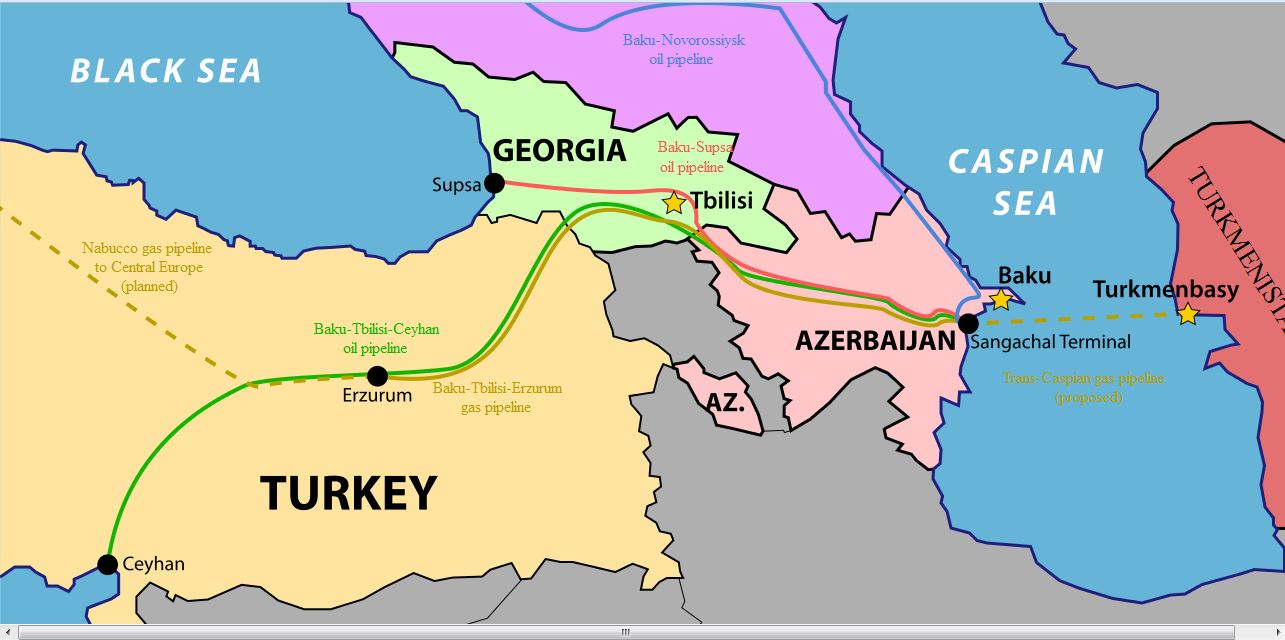
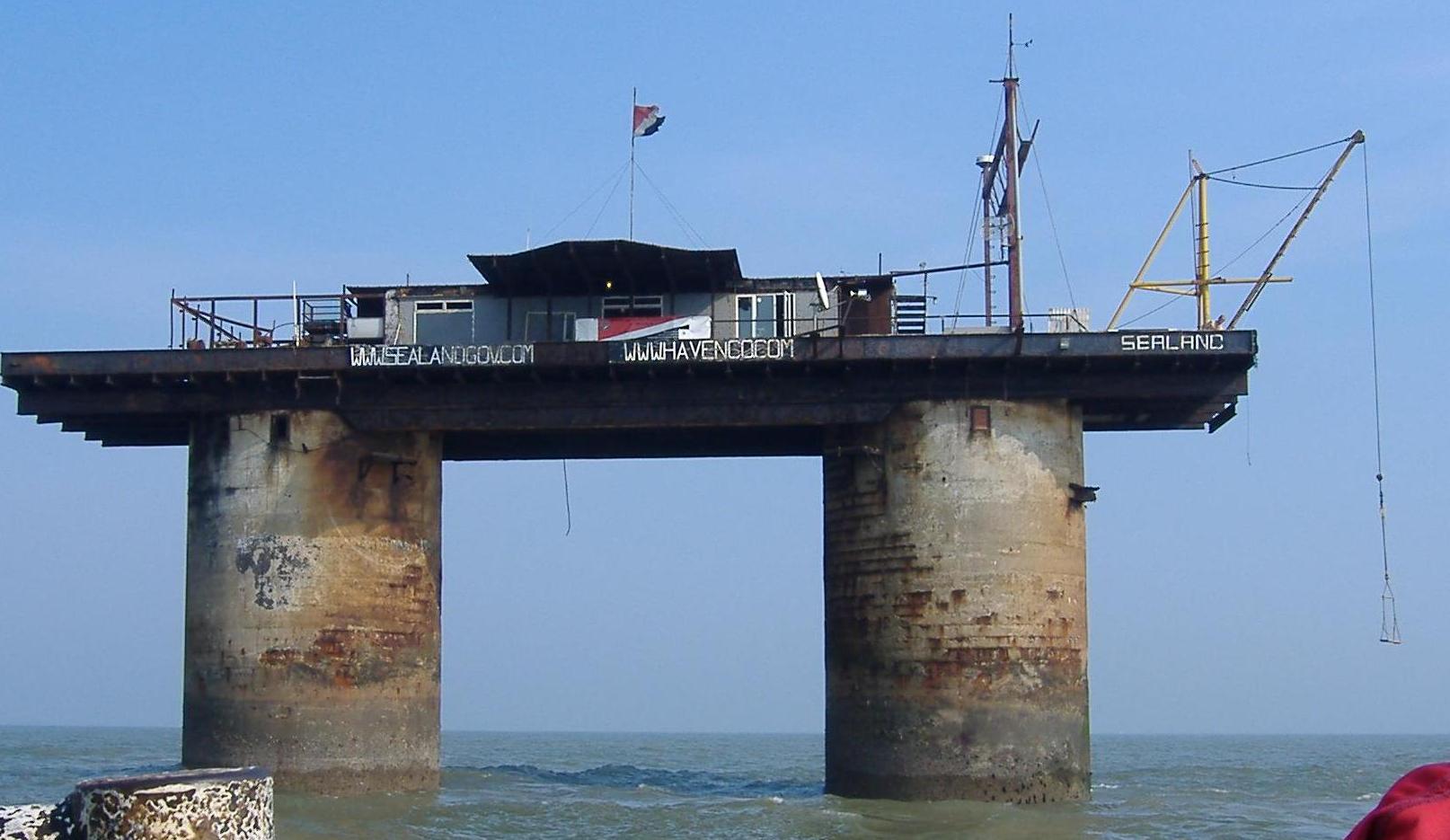
The article goes onto mention that the environmental impact research report will soon be available … and I cannot shake the feeling that I’m re-reading Barry’s new book only this time it’s set in the US. Fittingly, I guess, if you look at the picture in this post, you’ll see the upper left says “POLITICS” … but I’m thinking Andrew would prefer “MATERIAL POLITICS.”

Idyllic bomb site

Capture

Often referred to as the world’s most idyllic bomb site, the Marieta Islands were used as bomb practice by the Mexican government in the early 1900s. But after an uproar from the community, the government cease their bombing and declared the island a natural park. Over the years, tides have brought sand and water in to fill these holes, creating breathtaking beaches hidden from the outside world.” (from here)

Andrew Barry and the Function of Transparency

Capture

A lesson in the function of transparency: In Andrew Barry’s masterful new book Material Politics: Disputes Along the Pipeline he goes to great lengths to consider how “transparency” is employed, in this case, the voluntary pursuit of transparency as a means to rationally improve the experience of oil companies as they pursue transnational oil pipelines (for Barry, it is the BTC).

The basic rationale is simple. Instead of dealing with complaints, usually about environmental concerns (i.e., endangered species, etc.) or issue of public interest (i.e., land rights, etc.), the firm could offset those concerns, thus, front-loading as a means of obviating them completely from the process if only they could be transparent enough and maximize front-end accountability. As he writes, his expectation, which was consistent with the expectations of oil company elites at BP, was that:

transparency might … foster informed and rational debate while limiting the scope and intensity of controversy (182)

The manifest function of transparency appears to be an outward attempt to improve the public appearance of accountability and to intentionally limit or reduce the controversy downstream. This seems fully logical: transparency is a means to reduce controversy; to rationalize a process to the point that it appears that everyone is consenting after the fact. Such a logic is, for nearly anybody under the thumb of transparency, assessment, and accountability measures and measurements, something to concern yourself with; that transparency of assessment suffocates the hard discussions rather than engaging or enlivening them.

However, transparency has a latent function too; a function that is cause for hope. Barry warns us:

while limiting the scope and intensity of controversy [is anticipated], this does not occur as anticipated. For as the case of BTC demonstrates, the production of information — in the form of the evolving archive [the host for all matters transparent at BP regard the BTC] — had the effect of multiplying the surfaces on which disagreements can incubate and flourish (182).

Now, there are host of other arguments of vast utility in this wonderful book, but this one sticks out because of recent discussions about assessment, accountability, and transparency in higher education. What Barry makes nakedly plain is that transparency is really a process of deciding what to make present (i.e.,public and transparent) and what to make absent (i.e., not public or transparent, but not identified as meaningful un-present). Thus, transparency is not a thing; it is a (strategic) process of showing and telling as well as hiding and obscuring. However, the hope that shines through — and I am hopeful about this — is that the real solution is right there, in front of us, if know how to look for it. The key is to see assessment and transparency as processes and engage them so that you see them as a whole because only when taken-together will the absences be apparent, and it is with these absences that we might multiple the much needed discussion and discourse surrounding the transparency, accountability, and assessment that so often impose themselves on our contemporary work lives.

Endre Dányi and EASST

matters

Our long-time friend on the blog, Endre Dányi, was featured on the EASST website for his collaborative work on “Mattering Press: New forms of care for STS books.” A terrific piece and happy to hear that Endre is keeping busy and out of trouble.

Long time bloggers, you may recall that Endre was a guest blogger for us doing a great, great series on Parliaments (6 parts in all, count them, one, two, three, four, five, and six!). Looking back, the six posts make a nice collection.

Also, in case you don’t already know it: mattering press.

Foucault’s Boomerang: the New Military Urbanism (2013)

Foucault’s Boomerang: the New Military Urbanism (2013) — interesting stuff

Clare O'Farrell's avatarFoucault News

Stephen Graham, Foucault’s Boomerang: the New Military Urbanism
OpenDemocracy, 14 February 2013.

According to Stephen Graham, a new set of ‘Foucauldian boomerang effects’ are shaping how states apply ‘tactics of control’ over everyday urban life. Today, he traces the emergence of what he calls a new military urbanism, which applies to cities both in the Global North and South.

On 4 February 1976, Michel Foucault, the eminent French social theorist, stepped gingerly down to the podium in a packed lecture at the Collège de France in the Latin Quarter on Paris’s South Bank. Delivering the fifth in a series of 11 lectures under the title ‘Il faut défendre la société’ (‘Society must be defended’), for once Foucault focused his attention on the relationships between western societies and those elsewhere in the world. Moving beyond his legendary re-theorisations of how knowledge, power, technology and geographical space were combined to underpin…

View original post 184 more words

Actually doing something with sociology

Capture

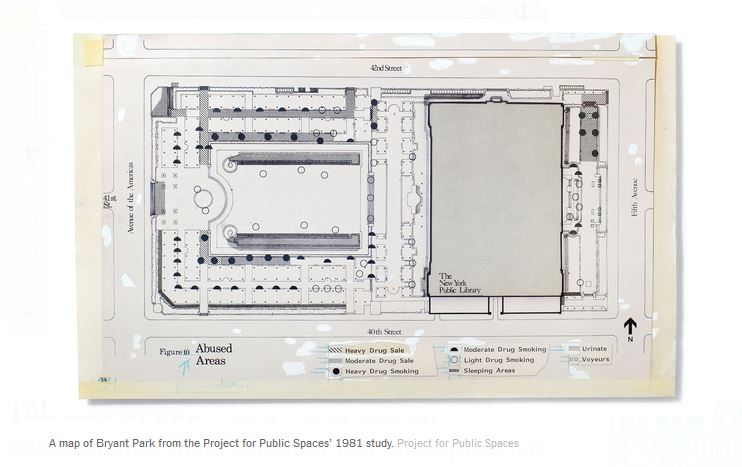
Making New York a better place through sociology? Apparently, it can be done. In 1975, Fred Kent (a former student of the wonderful W. Whyte) created Project for Public Spaces. His job? Take time-lapse films of public urban spaces with an eye to improve them. Better than any theory would be massive amounts of data. After all, rather than over-generalize Putnam’s “bowling alone” or agree too hastily with Turkle’s “alone together” thesis, he might be able to just study a spot and improve it with data and experimentation.

Kent challenges Turkle, in particular, stating that her sometimes casual observations about connection are simply no replacement for time-stamped, time-lapse data on human interaction. What’s missing, he says, is historical perspective. To avoid nostalgia for the past and the inevitable retrospective bias and attribution errors as we “remember” the past, we just need data and rigor.

Kent found some of Whyte’s old footage with an eye to recreate the research to achieve a time-place-specific reproduction for sake of comparison. Here is what he found:

… mobile-phone use, which Hampton defined to include texting and using apps, was much lower than he expected. On the steps of the Met, only 3 percent of adults captured in all the samples were on their phones.

People may decry human disconnect, but, according to Kent, 3% does not make sense as a rough count for the social armageddon that we are supposedly heading toward thanks to too much texting. Instead, he research reveals that people are more public, that is, they hang-out in public more than they did during the previously captured time period that Whyte recorded. Kent also noticed one big change: more women, many more of them. As he (nicely) puts it:

Across the board, Hampton found that the story of public spaces in the last 30 years has not been aloneness, or digital distraction, but gender equity. “I mean, who would’ve thought that, in America, 30 years ago, women were not in public the same way they are now?” Hampton said. “We don’t think about that.”

See NYT story about all this here.

“Abandoned Cruise Ship Full of Starving Rats Headed For Land”

Image

The Lyubov Orlova, a Soviet cruise ship, is packed-full of starving rats, who appear to be sailing for shore.

A ghost ship filled with cannibal rats is floating somewhere off the coast of Scotland, ready to crash ashore and unleash its disease-ridden cargo of starving rodents. And it’s all because Canadian authorities let the Soviet-era nightmare liner loose in the North Atlantic, satisfied that it was no longer a threat to Canada.

The “hundreds” of rats aboard the abandoned cruise ship have surely begun eating each other by now, officials say. It has been nearly a year since the vessel was intentionally lost at sea by Canadian authorities who were happy to let the “biohazard” become another country’s problem.

This gruesome gift from Canada is now expected to crash ashore in Ireland or the United Kingdom, dumping the plague ship’s living cargo of cannibal rats onto the land.

More on this story here and here and here.

Holy Crap: Infrastructure Jokes?

Capture

Apparently, there are infrastructure jokes. We have written about fun in infrastructure studies, humorous infrastructure hoaxes, Onion reports, and even have a tag for “infrastructure humor.” Still, the way that San Francisco used humor to draw attention to and improve its sewer infrastructure is pretty remarkable. Here is the back story:

On a Monday evening back last May, at the intersection of 2nd Avenue and Lake Street in San Francisco’s Richmond district, the earth opened up. A giant sinkhole–about 20 feet across and nearly 10 feet deep–suddenly gaped in the middle of the road. But the culprit wasn’t an earthquake or a creature from the deep. It was just an ancient sewer line, finally giving way after more than a century of decay.

A few months later, some odd advertisements began popping up. A set of unusual slogans suddenly plastered the backs of buses, Facebook and Twitter timelines, and in newspapers across the city, making residents double-take on their morning commutes. The ads read things like No One Deals With More Crap Than I Do and Your #2 Is My #1

This is a great idea; simply wonderful. It underscores the significance of the problem and does it with a lighthearted approach. A truly fresh idea to a serious problem. According to the FactCompany write-up,

The real punch-line, however, was that these ads came not from a newly minted, investor-backed fertilizer startup, but from the San Francisco Public Utilities Commission (SFPUC), a government agency with a tight budget and an unattractive but vital job to do.

There are more infrastructure jokes, although none so useful as San Fran’s, like this predictable one about government spending, this one that is a bit sexist about a bridge to Hawaii, or this one about IT servers. However, when you search for “infrastructure joke” you will also find these blogs indicating that crumbling and failing infrastructure is, in fact, no joke, a cruel joke, or … <choke> “snow joke” in times of in-climate weather.

three visiting fellowships on innovation at the Technische Universitat in Berlin – due Feb. 15, 2014

Capture

three visiting fellowships on innovation at the Technische Universitat in Berlin – due Feb. 15, 2014

katherinechen's avatarorgtheory.net

One of our orgtheory readers, Jan-Peter Ferdinand, forwarded a flier about a fellowship opportunity at the Technische Universität in Berlin, Germany.   This sounds like a great opportunity for grad students and prospective post-docs who are studying innovation.

Here’s an overview:

The DFG graduate school “Innovation society today” at the Technische Universität Berlin, Germany, is pleased to advertise 3 visiting fellowships. The fellowships are available for a period of three months, either from April to June 2014 or October to December 2014.
The graduate school addresses the following key questions: How is novelty created reflexively; in which areas do we find reflexive innovation; and which actors are involved? Practices, orientations, and processes of innovations are studied in and between various fields, such as (a) science and technology, (b) the industrial and service sectors, (c) arts and culture, and (d) political governance, social planning of urban and regional spaces. More information…

View original post 104 more words

Not Durk/Tarde, but Saint-Simon/Comte!

Capture

It is practically lore now that Latour is right that if only sociology had listened to Gabe Tarde instead of old Émile Durkheim, we could have obviated a seriously bad detour in the history of sociological analysis. Admittedly, that’s a super-glossy gloss, but that is basically what Latour argued in Reassembling the Social.

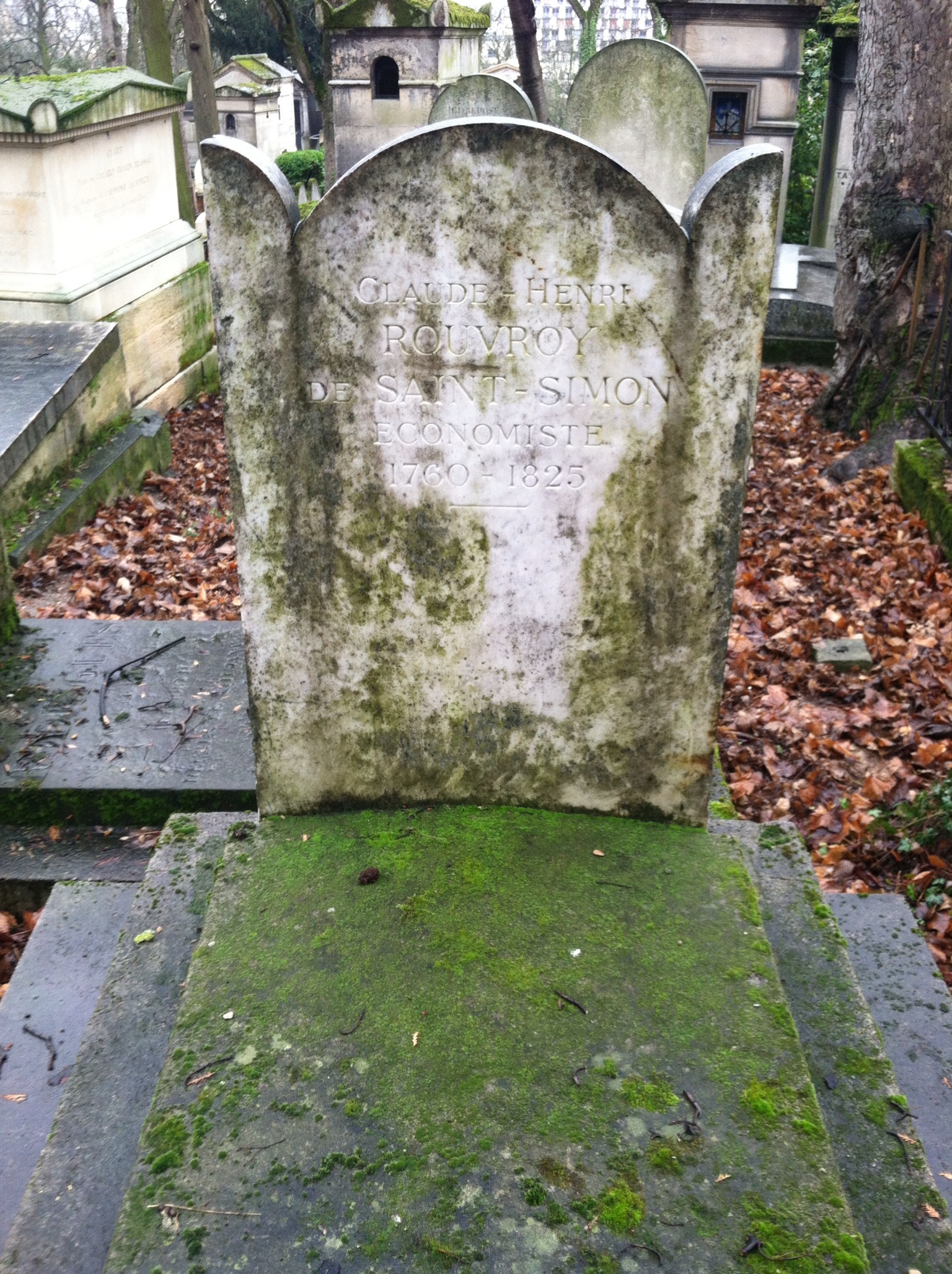
Now that I’m teaching social theory again, I am not so sure Latour was right, or, put another way, I think we made another even bigger mistake in sociology, but it was before the likes of Durkheim and Tarde ever went at it — before either were born. The break to be worried about, given our recent discussions about the austerity-infrastructure relationship, is one the divided Saint-Simon and Auguste Comte. Without going into the full details, Saint-Simon was a social thinker that kept infrastructure closely in mind; in fact, to him, a “socialist” (note: not socialist, as in the modern political moniker, but socialist in the form of a socially organized rather than religiously organized society) was somebody that supported pro-social endeavors, for example, projects that result in something meaningfully useful to “all” of us (hence, the social part of socialist). For example, his early plans were to develop canals indicating that nothing was more social than infrastructural developments (he even anticipated and offered a design for what would eventually be called the Seuz Canal). His best student, however, Auguste Comte, did not have such a practical mind. Instead, Comte gave us terms like “sociology” and “society” and devoted himself to arm-chair theorizing. This break, between “the social” connoting shared infrastructure and “the social” being more of the world of ideas if only they could be properly rendered from the comfort of an office chair, is the break we should be worried about.

The austerity-infrastructure relationship

Capture

Infrastructure research might get a “shot in the arm” over the next decade, but perhaps only because of the deleterious effects of political/economic austerity measures. Perhaps we need to start developing more concepts around the topics of decay and decay-remediation over the next few years.

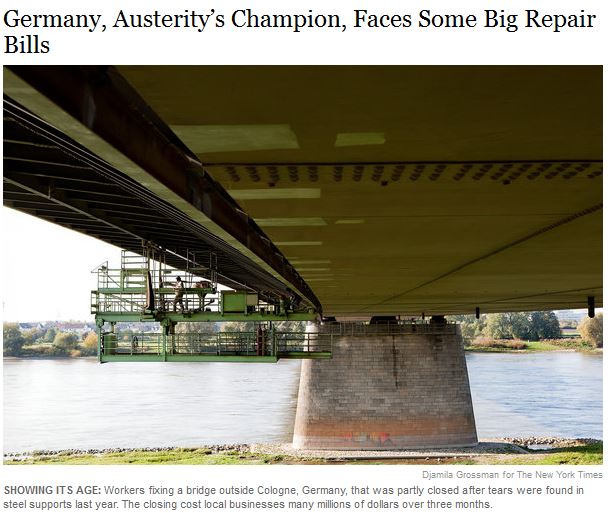
Suzanne Daley and Alison Small report that austerity in Germany has weakened its infrastructure, one of its most important public investments:

Germany was once known for its superfast autobahns, efficient industry and ability to rally public resources for big projects, like integration with the former East Germany. But more recently, it has been forced to confront a somewhat uncharacteristic problem: Its infrastructure — roads, bridges, train tracks, waterways and the like — is aging in a way that experts say could undermine its economic growth for years to come.

In the years to come, as austerity measures reach a fever pitch (in both popularity and critique), we should expect to hear more about the deleterious effects of austerity on infrastructure. Those of you in the “know” already have seen the wave of such discussion. For a merely a smattering of such discussion, consider American Dave Johnson’s blog, Colin Turner’s work on seeing austerity as a “pro-growth” model of governing infrastructure investments, or Mark Gongloff’s Huffington Post piece linking a bridge collapse with austerity measures, though there is much, much, much, more to say.

This should be a recurrent theme in scholarship in STS, although the topic seems only modestly addressed in our professional literature (with a few notable exceptions).

4S and EASST invitation, 2014

Screenshot 2014-01-10 12.07.42

Open letter to readers:

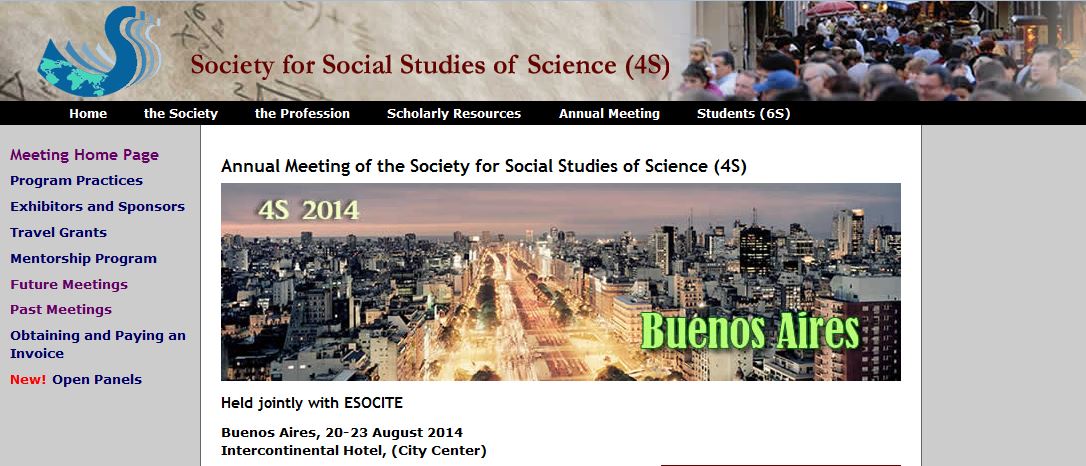
This is Nicholas Rowland and Jan-Hendrik Passoth. This year we’re chairing sessions at the annual meeting of the Society for the Social Studies of Science (4S) (20-23 August 2014, Buenos Aires, Argentina) as well as the annual of the European Association for the Study of Science and Technology (EASST) (17-19 September 2014,Toruń, Poland). Consistent with years past, we have proposed a session with multiple panels, all organized around the broad and basic topic of STS and “the state.”

We invite you to submit your work to the sessions. Over the past half-decade or so, we have done our best to host papers on a variety of topics related to the state in some way (state and state infrastructure projects, policies, and practices, and anything related to state theory itself).

Also, consistent with the last few years, 4S and EASST leadership have required us to be a little more formal when it comes to submitting papers. So, if you do decide to submit your work (and we hope you do), please submit the paper abstracts individually through the formal 4S and EASST on-line paper submission process.

For 4S, the deadline for submissions is March 17th. Here is the website for the conference. You can submit here; they want 250 words and a title. We are track 74.

For EASST, the deadline for submission is March 28th. Here is the website for the conference. The submission site is not yet up (the deadline for session proposals was only 08 Jan 2014; they will likely want 250 words too and a title. We will update this as soon as the system goes live.

We look forward to expanding and extending in new ways the discussions we started in Cleveland in 2011, Copenhagen in 2012, and San Diego in 2013.

our very best,

Nicholas Rowland

Jan Passoth

p.s., our track to 4S is here and our track sent to EASST is so similar we don’t need to share it again.

Foucault’s Lectures on the Punitive Society IV.i

Next installment of Foucault …

Barry Stocker's avatarStockerblog

Lecture of twenty-fourth January, 1973

As my notes and comments on this expanded beyond the length of what I posted for previous lectures, I posting on this lecture in two parts.

Foucault sets up this lecture in such as way as to emphasise the political context of debates around criminality. Though some of this can be found in his book of 1975 Discipline and Punish, much of it is more taken up in the lectures of 1975 to 1976, Society Must be Defended, and the lectures of 1976 to 1977, Security, Territory, Population. Here he suggests that look at attitudes to towards criminality and the penal code in the context of the upheavals and debates regarding sovereignty, institutions, and the use of violence to change or preserve these things, which make up the French Revolution.

In the debates of 1791, Maximilien Robespierre opposed the idea that the…

View original post 639 more words

A new natural history of destruction?

Derek Gregory's avatargeographical imaginations

Security by remote control conference

My work on drones has been invigorated by reading an outstandingly creative essay by Lucy Suchman on ‘Situational Awareness: deadly bioconvergence at the boundaries of bodies and machines’, forthcoming at the ever-interesting Mediatropes.  It’s sparked both an e-mail conversation and an invitation to speak at a symposium on Security by remote control: automation and autonomy in robot weapon systems at Lancaster University, 22-23 May.  Here is the call for papers:

Remotely operated and robotic systems are central to contemporary military operations. Robotic weapons can select targets and deliver lethal force with varying degrees of human control, and technologies for fully autonomous weapon systems are currently in development. Alongside military reconnaissance and the prospective configuration of ‘killer- robots,’ drone technologies are being deployed for ostensibly peaceful purposes, most notably surveillance of public space, private property and national borders. More generally, the frame offered by contemporary security discourses has redrawn…

View original post 726 more words

Integrate the social sciences and humanities?

Picture1

One of the Horizon 2020 grand challenges for research and innovation is precisely that: Integrate the social science and humanities.

The value and benefits of integrating Social Sciences and Humanities
European Social Sciences and Humanities are world class, especially considering their diversity. They are indispensible in generating knowledge about the dynamic changes in human values, identities and citizenship that transform our societies. They are engaged in research, design and transfer of practical solutions for a better and sustainable functioning of democracy. Their integration into Horizon 2020 offers a unique opportunity to broaden our understanding of innovation, realigning science with ongoing changes in the ways in which society operates.


1. Innovation is a matter of change in organisations and institutions as well as technologies. It is driven not only by technological advances, but also by societal expectations, values and demands. Making use of the wide range of knowledge, capabilities, skills and experiences readily available in SSH will enable innovation to become embedded in society and is necessary to realise the policy aims predefined in the “Societal Challenges”

2. Fostering the reflective capacity of society is crucial for sustaining a vital democracy. This can be achieved through innovative participatory approaches, empowering European citizens in diverse arenas, be it through participation as consumers in the marketplace, as producers of culture, as agents in endangered environments, and/or as voters in European democracies.

3. Policy-making and research policy have much to gain from SSH knowledge and methodologies. The latter lead to new perspectives on identifying and tackling societal problems. SSH can be instrumental in bringing societal values and scientific evaluation into closer convergence.

4. Drawing on Europe’s most precious cultural assets, SSH play a vital role in redefining Europe in a globalising world and enhancing its attractiveness.

5. Pluralistic SSH thinking is a precious resource for all of Europe’s future research and innovation trajectories, if it can be genuinely integrated. H2020 offers this opportunity for the first time.


Conditions for the successful integration of Social Sciences and Humanities into Horizon 2020

7. Recognising knowledge diversity: Solving the most pressing societal challenges requires the appropriate inclusion of SSH. This can only succeed on a basis of mutual intellectual and professional respect and in genuine partnership. Efficient integration will require novel ways of defining research problems, aligned with an appropriate array of interdisciplinary methods and theoretical approaches. SSH approaches continue to foster practical applications that enhance the effectiveness of technical solutions.

8. Collaborating effectively: The working conditions of all research partners must be carefully considered from the beginning and appropriately aligned to set up efficient collaboration across different disciplines and research fields. This includes adequate organisational and infrastructural arrangements, as well as ties to other stakeholders in civil society and business. Budgetary provisions must be appropriate to achieve this goal.

9. Fostering interdisciplinary training and research: Integrating SSH with the natural and technical sciences must begin with fitting approaches in post-graduate education and training. Innovative curricula foster a deepened understanding of the value of different disciplinary approaches, and how they relate to real world problems.

10. Connecting social values and research evaluation: Policy-makers rightly insist that the impact of publicly funded research and its benefits for society and the economy should be assessed. Accurate research evaluation that values the breadth of disciplinary and interdisciplinary approaches is required to tackle the most pressing societal challenges.

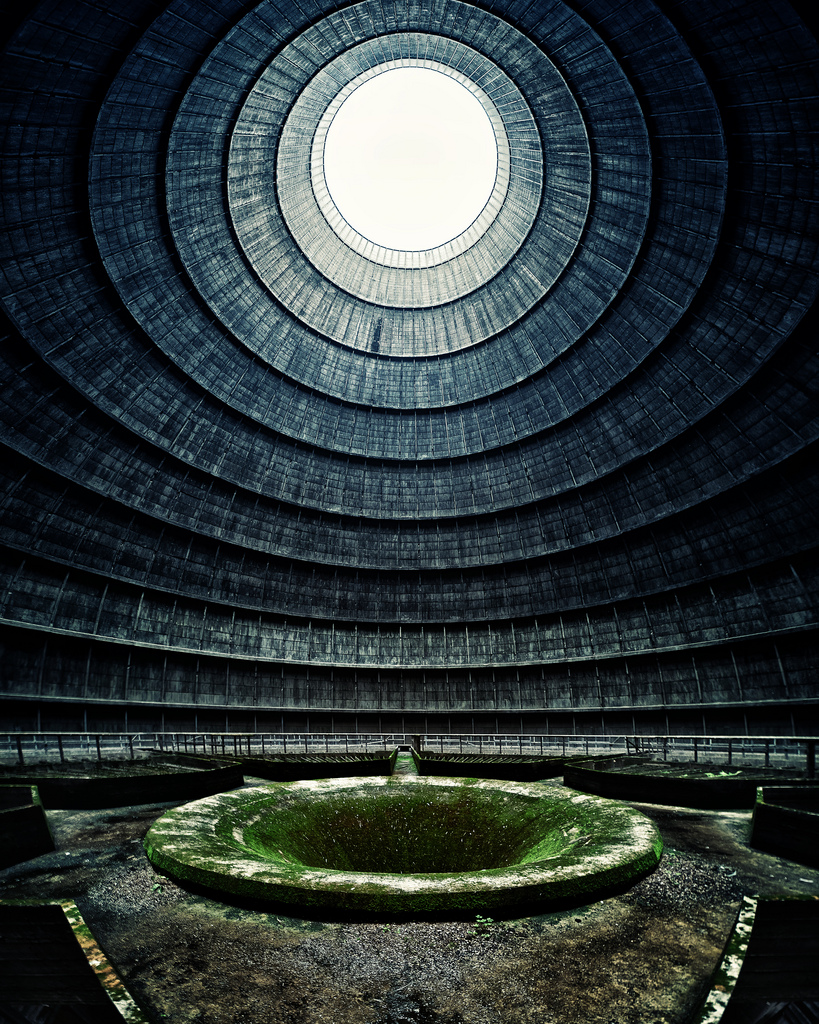
Abandoned Places

power

Abandoned places. Stunning visuals.

I am of the mind that abandoned places have something, analytically, to contribute to infrastructure studies. Once you click the link, you’ll see that the producers of this compilation (not sure how many pictures are truly “there’s”) suggest with the opening lines that this is something about what the entire world would like without people, which is sort of a pseudo-apocalyptic comment on global warming, the end of days, and curiosity about “a world without people” (anymore — or this documentary about life after people). The first lines read:

These real life ruins offer an eerie glimpse into a world without humans. Their dark walls inspire a sense of wonder like I’ve never felt before.

This should surprise no one. Perhaps the thought experiment is a good one for students, but generally thoughtful people don’t have to let their minds wander/wonder too far to know what a world without people would look like as our infrastructures remain slowly giving way to the elements.

What else might infrastructural relics like these tell us? Surely, it is fair to say that they would teach us something new every time we returned to them. However, one of the points that these might tell us, which archeologists and anthropologists have claimed for more than a century (and quite longer, I would guess), is that infrastructural remains indicate more than just “people” were here. Many of these remains (pictured above) are not ancient, either, so we don’t need to impose meanings on where these structures came from or how they were used in antiquity. These are contemporary ruins that sit precariously alongside “life as we know it” now. The point? Some, but not all, are state projects, meaning, of course, real people on the ground ultimately produced the structures that “remain,” but the attributional source of the work is a non-human entity called “the state” … these are pieces of evidence that the state exists somewhere, somehow. How to harness that insight for state theory would be a great bridge to infrastructure studies (and infrastructural relics might also be a nice play on literature for infrastructure studies that would sort of be like the relationship between STS and disaster studies, although, there is something really nice about a slow decay as compared to a momentary boom found in most disaster studies — exceptions, of course, exist).

Andrzej Nowak joining as Guest Blogger

image001

Our colleague and friend Andrzej W. Nowak from Adam Mickiewicz University (Uniwersytet im. Adama Mickiewicza w Poznaniu) in Poznań, Poland, is joining the blog as a Guest Blogger.

Please welcome him.

I’ll introduce him through a bit of information that he sent me recently. He shared with me this 3-min film, which briefly shows the police’s violence at the Economic University in Poznan, PL. The police attacked a small group of people peacefully protesting against a pseudo-‘scientific’ lecture (“gender as a destruction of the human and the family”) delivered by a priest (& lecturer from theology dept at Adam Mickiewicz University).

The event took place on 5th Dec. Unfortunately, Andrzej couldn’t find any news in English.

Andrzej is falsely accused in Polish right wing blogs as well as a few newspaper as a hooligan; someone who was main provocateur of this event. Just the right sort of company for us on the blog!

WELCOME ANDRZEJ!

*And the photo above was taken at the event by one of Andrzej’s friends.

P.s., when I first asked Andrzej to join the blog he wrote back: “I don’t have time to make science when I really did STS and State exercise (batons, shield, electroshocks)” (!)

Jeremy Crampton on my ‘the political is always technical’ comment

Is “the political always technical” or is “the technical always political”? An interesting interpretation of discussions we’ve had here: https://installingorder.org/2013/12/18/infrastructure-is-politics-by-other-means/

stuartelden's avatarProgressive Geographies

Jeremy Crampton has responded in a very interesting way to my comment that ‘the political is always technical’. I made that comment in my remarks to the ArcticNet conference last week – a summary and the audio recording are here. Here’s the key paragraph he is responding to:

One of the previous presenters had made the claim that there was nothing political about some of the techniques. While I made the comment that we could say that there is always a politics to the technical, I was most interested in turning his claim around, rather than disagreeing with it: suggesting that the political is always technical. I’ve made this claim before in relation to territory as a political technology, as dependent on all sorts of techniques for measuring land and controlling terrain.

Jeremy’s post is interesting on several levels. The first is that he sees this response as a…

View original post 413 more words

Call for Papers – Spontaneous Generations

32 - Pasteur

Call for Papers – *Spontaneous Generations: A Journal for the History and Philosophy of Science*
http://spontaneousgenerations.library.utoronto.ca

Submissions for the eighth issue should be sent no later than *March 14, 2014. *

**Science and Social Inequality:*Science and technology reflect and perpetuate social inequalities, but also serve as crucial sites of contestation, intervention, and hope. Over the past several decades scholars, particularly those engaged with feminist and critical theories, have questioned the ways in which inequalities among the producers of knowledge affect the kinds of knowledge produced. At the same time, investigations into the social engagement with science have pointed to the ways in which science can, and has, benefitted from the inclusion of marginalized groups. This focused discussion aims to encourage scholars in the history and philosophy of science or science and technology studies to consider inequalities within scientific practice, professions, and knowledge production. We will feature work that explores the causes and
consequences of—or resistances to—these inequalities and how they shape the experiences and knowledge claims of historically marginalized individuals.
We seek scholarship that pushes STS and HPS to re-engage with questions surrounding science as a professional “field” and, in particular, as one that has been—and remains—stratified in practice by inequalities of race, gender, and social class.

We welcome research that interrogates the various and intersecting forms of inequality, and resistance to inequalities, that shape power structures in science and technology at any time or place. We seek research comparing various areas of scientific practice. Submissions can focus on a variety of institutional and national contexts, can use both historical and contemporary cases, and can draw on a variety of critical and methodological perspectives. The questions below may help guide potential submissions:

1. What perspectives on inequalities within scientific practice
can we draw from critical theories, such as feminist and critical race
theories?

2. How has diversity and inequality affected inter/multi/trans-disciplinary scientific collaboration and “Team Science”
(inclusive of academic and non-academic science teams)?

3. What has been the role of gender, race/ethnicity, and
socioeconomic status in scientific education and training across the
educational spectrum?

4. What is the normative and instrumental value of diversity in
science, given science’s orientation as “value-free,” objective, and
universal? Why is scientific diversity a good thing? Have diverse
scientific teams produced better science?

5. What has been the role of the “invisible worker” in science
and technology at different times and places? What light can historical and transnational studies shed on the changing position of the “invisible worker”?

6. How have inequalities of race/ethnicity, gender/sexuality,
class, and ability permeated the ranks of knowledge production and affected the kinds of knowledges that are produced?

7. How have science and technology been (re)configured to alter
the course of social inequalities?

The eighth issue of Spontaneous Generations will appear in September 2014.

Submissions for the eighth issue should be sent no later than *March 14, 2014. * For more details, please visit the journal homepage at
http://spontaneousgenerations.library.utoronto.ca

*Spontaneous Generations* is an open, online, peer-reviewed academic journal published by graduate students at the Institute for the History and Philosophy of Science and Technology, University of Toronto. It has published seven issues and is a well-respected journal in the history and philosophy of science and science and technology studies. We invite interested scholars to submit papers for our eighth issue.

We welcome submissions from scholars in all disciplines, including but not limited to HPS, STS, History, Philosophy, Women’s Studies, Sociology, Anthropology, and Religious Studies. Papers examining any time period are welcome.

The journal consists of four sections:

– A focused discussion section consisting of short peer-reviewed and
invited articles devoted to a particular theme. The theme for our eighth issue is “Science and Social Inequality”* (see a brief description
below).
Recommended length for submissions: 1000-3000 words.
– A peer-reviewed section of research papers on various topics in the field of HPS. Recommended length for submissions: 5000-8000 words.
– A book review section for books published in the last 5 years.
Recommended length for submissions: up to 1000 words.
– An opinions section that may include a commentary on or a response to current concerns, trends, and issues in HPS. Recommended length for submissions: up to 500 words.

Teaching STS: Teaching that time does not exist

istockphoto_3153865-stop-watch-scaled500

Times does not exist. At least, we think time does not exist.

According to Ferenc Krausz at the Max Planck Institute of Quantum Optics in Garching, Germany, time is unlikely real.

Efforts to understand time below the Planck scale have led to an exceedingly strange juncture in physics. The problem, in brief, is that time may not exist at the most fundamental level of physical reality.
Check out the original Discovery reading here. It is an easy read and would do well if presented students in-class to read on-the-spot and then immediately discuss it. It has worked well for me to get at issues of “reality” in a surprisingly concrete way. Admittedly, this might seem like a no-brainer for long-time friends of social constructivism. Still, time is generally a great concept for an STS class, especially issues of “standards” and so on. We’ve discussed it once before on the blog here.

One of the comments is particularly nice for students to chew on:

This article was written in 2007, and I am responding to it and commenting on it in 2013. Why? Because “time” doesnt exist.

Also, of interest: notice that you have to raise time as real to tear it down as not real, signifying the significance of real-time for understanding the un-realness of time.

Infrastructure is politics by other means

Capture

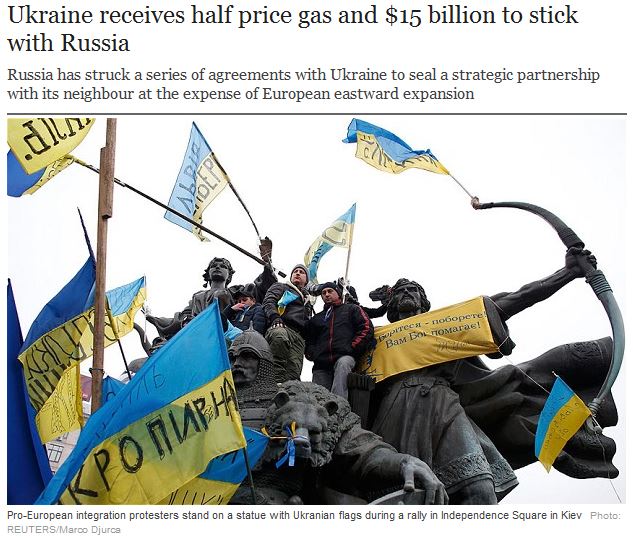
Spent the morning reading Petrostate by Marshall Goldman, and look what I find in my news feed: “Ukraine receives half price gas and $15 billion to stick with Russia.” Reminds us all that infrastructure (and control over infrastructure) is politics by other means. As Goldman mentions in the book (I’m paraphrasing): Who wants/needs nuclear weapons, when there is no mutually-assured destruction to curb the use of petroleum and natural gas!?

Stef wrote something about this recently too, but not about pipelines. Along these lines, I’m in the middle of reviewing Andrew Barry’s new book (about pipeline infrastructure and politics from a geography angle) for Science Technology ans Society (the EASST journal).

American cover-up of Icelandic revolution?

Capture

According to Rebecca Savastio of Liberty Voice, there is good reason to believe that American news sources are purposefully not covering the political transformations of Iceland over the last five or so years:

Socialist and Marxist blogs here in the U.S. say that there’s been a massive U.S. news conspiracy and cover up about the revolution in Iceland because the U.S. media is controlled by corporations, including banks, and the “powers that be” don’t want U.S. citizens getting any ideas to stage a revolution of their own. Some conservative Icelandic bloggers claim that while there was, indeed, a revolution, it did not lead to a successful or widely accepted new constitution. They say the situation in Iceland is worse than ever, and that international news reports of an effective democratic uprising leading to a better government are simply myths. Social media commenters are scratching their heads over why they were robbed of the story of Iceland’s pots and pans revolution.

There is also a video (in the pic above) documenting this “pots and pans” revolution that is available here, which is quite good.

Andrzej W. Nowak on “Ontological Imagination”

zylo_9272314

Our colleague and friend Andrzej W. Nowak (see him on academia.edu) from Adam Mickiewicz University (Uniwersytet im. Adama Mickiewicza w Poznaniu) in Poznań, Poland, just put a new paper on-line and it deserves some attention.

His new paper “Ontological imagination: Transcending methodological solipsism and the promise of interdisciplinary studies” is available free here. This let’s the cat out of the bag, so to say, but here goes:

To conclude, without phronetic politics, ontological analyses are only an esoteric game, whereas politics and critical reflection are blind without a posthumanist, historical ontology.

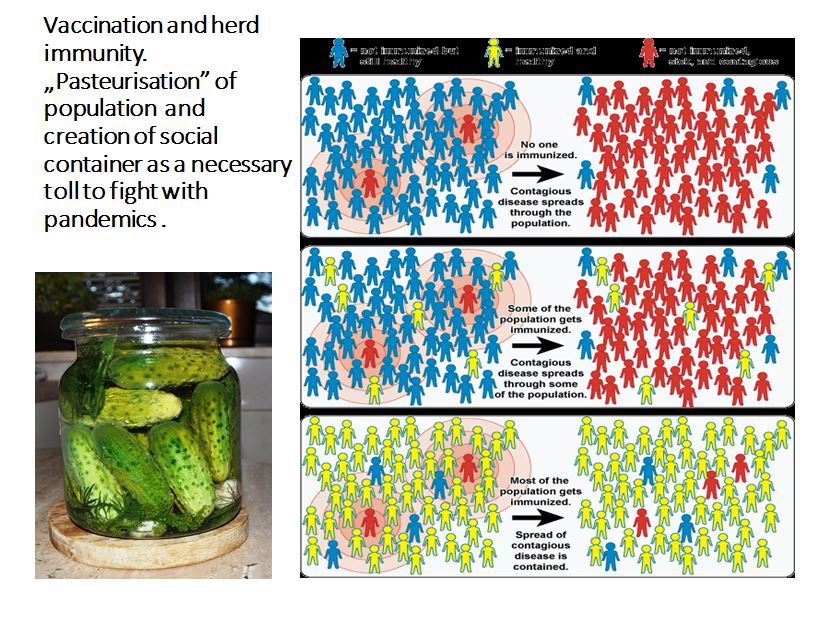
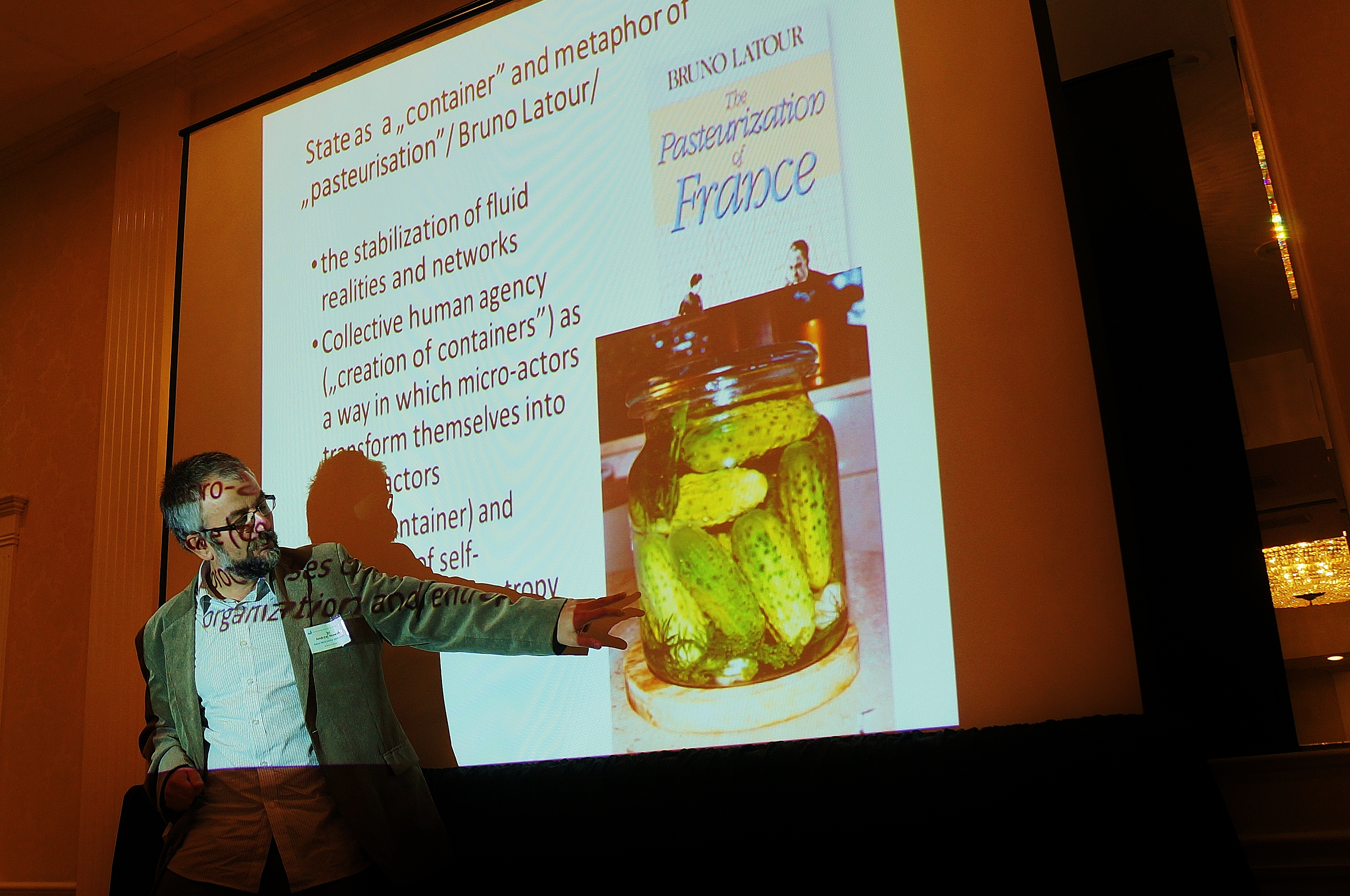
Nice, no? If you don’t know Nowak or his work, we have mentioned him on the blog before with regard to our annual 4S meetings. This year, his talk at 4S with the long title “The fragile life of the state and its ambivalence: from the vaccination commando to the anti-vaccination movement. Merging Actor-Network Theory with World-system Analysis” was outstanding. At one point, the crowd was audibly gasping when Nowak discussed the state as akin to a jar of pickles — see the original slide below and then a follow-up slide where he makes the claim (in person) even more forcibly:

Capture

DSC07030 - Copy

At any rate, I will post about presentation as part of a series starting in the new year. So, his new paper. Here is his provocative abstract:

This text is a presentation of the notion of ontological imagination. It constitutes an attempt to merge two traditions: critical sociology and science and technology studies – STS (together with the Actor-Network Theory – ANT). By contrasting these two intellectual traditions, I attempt to bring together: a humanist ethical-political sensitivity and a posthumanist ontological insight. My starting point is the premise that contemporary world needs new social ontology and new critical theory based on it in order to overcome the unconsciously adapted, “slice-based” modernist vision of social ontology. I am convinced that we need new ontological frameworks of the social combined with a research disposition which I refer to as ontological imagination.

Andrzej wants nothing more than to slam together, with so much rhetorical force that they fuse, the likes of C. Wright Mills and Bruno ANT Latour. Do accomplish this, he follows the lead of Flyvberg, stating:

My starting assumption is that one of the problems plaguing the contemporary humanities and social sciences is their isolation from social problems (Flyvbjerg 2001: 166). … Today we know that these fictively-traced boundaries of modernity
cannot be upheld (cf. Beck 1992, Feenberg 2010: 181). The ozone hole, anti-vaccination movements, energy security, terrorism and religious revival do not fit simple modernist frames (cf. Latour 2011).

It initially reminded me of Latour’s Politics of Nature (which I reviewed), but as I read on, I am not so sure. In fact, I am now thinking that perhaps Nowak got it better than Latour did.  In the end, Nowak’s “ontological imagination” amounts to this:

The notion of ontological imagination is conceived as multi-faceted, and if one follows Mills and draws and analogy to sociological imagination, at least three main aspects thereof can be listed: methodological, sociological-historical, and moral-political. Let us characterise each of them. The methodological aspect of ontological imagination is, above all, the abandonment of the ideal of science as theory and letting go of the illusions related to humanistic fundamentalism (Abriszewski 2010: 143-157). Using ontological imagination requires noticing the complex network of actors that construct our collective, in accordance with the principle of symmetry, raised by Bruno Latour (Latour 2011). The second aspect consists in the response to the challenge posed by the so-called reflexive modernity and to the fears evoked by technoscience (Nowak 2012). It is the hope that disseminating such sensitivity and cognitive disposition will help to empower groups and individuals in the world of technoscience.

Check out the conclusion for the real push: to be ontologically imaginative will also require us to engage real social problems and perhaps engage in the social change we supposedly only study…

To be, for a moment, critical: The term “ontological imagination” (though sociological in form and function in Andrzej’s use) is not an original term; in fact, this idea has been used elsewhere, for example, in literature, on blogs, in books, and even lectures, often featuring pragmatist thinker William James who, it seems, is not featured in Nowak’s work.

A new Crystal Palace?

Charlotte Mathieson's avatarDr Charlotte Mathieson

It’s a couple of months now since the first press release announcing plans to rebuild the Crystal Palace. My initial response was amazement that it may be possible in coming years to see the rebuilding of one of the most important buildings of the nineteenth century; but as further details unfurl I, like many others, am increasingly ambivalent about the project, which would see a £500 million investment by a private Chinese corporation into the building and surrounding parkland. While the regeneration of the park seems long-overdue and supported by the local community, the corporation currently have an exclusivity agreement with the local council that prevents other proposals for the site’s development to be submitted until February 2015; during this time there is a call for the community to express their feedback on the scheme but it seems this has come rather late in discussions and from what I’ve read of…

View original post 1,250 more words

FBI vs. Orwell vs. Foucault

Jeremy's avatarOpen Geography

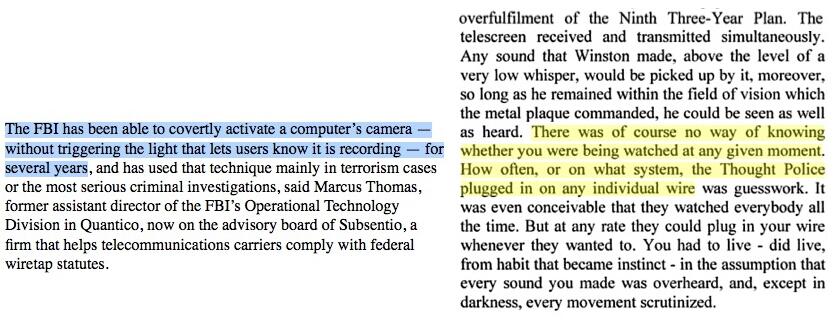
This image attracted a lot of attention around the web today:

The text on the left is from a story in the Washington Post which discusses the FBI’s ability to exploit laptop cameras without enabling the indicator light.  The text on the right is from Orwell’s novel Nineteen Eighty-Four discussing the dystopian state’s capability to view any given citizen unknowingly through their telescreen. (The comparison was tweeted out by @tinyrevolution.)

To which we can add:

Foucault DP

Michel Foucault, Discipline and Punish, page 201.

This was originally published (in French) in 1975, well after Orwell’s book. So Orwell was first with the idea? Not so fast! Foucault is discussing the ideas of the social reformer Jeremy Bentham, who proposed the idea of the “panopticon” (all-seeing) in the late 18th century. According to one history, there are at least 300 prisons worldwide built on panoptic principles. You can see a classic illustration

View original post 138 more words

Door to Hell, 42 Years Later

The_Door_to_Hell

Proverbial “Door to Hell”, Derweze, Turkmenistan: Check out a video here.

The Door to Hell is a natural gas field in Derweze (also spelled Darvaza, meaning “gate”), Ahal Province, Turkmenistan. The Door to Hell is noted for its natural gas fire which has been burning continuously since it was lit by Soviet petrochemical scientists in 1971, fed by the rich natural gas deposits in the area. The pungent smell of burning sulfur pervades the area for some distance (Wiki).

Not the first time we talked about disasters on the blog. For example, about how Google worked in Japan post-Fukushima disaster to use Google-cars to help find missing persons. About how the intersection of infrastructure studies and disaster studies will likely grow in future years. More recently, we featured “Philip Mirowski’s Never Let a Serious Crisis Go to Waste … an important and distinctive contribution to debates around the politics and economics of the economic crisis”.

A Review of Infrapolitics: The Social Life of Water in Mumbai

Infratheory today and now infrapolitics!

Max Liboiron's avatarDiscard Studies

Dissertation Reviews is a site that  features overviews of recently defended, unpublished doctoral dissertations in a wide variety of disciplines across the Humanities and Social Sciences. Their goal is to offer readers a glimpse of each discipline’s immediate present by focusing on the window of time between dissertation defense and first book publication. This review of Nikhil Anand’s dissertation, Infrapolitics: The Social Life of Water in Mumbai, written by Tarini Bedi, will be of interest to discard studies scholars because of the methodological approach and how it highlights the politics of infrastructure:

Nikhil Anand’s dissertation is a nuanced, theoretically ambitious, and timely contribution to political ecology, to the anthropology of the state, and to the emergent field of the anthropology of infrastructure. Anand’s methodological approach, where the city, the “urban,” is the site through which to study the state is provocative for scholars of urban studies. The work is…

View original post 284 more words

Book Review Symposium – Philip Mirowski’s ‘Never Let a Serious Crisis Go to Waste: How Neoliberalism Survived the Financial Meltdown’

Some interesting ideas for the intersection of infrastructure and disaster

Antipode Editorial Office's avatarAntipodeFoundation.org

Guest editor: Brett Christophers, Uppsala University

Philip Mirowski’s Never Let a Serious Crisis Go to Waste is an important and distinctive contribution to debates around the politics and economics of the economic crisis which began in 2007-8 and, as such, is well-deserving of the symposium convened here at Antipode.

Never Let...For one thing, the book is different. As Mirowski remarks in his response to our four reviews, the last five years have seen a veritable “torrent of crisis books”; so why single out this one for particular scrutiny? Because it does not profess, like so many other crisis books tend to do, to identify broad causes and consequences of the crisis. Instead, its specific agenda is to offer an “intellectual history of the crisis and its aftermath” (p.11). That is to say, while it tentatively “explores the economic crisis as a social disaster”, it explores the crisis much more…

View original post 973 more words

Acting in IR?

Capture

Recently, Jan and I completed a new paper about how the material infrastructure on states (and our actor-network state idea) might figure into contemporary theorizing about international relations. In particular, we are in the process of contributing to a book about the “human element” in IR, and the resulting paper now can be read, but it is only in draft form.

Check out the paper here or here; we do some of our earliest work on “state multiplicity,” play with decentering the human in IR, and we also dabble with non-scholarly state theorizing.

4S deadline was last Friday; we submitted

Capture

Here is our session proposals for 4S in Argentina next year; hopefully we see you there. I think leadership at 4S will select the sessions it wishes to host in about two or so weeks.

********************************************************************************************************

First name: Nicholas J.
Last name: Rowland
Co-authors: Jan-Hendrik Passoth
Session Title: STS and “the state”
Session Description:

Consistent with the general theme of the conference, “Science in context(s): Souths and Norths”, we encourage 4S and ESOCITE scholars researching the emerging intersection of STS and “the state” to submit their work. This jointly-held meeting affords us the unique opportunity to balance South/North perspectives on both “the state” and STS, which is a rare opportunity indeed, and will be the source of a rich discussion among participants.

We anticipate hosting a series of papers in a series of “Open Panels.” In particular, we are hoping to find papers that give rise to new dialogues and exchanges on the following four topics:

1. Empirical cases of “the state” as manifest in infrastructure or in everyday life: New and exciting work in infrastructural developments offer fresh perspectives and cases to reconsider dated theoretical approaches to understanding what the state is and what they state is becoming. Likewise, a new line of research in “the state in everyday life” offers a perspective no less fresh that gets at mundane experiences and routine activities that either bring us closer to the state or fend us off from it. How these differ in the North/South divide are of prime concern.

2. Empirical cases of “the state” as manifest in material or in environmental arrangements: State formation has been a perennial question in state theory. However, as scholarship develops, the old theories of the state, which emphasize war-making and international treaties, have given way to new research on the practical aspects of state formation, as in, how do you form a state. Chief concerns in this area are material activities associated with state formation and, crucially, environmental concerns related to forming states in the first place and sustaining them in the long run. Again, how these differ in the North/South divide are of prime concern.

3. Where is the state and where is not the state? State absense/state presence: This topic emerged organically from the last 4S meeting in San Diego, and while it is new to us and is far more experimental than the above themes, we consider it of vast potential. One way to re-think the state is to ask where it is and where it is not. Are there new boarders emerging between states? Are there areas inside of the traditional territorial zones that bound states where the state simply does not appear to be present? Is it possible that the state is present even in its absence, under certain conditions? We don’t know the answers to these questions; it is the most “open” of the open panels.

4. Theoretical approaches to the state and state theory: No doubt, state theory has odd and deep roots in the Northern tradition of scholarship. Ideas that need to be challenged. We anticipate this coming from two directions if we are sensitive to STS and the state. First, in the North, fresh perspectives on the state are emerging through the lens of STS. Second, in the South, fresh perspectives on the state already exist as alternatives to traditional Northern scholarship on the state (and, of course, STS shapes these discourses too).

Please consider sending your abstracts to our set of open panels. The multiple panel format ensures a sustained audience and prolongs the discussion of our work far beyond a single paper or a single panel.