Law Blog

Capture

Law at the end of the day is run by Law Professor Larry Backer (PSU, Dickinson School). Between some of the issues we deal with here and those found at a favorite site of mine (orgtheory.org), there is the potential for some synergy between organizations, law, and infrastructure.

Check it out: these days, Larry seems to be interested in the goverance without government debates that have been gonig on in IR, public administration, and international law. In particular, check out his most recent post: its about the re-stating (let’s say) of the oil infrastructure/industry in Argentina and putting it back into the hands of the state (where it previously was before mid-1990) even though a Spanish company now owns much of the industry privately. State or public intervention into market or private operations with heavy, highly-localized non-transportable/transferable infrastructure might be uniquely appreciated/analyzed from an infrastructure perspective too (although as a law professor, Larry prefer law as the inroads for analysis)…

Where’s the fun in infrastructure studies?

Capture

While this edited book came out in 2003, I only just learned about it today. The Infrastructure of Play is a book about building tourist locations in cities or “tourist friendly cities”. The editor is Judd, who also co-edited the The Tourist City in 1999.

Increasingly, city tourism plays an important role in urban economics and thus downtown areas and, in particular, waterfronts have been transformed from purely (if that was ever true) commerce/business oriented operations into pedestrian friendly spaces for “hanging out” and places to “take in”. The authors, and this is a strained metaphor, look at what it takes to turn a city into a tourist Mecca (of sorts). In the earlier book, an interesting, but not entirely explored idea was hidden in there; a kernel, really, and it goes like this: 

As cities become places to play, the authors show, tourism recasts their spatial form. In some cities, separate spaces devoted to tourism and leisure are carved out. Other cities more readily absorb tourists into daily urban life, though even these cities undergo transformation of their character.

You see the tension!? As the city recasts its form, planners must balance changing the city system enough to attract tourists but not so much that that which attracts tourists to the city (especially historical elements/places) is/are marred. Still, the newer book is all about North American cities, so this tension (given that US citites are just not that old) cannot be fully developed (in my opinion).

In a final comment, another issue that struck me while review these titles: they were about people having fun … and upon a little refelction, why is it that so little research on infrastructure is about fun?

Promising Post-4S Conference at LSE

Just got this from Peer Schouten, PhD Researcher, School of Global Studies, University of Gothenburg and it looks promising:

Call for papers

 Accounting for heterogeneities in the international: writing symmetry, engaging with criticality

A double panel and a seminar hosted by Theory Talks & Millennium during the 2012 Annual Millennium Conference


October 20-22 2012, at the London School of Economics

Conveners: Rocco Bellanova, Julien Jeandesboz, Peer Schouten

 Background

Technical devices such as algorithms, databases, and robots mediate the production of (in)security and the conduct of war; ‘non-places’ such as financial markets remap and reshape the exercise of state sovereignty; previously established distributions such as between ‘private’ and ‘public’ entities are increasingly entangled in hybrid assemblages. These and other heterogeneities of the international are part of a renewed focus on materialities and material practices in international relations (IR).

World politics is thus increasingly recognized as involving the participation of multiplicities of heterogeneous elements, many of which were until now smoothened out in mainstream IR accounts. When IR researchers shift their analytical lenses, they bring into focus agencies and practices that actively contribute to the assembling of the international—in doing so, they intervene in, and reformulate some of, IR’s most classical concerns. Point of departure for this workshop is that dealing with such seemingly new world politics, and accounting for these constitutive heterogeneities, however remains a difficult challenge.

 Aim of the event

The main goal of the event is to bring together researchers that, in different ways, depart from an understanding of IR premised on homogeneity and engage with entanglements and multiplicities that go beyond rational choice and inter-subjective social constructions. The ambition is to foster debates and exchanges on shared concerns with accounting for heterogeneities in the international. In particular, the aim of this event is to bring to the fore the potentialities and pitfalls of working with ‘thinking tools’ that hail from beyond the traditional disciplinary horizons of IR, such actor-network-theory (ANT), science, technology and society studies (STS), or performance theories.

 Structure of the event

This event consists of two conference panels and a seminar. The seminar, structured around two sessions and a keynote speech, will take place on Monday the 22nd, the day after the Millennium Conference.

 Conference panels

Each conference panel revolves around a specific theme: first, symmetries in the international; and second, the black-boxing of security. The first panel—symmetries—opens up analysis of entanglements of discourse and practice, social and material, in the constitution of the international; the second panel—black-boxing—addresses the politics of ‘securitization’ from a different angle, focusing on the processes of silencing, stabilizing, and separating out people, flows, and practices.

The participants are expected to contribute papers presenting their angle on, and use of, these concepts in relation to their own research. In order to foster a hybrid discussion, each panel will have two discussants, both an ‘outsider’ (from the fields of STS, ANT, or sociology) and a senior IR scholar discussing papers and presenting their understandings/applications of the notions at hand. The two conference panels will translate into two homonymous workshop sessions.

 Panel 1: Accounting for symmetries in the international

The first panel opens up analysis of assemblages or entanglements of for instance, discourse and practice, social and material, human and technical in the constitution of the international. It opens up space for contributions specifically trying to create balanced accounts of international phenomena that can most fruitfully be approached as heterogeneous or constituted across the ontological divides that traditionally structure analysis of international relations.

 Panel 2: Black-boxing international security

This second panel addresses the politics of ‘securitization’ from a different angle, focusing on the processes of silencing, stabilizing, and separating out people, flows, and practices. How do dominant security solutions and securitizations arise out of controversies and how are competing understandings, configurations and practices silenced and how are security practices themselves used to stabilize other assemblages?

 All participants need to submit a paper specifically focusing on one of the two panels. Co-authored contributions are particularly welcomed. Abstracts of around 300 words are due by May 1 and should be submitted both to millennium@lse.ac.uk and
to peer@theory-talks.org.

 Seminar

This second part of the event shifts the accent to ethical and methodological issues, that is, the question of how to account for heterogeneities. It will take the form of two roundtables connected to the homonymous panels in which participants (both previous paper-givers and discussants/chairs) will be asked to share and discuss their own hesitancies, their tactics and ploys when confronted with the challenge of writing accounts of heterogeneities in the international. The seminar additionally aims at addressing questions as: what are the limits of translating STS/ANT into new fields? Is critical engagement still possible when the starting point of the research is symmetry? How can we be reflexive (and do we need to be) with regard to the researcher’s own practices of translating, black-boxing and assembling?

Participation to the seminar is open to all researchers participating to the Millennium conference. While presentations will trigger the debate among participants, the chairs will ensure that stimulating questions (and answers) coming from the public will not be lost.

 Seminar: How-to account for heterogeneities in the international?

 09:00-10:30     Roundtable session 1. Accounting for symmetries in the international

Chairs: Rocco Bellanova & Nick Srnicek

 10:30-10:45     Coffee break

 10:45-12:15     Roundtable session 2. Black-boxing international security

Chairs: Julien Jeandesboz & Peer Schouten

 12:15-13:00     Keynote speech: John Law (tbc)

 13:00               Closing by Millennium/Theory Talks

"Material Powers" (?): ANT Blasphemy or Fresh Direction?

51vee9vkzl

In 2010, Tony Bennett and Patrick Joyce edited Material Powers through Routledge. The volume is mainly about bringing power back into cultural studies, especially cultural studies research that attends to issues of state and colonialism, but without losing out on the “material turn” in the anthropology of the state (on that, see a great 2006 reader, The Anthropology of the State). While the chapters are not all of equal quality, a few really stand out, provided you’re willing to swallow the cultural studies pill — there are not bolded concepts and data seems to come in many forms.

Personally, I’ve always been exceptionally tolerant (fond, even) of cultural studies because the entire enterprise is, when done well, like a theory/philosophy incubator, moreover, the writers while sometimes maddeningly opaque, often provide readers with sentizing imagry that is unforgettable (here, I’m thinking of A Thousand Plateaus). Material Powers, so far at least, has not uncovered any masterful metaphors yet, but the authors masterfully tackle a huge issue for researchers who appreciate “the material”, which is: what to do with such a dirty word as “power” without violating basic assumptions in actor-network and foucauldian models of society and governance?

Ungoverned Infrastructure; Unplanned Civil Engineering

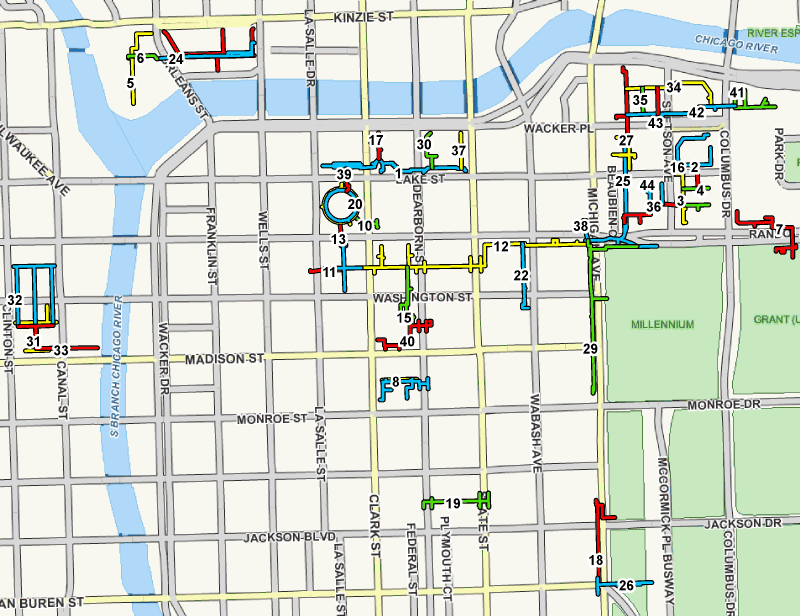
I’ve stumbled across a great case for infrastructure studies: Chicago’s Pedway.

Against the order of the grid city of Chicago, the disorderly pedway was a surprisingly organic and inconsistent “vision” of civil engineering with no grand oversight or centralized control mechanism to insure maintenance, cleanliness, and so on. It was fascinating, and because a number of major metropolitan areas have them, comparisons for sake of research would be plentiful. This is an untapped case with tons of potential.

Pedway-map-labeled

Pedways are pedestrian walkways and they are both above ground and below; in Chicago’s case, it is a combination of the two. Here’s the upshot for us:

  • there is no overarching vision for this walkway infrastructure (and few accurate maps); 
  • there is no basic understanding of the total cost of this;
  • it is still being developed;
  • it is privately produced and owned (in sections) but explicitly designed for the public;
  • it is not goverened other than in approximately 30 meter sections (which mirror, often, the building above or below);
  • it is sectioned by revolving doors (so that the pedway does not just become a massive wind tunnel);
  • it is inconsistently developed over time (some sections are less than a year old while others are decades old);
  • nobody owns it, although it is maintained in sections, but this means that there is nobody to “ask” if you want to film it; 
  • they connect elevated train stops, but with no apparent logic;
  • legal codes within the walkway are not fully deveoped or understood;
  • and, despite many more oddities, it is inconsistently available for public use, meaning that two contiguous sections might be open during different periods of the day…

So, you can go on tours, which span from artistic and philosophical in nature to practical and even humorous in nature (I took this tour; Margaret Hicks is an ex-comedian who gives a great tour through “Chicago Elevated”). Here is a description of the “loose infrastructure” in Chicago:

Chicago’s Pedway, a series of heated walkways, passages and tunnels, serve as the backdrop for an amusing and enlightening tour of some of the hot-spots (or a least warm-spots) of downtown Chicago.  The tour focuses on interesting anecdotes and tales about some of the great buildings downtown, but it’s also a study of the city underneath the city. The Pedway is a  strange and wonderful place and adds so much to the city’s personality. These are great tours for Chicagoans who want to learn more about the city and for tourists who want a full Chicago experience without ever going outside.

Here are some pictures from my experience in the “loose infrastructure” of Chicago’s Pedway

One_way_in_is_off_of_lakeThis_hotel_is_an_entry_pointI_walked_under_the_pedway_bridge_without_noticing_itView_from_bridgeRevolving_doors_moderate_windIndicatorsPedway_has_restaurants_and_l_stopsThese_are_at_the_start_and_end_of_each_section

Water as a boundary liquid … ahhh…object

Good news for our friends in water infrastructure research (and for those interested in STS and state theory of course): Patrick Carrolls “Water, and Technoscientific State Formation in California” has just been published as an “online-first” by Social Studies of Science!

This paper argues that water gradually became, over a period of more than half a century, a critical boundary object between science and governance in California. The paper historicizes ‘water’, and argues that a series of discrete problems that involved water, particularly the reclamation of ‘swampland’ in the Sacramento Valley, gradually came to be viewed as a single ‘water problem’ with many facets. My overarching theoretical aim is to rethink the ontology of the technoscientific state through the tools of actor-network theory. I conclude with the following paradox: the more the technoscientific state forms into a complex gathering – or ‘thing’ – of which humans are part, the more it is represented and perceived as a simplified and singular actor set apart from those same humans.

http://sss.sagepub.com/content/early/2012/03/06/0306312712437977.abstract

By re-making the Rh??ne, we re-make the French State

By Sara B. Pritchard, Confluence is a terrific book.

217691970

The two stylistic issues that stand out to me are the clever blending of historical/empirical material with conceptual/sensitizing meta-commenting as well as effortless shifting between geography, political science, STS, and other disciplines. After all, when the entire enterprise turns on the river Rhône, we cannot help but to see, for example, how hydrological changes to the river become inextricably linked to political and cultural events of the 21st century or how the river was iconic of the French state and re-building efforts after the second world war (and there is much, much more to un-tangle).

This is a rich, historical text that will not upset sociologists whom might be more interested in the generalized patterns at play or the take-away new concept for their toolkits … although, those types of sociologists will have to be patient because conceptual matters are peppered throughout the well-seasoned document. Although, the patience is reward by excellent writing; varied sentence structure, lively telling of the past, occasionally challenging vocubulary, and a deep sensitivity for differences between translated languages so that we often get the original French term alongside the translated English substitute.

My friends in infrastructure, especially water infrastructure like Patrick Carroll and Govind Gopakumar have probably already found this gem, but if they have not — take a look!

STS Handbook Takes a New Direction

Previously I posted about how another edition of the Handbook of Science and Technology Studies is coming out and a new set of editors was about to be named. Now, I own the 2001 “Revised” (or 2nd) edition, and have not closely read the 2007 (or 3rd) edition. Does anyone know what the first edition was called? I can only remember that I used to see The Science Studies Reader on the bookshelf…? Although, the editors of the 2007 edition suggest that a 1970s book titled Handbook of Science, Technology, and Society was the progenitor of the handbook series.

Apparently, the 2013 (or 4th) edition is on the make.

In the 2001 edition, the editors took the role of purported “cartographers” (2001:xi) and chose to map out the contours and meridians of STS (seemed apropos after Tom Gieryn’s Cultural Boundaries of Science in 1999). In the 2007 edition, the editors (2007:3) split the book into sections: theory and method, relations to other fields, public engagement, and something like enduring themes. Of particularly interesting note, as we shall see, is that the original 1970s handbook apparently took 6 years to complete, the 2001 edition (which was originally published in 1995 with 4S) took 7 years to complete, and the 2007 edition (the largest in terms of pages, contributors, and contributions was also published with 4S) took 8 years (2007:2).

The new edition appears to return to the original titling from the 1970s:

… the Handbook of Science, Technology and Society, to be published by Routledge … While there are other handbooks that consider science, technology and society, what we envision is a volume that addresses specific substantive domains, is unified by attention to common themes, and which uses empirical cases to illustrate theoretical claims. 

Instead of drawing a map of STS or cross-cutting into a few categories, this new edition, which is under the perview of 4S too, will be:

… a volume that addresses six substantive domains that shape and are shaped by science and technology:  Digitization, Environments, Technoscience and/ as Work, Technoscience and Bodies, Rules and Standards, and Consuming Technoscience.  Many handbooks seek to capture a field with some comprehensiveness, but without promoting coherence across essays. Instead, we ask each contributor consider one or more of three key processes in their substantive essays:  how and why ideas, artifacts, and practices come to be institutionalized or disrupted; what explains the scale at which technoscience comes to have meaning, is struggled over and travels; and/ or the means by which materiality and cultural value(s) shape science and technology.  We ask each author to read two other chapters in the volume, and to engage them in some way in their own chapter.  While much in STS is richly descriptive, we seek work that is explanatory, and that weaves a clear and cogent argument through an empirical case or cases.

Now, what is also exciting and interesting are the proposed deadlines:

an abstract … [due] by 10 March 2012, … a first draft … [due] by 5 October 2012. … A final draft … due by 5 March 2013.

If the new editors even come close to their target deadlines, this will be the most quickly prepared handbook to date. Should prove to be a most excellent edited volume.

Not an open panel…Methodologies and Theories of Scale

As CfPs for “Open Panels” at 4S/EASST are frequently flooding our email clients at these days a remarkable regular panel (I actually have just seen two of them) is focussing on a topic we have discussed a few times: “Methodologies and Theories of Scale”. As regular panels are such a rare thing this year, I would really encourage people to send in good papers for this one – I would love to see good talks and papers on that topic. And no: I do not know Max Liboiron personally, this is not a friend´s recommendation 🙂

CFP: Methodologies and Theories of Scale
Panel proposal for 4S Annual Conference
October 17-20, 2012, Copenhagen, Denmark

Scale is not about being big or small. At different scales, different relationships matter. In the last two decades, there have been heated contests over the meanings and methodologies of scale, not the least because our historical moment faces economic systems, power structures, and ecological problems at global and planetary scopes. In these contexts, the use of the term “scale” is often unreflective and scholars inadvertently create “scalar fallacies,” particularly in the realm of environmental advocacy and design, where the scale of the problem and the scale of the solution are mismatched. This panel invites scholars whose work explicitly deals with theories and methodologies of scale, including, but not limited to, the following:

  • the epistemological versus the ontological aspects of scale
  • how interscalar relationships are defined and investigated
  • the relationships between time and space at different scales
  • the implications of terms and ideas such as “global,” glocal” and “planetary”
  • problems presented by designing technologies or actions meant to address different scales
  • methodologies that test designs and actions for scalability
  • methodologies that address scalar politics, and/or the politics of scale
  • designing technologies, policies or actions for specific scales
  • innovations in scalar theories or methods

Please send a 250 word abstract and CV to max.liboiron@nyu.edu by
March 10th, 2012.

Note that acceptance onto this panel does not guarantee acceptance
into the conference, as the panel as a whole must go through the 4S
acceptance process. The title and description of this panel are
mutable, and we will adapt each to the types of submissions received.

Max Liboiron is a PhD Candidate at New York University in the Media,
Culture, and Communication Dept.

Legit Infrastructure?

An interesting, new-ish scholar to look into is Ben Cashore, Professor, Environmental Governance & Political Science; Director of the Governance, Environment, and Markets Initiative at Yale (GEM) and Director, Program on Forest Policy and Governance.

Currently, I’m reading his co-authored paper on establishing legitimate non-state governance infrastructure, in his case, regarding the voluntary self-regulation for the development of forestlands and the sale of such harvests on the global market.

The paper is very similar to his other work, but it raises two great points worth considering:

1. While there is much ado about “governance without government” most governance seems to be about government in some way or another; put another way, most non-governmental goverance is in fact quite governmental in terms of its origins, functions, and composition. For example, the International Monetary Fund (IMF) was established by legitimate states and its body is mainly composed of individuals in or with strong ties to existing governments and it was established by states as a way for states to deal with international issues. This is good hidden-in-plain-sight observation: there is such a thing as goverance without government, but the “government” never gets too far from sight.

2. Because non-state mechanisms, such as voluntary self-regulation for the development of forestlands, have little or no power to enforce standards/norms and authority to penalize non-compliant firms, the legitimacy of these operations becomes paramount to understanding them. Their authority or power, which tend to be limited, are contingent on their legitimacy (note: this is a bit strong-handed, so please read the paper for a more nuanced interpretation).

Now, for the readers of this blog, this raises the issue of legitimate infrastructure. It is relatively rare to see work on infrastructure raise the notion of legitimacy, which is a concept that has many meanings and numerous analytical trajectories in various disciplines. In sociology, the new institutionalism is where I was first exposed to legitimacy arguments. Thinking back to Cashore’s work now, the development of non-state mechanisms such as voluntary self-regulation is influenced by the perceived legitimacy of the mechanism (and its relation to other mechanisms, conceivably), thus, might non-state infrastructural development follow the same underlying dynamic?

New book: Phenomenology, Organizational Politics, and IT Design: The Social Study of Information Systems

Description

Information systems are researched, published on, and utilized as an extremely broad and vital sector of current technology development, usually studied from the scientific or technological viewpoints therein.

Phenomenology, Organizational Politics, and IT Design: The Social Study of Information Systems offers a new look at the latest research and critical issues within the field of information systems by creating solid theoretical frameworks and the latest empirical findings of social developments. Professionals, academics, and researchers working with information will find this volume a compelling and vital resource for a cross fertilization among different, yet complementary, and strictly connected domains of scientific knowledge, consisting of information systems research, philosophy of social science, and organizational studies.
9781466603035
And, to shameless promote my portion of the book, about the micro-political order of prioritizing implementation timelines; here is an excerpt of the introductory remarks:
One example of the heightened institutional appropriation of ethnomethod’s reflexive nature emerges from Nicholas Rowland study of Enterprise Resource Planning software usage in American Universities (Rowland, this volume). His empirical case study demonstrates that the received ethnomethodological transcendental interest that the social order is always a local accomplishment—that is the result of a concerted activity of a community of co-operating fellows—requires some further discussion. Rowland’s paper provides illustrations of how people involved in large-scale information systems implementation do not know what they mean when they produce accounts. He does so by making reference to the ‘fit-gap work’ taking place during ERP implementations, but he also identifies how participants found ways to deal with these uncertainties, to manage the reflexivity of their understandings. In particular, he makes reference to the “prioritizing/de-prioritizing” work. Something that cannot be decided, or evaluated on the basis of a sufficiently accountable manner, gets de-prioritized. The most useful feature of de-prioritization is that issues related to implementation that become de-prioritized are “removed without removing” and remain in the purgatory of prospective possibilities.

The process of natural objectification of practices for organizing the orderliness of events produces tools, instruments, artefacts, benchmarks that become available for future and distant accomplishments. What the illustration deriving from the “fit-gap work” reminds us is that these commodities are certainly re-enacted in each locale, but people do not re-invent the wheel all the same all the time. Prior than the transcendent re-enactment of social order, the chief interest of social researchers in information system is on the layers of customization encrusted in organizing artifacts and ordering systems that protect people from being disbanded every time they encounter even the most routine task. What Nicholas Rowland study suggests is that it is true that people do not know what they mean when they produce accounts, but it is also true that they know that. And by knowing that, people’s major occupation is to produce work-arounds in order to reduce the noise of the reflexivity of understandings (e.g. the ‘fit-gap work’). These accomplishments, that take the form of routines, tools, instruments, artefacts and institutions, are of central interest for a social researcher in Information Infrastructures.


My Best Fiend lectures: Fuller & Oswell recordings | CSISP

Steve Fuller: ‘Bruno Latour and Some Notes on Some Also Rans’ (December 13th).

Who is my best fiend? S/he is someone who has got the right facts mostly right but draws exactly the wrong normative conclusion – or at least gestures in the wrong way. In my own career, Kuhn and Latour fit that description. These are two ‘Zeitgeisty’ figures – i.e. future historians will understand their disproportionate significance in terms of their eras, the Cold War order and the neo-liberal post-Cold War order, respectively. But if you want to think ahead of the curve – perhaps because you believe that there is some larger ‘truth’ that humanity is trying to grasp – then you will want to ask how can these very smart people can be both so persuasive and so wrong. (I recommend this as a strategy for younger scholars who plan to be alive beyond the year 2050.) Of course, I have been beset by other fiends in my career, but they are much less interesting because they are simply slaves to fashion/induction, taking their marching orders from high scientific authorities. (And here I mean to include just about anyone who has reacted violently to my support for intelligent design.) I’ll say something about them, if only because of their entertainment value.

Recordings (to be downloaded; these are not designed to stream)

1. David Oswell: lecture
2. David Oswell: discussion
3. Steve Fuller: lecture

Thanks to the ANTHEM Blog I saw this today and I feel sad that I was not able to be in London in December. Although the basic point Fuller makes sounds familiar, I remember reading it in Putnam´c comment on Rorty, it is a valid point. And Fuller is – although a bit strange – always an entertaining guy to listen to.

Great Book on Infrastructure — Jo Guldi’s "Roads to Power: Britain Invents the Infrastructure State"

I don’t know how this book was not on my “to read” list until now, but it is a fabously written book: Jo Guldi’s Roads to Power: Britain Invents the Infrastructure State.

Roadstopowerjacket

Guldi does a first-rate STS analysis; this primarily historical work is peppered with sociological and political insights, none more important, to my mind, than the idea that large-scale infrastructural investments cause conflict (it seems no matter what) and have the potential to transform a nation (ironically, from within). As it happens, Britain was the first nation to be united by (albeit primitive) highways connecting nearly every town and village. For those of us in love with blueprint images, the book has a couple that I would like to have full-sized, framed, and mounted on my office wall. One of the take-aways from this historical analysis is a fresh look at the now old insight that we are growing increasingly isolated, and that one of the core causes is technological in nature. Instead of focusing on cellular phones or social networking media, the book draws our attention to roads, specifically, how roads bring us together on the roads but utlimately isolate us from the people we are now in contact with more often. Still, perhaps the author could have said something more about the role of signs and the innumeration of places. However, the section devoted to how Britain was even colonizing its own people, through the elaboration of roads at home, rings an appropriate bell for scholars that like a little humor in their science.

NOTE: Joanna Guldi is Mellon Postdoctoral Fellow in Digital History, University of Chicago, and a Junior Fellow at the Society of Fellows, Harvard University. She also runs the Landscape Studies Podcast.

4S/EASST Open Panels: Program Practice

Copenhagen is coming closer every day – only 263 days to go until the next 4S/EASST joint meeting will take place this October. Nicholas already announced that we are going to organize a so called Open Panel on “On states, stateness and STS: Government(ality) with a small ‘g’?” which can hold up to 15 papers. I repeat the call here: we are still looking for good contributions – please feel free to contact us!

2535238292_4e01a67800_z

(c) Photo: Tobias Sieben

As there are 106 panels in 10 thematic fields many of you might have noticed the flood of emails with CfPs on the various STS lists. Although the list of Open Panels is included in the overall CfP many (we are no exception) felt the necessity to individually post the call. You might have guesses that this has to with promoting our own work, but well…no, that is not the reasons. The reason is: software.

Here is why: To submit a paper to an Open Panel the submitted has to tick a checkbox – that is how a paper proposal gets linked to a panel. The problem for us organizers is the following: we do not know what has been submitted yet – there might already be 15 papers, there might be none. We simply cannot see that until the call is closed. So: the only way to get informed is getting individual notifications from those who submit. I guess that is the “secret” reason for individual calls: To remind potential submitters of who is organizing which panel individual calls are one opportunity…we still do not know the exact number of submissions until March 18th, but we can try to get an approximation. So: you would do us a real favor if you could send us a notice when you submit a paper to our panel. Thanks a lot!

Infrastructure with Soul!?

Tom Vanderbilt is author of Traffic: Why We Drive the Way We Do, and in a recent news/interest article, he framed the acceptance of public transit as an infrastructure question; that is, infrastructure with soul, that is still efficient for moving human bodies around.

It is a striking comparison he makes in the opening image:

120119_trans_dubairio

Planned cities like Dubai (left) are considered high system/low empathy while places that grew more organically, like the favelas of  Rio (right) are low system/high empath.

Then he goes onto to ask, can you make infrastructure that is efficient, but still has soul?

A planned-from-scratch place like Dubai, or Le Corbusier’s “Radiant City,” Leadbeater argued, was “high system/low empathy,” while the favelas of Rio, which grew up organically and are sustained by a web of informal networks, could be considered “low system/high empathy.” Then there are places—Lagos, he suggested—where neither axis is particularly optimized. How, he wanted to know, could you design for both?

Teaching STS: Leap Seconds and the social construction of time?

This year is a great year to teach STS because we have a leap year, and students can learn alot about STS by studying time.

Istockphoto_3153865-stop-watch

As many of you know, “time” is a social construction, and it makes for a great topic to teach students about standards, units of reality, and the basic infrastructure that makes “modern” life possible. What also makes time such a great topic is how seemingly “naturalized” it has become (or been packaged to be). Time corresponds with the predictability of the Earth’s revolutions; times is, ironically, one student said, “in synch with natural rhythms.”

Leap years remind us where all that went wrong. It is important to convey to students one idea above all: the second has changed duration over time.

When early numerized “time” was being developed under the sexigecimal system (system of count according to measures of 60) by Egyptians and Bablyonians, the whole day was being “diced” into smaller and smaller units, down to the second. And this lasted for a long time, although the second was occasionally refined, it was not until 1954 that the International Committee for Weights and Measures redefined the duration of the second, this time in fairly scientific terms. Six years later, in light of the advent of the atomic clock, the second was redefined once again. Suddenly, the accounting for time started with smallest unit and “days” where built from there (rather than the inverse process, where the day was the unit to dice-up into smaller units).

Now, what’s interesting about this, in light of the leap year, is that there is now a rogue second that must be accounted for:

The International Telecommunication Union’s Radiocommunication Assembly, otherwise known as the international authority that keeps close tabs on time, will debate a philosophical question this week: They will decide whether to eliminate the leap second and in doing so break its tie to astronomical time.

Leap seconds

are added occasionally to synchronise ultra-accurate atomic clocks with the real length of the day, which varies slightly because of irregularities in Earth’s rotation around its own axis.

What is so nice about this example is that it will be though scientific consensus that we determine whether or not the, and I love the irony here,

The world’s timekeepers will decide … to break the age-old link between their official clocks and astronomical time based on Earth’s rotation.

This is a great lesson for social construction of science, philosophy of science, the role of induction, and a good, basic lesson (if properly fleshed-out) on challenging taken-for-grantedness in our daily lives (a good follow-up too: check out how the weight of the gram has transformed in light of radiation; both are good examples about how the units of measure that “make reality” are themselves far from uniform and stable).

Panels approved for 4S/EASST Copenhagen meeting

Annual Meeting of the Society for Social Studies of Science (4S) 2012: Copenhagen

.

October 17-20, 2012, Copenhagen Business School, Frederiksberg, Denmark

Sessions: On states, stateness and STS: Government(ality) with a small “g”?

Organizers: Jan-HendrikPassoth, jan.passoth@unibielefeld.de, Bielefeld University + Nicholas J. Rowland, Penn State, PA, USA

Description: The relationship between science, technology, and governance shapes and is shaped by states. While it has been influential in STS research on how modes of governance influence scientific practice and technological innovations, the converse question of the influence of both on governance is underrepresented.

This panel explores the inter-play between this relationship and its depiction in social/political theory. We engage and question well-trodden artifacts of social and political theory such as state entitivity, state materiality, and the much distributed Foucauldian model of stateness. What does STS have to offer broader social and political theory devoted to the depiction and performance of political action? Likewise, what can STS learn from these traditions that have shaped previous research on state formation, degradation, and revision? Hence, we explore empirically and conceptually the possibilities of research based on an STS approach to politics, states and stateness, governance and governmentality. Just like early lab-studies came back from the lab to inform us empirically about science with a small “s”, an STS approach to states and stateness would be the attempt to study govern(mentality) with a small “g”: It looks at the many interwoven processes of designing, planning, maintaining and displacing the infrastructural setting of modern political practice as well as the re-assembling of the respective actors and entities.

We propose an open panel, and anticipate two to three related sessions: we anticipate that one session focuses on conceptualization and theoretical approaches, dealing with the mechanisms and techniques of creating, maintaining and shifting the multiple ontologies of stateness. We also imagine that the additional sessions be devoted to papers that deliver a diverse set of case studies with empirical support on topics related to state ontology, state infrastructure, and techniques or practices of self-regulation under political (perhaps neoliberal) conditions.

"politics from below" vs. the "politics from the side" in infrastructure studies

For many of us, the “infra” in infrastructure denotes a relatively straightforward image of “something below,” in this case, a structure below, which is usually conceptualized as a supporting or facilitating structure that allows other practices, events, etc. to “happen” or “take place.” Hence, infra equates to below, if sensitized to issues of hiearchy (rather than, say, scale or functionality). I wrote about this here.

The problem is, many of us are, as Hendrik put it, “flat-earthers,” meaning that we have adopted a lateral perspective in our research, mainly, as a matter of principle. Latour is probably one of the most famous proponents of this “view” that challenges hierarchy at every turn, and this argument is made well enough in his 2005 book.Hence, “flat-earthers” reject issues of hierarchy as being in any way hierarchical.

I present these choices as binary, meaning if you elect one you cannot select the other. You must choose either a hiearchical or laternal perspective. To some extent, they are contradictory comments on reality (or perspectives) because “politics from the side” (i.e., assuming a lateral world) rejects any preordained notions of hierarchy, above as well as below (i.e., “politics from below” or assuming a hierarchical world). The only alternative, I posited, “would be a position where one argues that infrastructure is “made to be below” through lateral practices.”

This solution, which I posted moments ago on Hendrik’s post, was that we could turn “politics from below” into the research question for a scholar committed to “politics from the side” and turn hierarchy in to what has to be explained instead of what we assume a priori. This is one way to change the view of “politics from below” vs. the “politics from the side” into “politics from below” as the “politics from the side” in infrastructure studies

Conference: Sustainable Transitions: Navigating Theories and Challenging Realities

We have had some discussion on Transitions. This is an upcoming conference in that area.

DTU Campus Lyngby

August 29, 2012 – August 31, 2012


3rd International Conference on Sustainability Transitions

Sustainable Transitions: Navigating Theories and Challenging Realities

August 29-31, 2012, Technical University of Denmark, Copenhagen, Denmark

Mail to organizers info@ist2012.dk

The need for societal sustainability strategies is globally recognized and reflected in the coming Rio+20 Earth Summit. In the wake of the current international economic crisis such strategies are increasingly framed in a âgreen growthâ discourse, where economic and ecological problems are addressed through the promotion of clean technologies and âsmartâ solutions: Smart cities, smart grids and smart growth. While such efficiency strategies may provide for changes in specific sectors and cross-sector practices, they are not likely to facilitate the type of pervasive transformative changes at the system level needed to deal with the entrenched character of the current climate and resource utilisation challenges.

Previous STRN conferences in Amsterdam and Lund have explored the plurality of issues related to such transition processes. Various approaches have been developed to describe the path-dependency of socio-technical systemsâ developments and to explore and engage in transitionâs challenges.

This third IST conference hosted by the âSusTransâ research alliance in Denmark welcomes further explorative studies. Furthermore, it also aims to engage in the core research program of the community through deepening the analysis of how opportunities for transformative change of systems reconfigurations may be recognized and exploited. This includes strategies for changing or dismantling existing systems as well as nurturing diversity in solution frames.

The organizers encourage both contemporary and historic studies aiming to understand how societies have organised their socio-material interactions and how transitions evolve.

The ambition of IST 2012 is to offer a space for the exchange of experiences with a broad range of empirical investigations and interventions in the field of transition studies. These include studies of the contributions from firms, industries, organisations, social practices, consumption, civil society and social movements. It should also include studies of the territorial and spatial distribution of transition processes and the implications of transitions in the context of developing countries.

Important dates

Abstract submission:
31 January 2012
Notification of review:
28 February 2012
Full paper submission:
1 July 2012

Abstracts must be submitted to this conference site which will open for submissions from 12 January 2012.

Website: http://www.ist2012.dk/index.php/IST/IST2012

Foucauldian infrastructures, Web 2.0 and beyond

I was advertising the paper by Marion Brivot and Yves Gendron earlier last year, now I have finally come around to give it a more thorough read. I am really impressed, and I would like to push a couple of points here about infrastructures that can be taken from this work (which, again, in its entirety is here).
The paper, first of all, does a good job of introducing the literature about new forms of surveillance, adding on a couple of recent French works that have yet to be taken up, as far as I can tell, in international discourse (whether in STS or accounting). Most notably, Brivot and Gendron adopt the notion of “sousveillance” or, in the English terminology they are proposing, “sub-veillance”, from a paper by Dominique Quessada. The basic insight is that contemporary ICTs indeed establish new forms of visibility and discipline but rather than an updated form of Benthamite panopticism a lateral form of surveillance is the result. Against this background the “big brother” idea of control appears like a belittlement of actual governance and the type of discipline that results from the ICT-mediated visibility of individual and collective conduct, and like a more or less infantile projection of disciplinary power among the governed. In contemporary forms of “sub-veillance” individuals play games of visibility and visibilization from which discipline emerges laterally from reflexive processes of reciprocal control and impression management. Brivot and Gendron demonstrate this empirically by a case study of a knowledge management system in an tax/law firm.
The authors argue that while panopticism may be an outdated image of contemporary forms of surveillance, the Foucauldian account of technologies of the self doing the actual governing remains very much valid. In effect, they present us with an Foucauldian account beyond panopticism which I think, may be very relevant to infrastructure studies with respect to ICT. While many people, faced with the power of ICT to make activities and economies visible and accessible to control, are still primarily afraid that a central power will accumulate some form of power-knowledge in order to control them, in the social network, facebook, and twitter world, the real power resides in the spread of artefacts and inscriptions across networks and participants. The despotic power of visibility, if it really exists, primarily derives from participants’ inclination to make themselves visible and from playing ICTs competitively in one way or another. Governance, control, and so on do not the result from some general plan or paradigm but from often from idiosyncratic detournments.
In conclusion, Brivot and Gendron urge the reader to “take into account the complexities, ambiguities and paradoxes which characterize today’s rhizomatic forms of control and surveillance. This is a difficult task since one of the greatest challenges confronting surveillance studies is to develop a grasp on the chaos and cacophony that underlie the spread of surveillance in organizations and society (…). Foucault can be very useful in making sense of this cacophony – as long as researchers look beyond the confines of the panoptical conceptualization which, quite paradoxically, Foucault helped to make fashionable.” (p. 153)
Now, I am stumbling upon another paper in the same journal that is just about to be published, arguing something very similar about the use of online ratings and social media in the travel sector. It is written by Susan Scott and Wanda Orlikowski; check it out here.
Looks like the old Foucauldian understanding of disciplinary power is just getting a Web 2.0 update.

Teaching STS: Where iPhones come from…

Iphone4_2up_front_side-420-90

Anyone teaching STS or related areas knows that a good reading is sometimes hard to find, especially if you’re not teaching graduate classes. Let’s face it, while you or I might love to discuss Law’s Portuguese ships or Akrich’s photovoltaic cells, students probably would rather hear about cell phones or electric cars (although, probably not Callon’s 1987 paper about them).

One solution I’ve come to is the “listening assignment” and here is why: readings in STS are geared almost entirely to advanced students, hence, we need more introductory materials that are direct, dynamic, and, per my preference, not second-hand regurgitation of more complex materials (even thought that is valuable for other reasons), and so I’ve started to incorporate “listening assignments” in place of a few reading assignments. Surely, students do read in my courses, but I’ve been trying this out for the last few semesters, and it has been sort of neat.

In listening assignments, students listen to a radio show or a pod cast, and that becomes the “baseline” for the day’s lesson and discussion.

I just found this about where iPhones come from, which will make a great listening assignment given that its well done and that students have an almost unending curiosity about (and attention span for) phones. This opens the door for discussion about the ethics of consumption, multinational corporations, conflict minerals, etc.

If you use it or try out a listening assignment, let me know, I’d love to discuss it over e-mail: njr12@psu.edu

Infrastructure at the crossroads of speed and scale

We’ve discussed scale quite often in this blog. I recently watched this clip, and suddenly scale seemed to matter even more when matters of speed figured in.

Check this out: a 30 story hotel in China (Hunan) built in 15 days.

Certainly, a hotel is not necessarily “infrastructure” (although, we could debate that), but the intersection of speed and scale seems like a very promising research site for infrastructure development (especially because it might be a way out of purely ideographic case studies toward more quantitative work in STS).

the vagaries of studying the state

Bartleson, in The Critique of the State, makes a great point about the current state of state theory. One camp, which we’ll call the contextual historians, views the state as something “essentially relative, historically variable, and contextual.” Hence, there is no such thing as “the state” but there are states operating in historic relief and we can observe them. Another camp, which we’ll call abstract philosophers, views the state as something of an object or a thing, and thus ontologize the state to be more of a “transcendental [idea] … with invariable content.”

That established, one of the foundational problems in state theory has to do with criticisms between these perspectives. Scholars, such as Bevir in The Logic of History of Ideas, have attempted to reconcile these seemingly incommensurate, if not opposing approaches to the state. However, and this is crucial, it does us no good. We cannot criticize historians for their committment to historical contingency any more than you can criticize philosophers for their committment to abstract systematizations. Without a committment to contexutality, historians would not be historians. Without a committment to abstract systematizations, philosophers would not longer be philosophers.These camps are at loggerheads.

The solution, Jens claims, is conceptual autonomy from the vantage point of logical constructivism. Here’s why: in principle, we cannot assume the stability and coherence of the state (theoretically and ontologically) in research when the stability and coherence of the state (theoretically and ontologically) are what are in question. Next, even if we could get past that, standards of stability and coherence “do indeed vary across time and context by virtue of the simple fact that they themselves are conceptual in chatacter” too, and hence we would need the tools of logical constructivism to uncover these conceptual shifts as well (even if we did assume the state into existance). Lastly, by selecting conceptual autonomy as a tool, Jens is essentially agreeing with the abstract philosophers that the state is unquestionably foundational to political discourse, because only conceptual autonomy puts the analyst in a position verify if the state concept is unquestionably foundational to political discourse because its conceptual stability and coherence are precisely what he intends to examine.

The state (or the state hypothesis) is an assumption from one perspective, and an open empirical question from another.

Thanks to Kathryn, and welcome to Govind!

Kathryn Furlong has been contributing to the blog for the last month and shared a number of updates on her emerging work as well as some wonderful photographs of “science in action” (if I may). Thanks, Kathryn for all you contributions.

That said, Govind Gopakumar, whose book I just reviewed for Social Studies of Science, and which Mike Lynch just told me would appear in an April or June edition of the journal devoted to water issues (I think the special edition is called “Water Worlds”). Welcome to Govind!

New article on Twitter

Happiness is trending downward, globally, according to a new study about Twitter using an “hedonometer” to assess tweets.

Capture

The paper is interesting material, although a challenge to fully appreciate in places (given that this study could have been book-length).

Here are their opening remarks:

One of the great modern scientific challenges we face lies in understanding macroscale sociotechnical phenomena–i.e., the behavior of decentralized, networked systems inextricably involving people, information, and machine algorithms–such as global economic crashes and the spreading of ideas and beliefs [1]. Accurate description through quantitative measurement is essential to the advancement of any scientific field, and the shift from being data scarce to data rich has revolutionized many areas [2][5] ranging from astronomy [6][8] to ecology and biology [9] to particle physics [10]. For the social sciences, the now widespread usage of the Internet has led to a collective, open recording of an enormous number of transactions, interactions, and expressions, marking a clear transition in our ability to quantitatively characterize, and thereby potentially understand, previously hidden as well as novel microscale mechanisms underlying sociotechnical systems [11].

What’s the upshot for infrastructure folks? Check out the first line above:

One of the great modern scientific challenges we face lies in understanding macroscale sociotechnical phenomena–i.e., the behavior of decentralized, networked systems inextricably involving people, information, and machine algorithms–such as global economic crashes and the spreading of ideas and beliefs…

This is something of our challenge in research too. However, even this huge, abstract portrayal of the problem — as being about people, info, and algorithms that bind them — happens somewhere. It is the sum of microscale sociotechnical phenomenoa, no doubt, but, of course, that does not make these trends “macro” out of hand (other than in the constructivist’s sense that we literally “make” them macro). So, there is a matter of scale (thanks again, Kathryn, for all your thoughts on scalar issues), and I wonder if the solution, a la Tom Gieryn, is to reduce our concerns over scale and instead focus on topographical depictions/conceptualizations (?).

In closing, and I have no real explanation ready-at-hand, what is are the “algorithms that bind” people and information (or resources) in infrastructure studies? This might unlock some new territory for case study experts and more quantitative types (like the authors cited above) to work together in future research…

Infrastructure, sunk costs and scale

In my first post, I said that I would take a look at issues of scale and the idea of infrastructure as “sunk cost” versus infrastructure as “base”. In this, my last post, I would like to explore how these issues might be related.  That is, on the one hand, how our conceptions of scale may to some extent predetermine our view of infrastructure as a “sunk cost”; and, on the other hand, what a view of infrastructure as “base” might imply for how we approach scale.

These are very much ideas in development, so please weigh in!

The concept of geographical scale generally focuses on delineations of territorial organization (e.g., local, national, global). Although seemingly durable, these are taken as constructed and thus transitory. This observation is meant to draw attention away from scale to the production of scale. Despite this critical approach to scale, certain seemingly self-imposed limits to analysis persist. As Marston (2000) points out, scale in geography overemphasizes processes of capitalist production while ‘ignoring social reproduction and consumption’.

The tendency then, when thinking of networked infrastructure, is to examine it at the scale at which investments and decisions about investments (or the lack thereof) are made. In most instances, this is the municipal scale. In a multi-scalar approach you would include higher scale actors that may regulate issues that influence investments, such as service quality. In the case of water, this would imply some level of senior government. When the focus is placed on these actors, to the neglect of consumers and households, it is easy to interpret infrastructure though the metaphor of the sunk cost. But what if a more relational perspective that would include “social reproduction and consumption” were applied?

In such a case, the metaphor of infrastructure as base, as opposed to sunk cost would (I argue) have more to offer. The concept of “base” comes from Stephen Gudeman’s work in economic anthropology.  Gudeman takes the concept of the base from rural subsistence farmers in Colombia. For the farmers and their families the base is “the wealth of the house” on which it can draw the necessary materials for work and subsistence and to generate some gain to expand the base. It is the safety net and the means of building and enhancing economic security and wealth over time. In a neoclassical model, the firm invests in infrastructure to create profit; in the household model, one invests in the base to build the base, which provides security and steady improvements in livelihoods. Whereas for the households that Gudeman studies, the base consist of land, tools, seed etc. If one were to apply the base concept to a community, its base should include various elements of public infrastructure.

What would it mean to understand infrastructure as base? And what does in mean for scale in relation to infrastructure? First, understanding infrastructure as base as opposed to a sunk cost, moves it from a firm model to a community model of analysis. Infrastructure in this sense is part of the community’s base, which is developed and sustained through collective community funds. On the other hand, this infrastructure enables individual households and users greater opportunity to build their own base at the household scale. This is because it is a fundamental element of what they need to engage in manifold forms of social and economic activity.

Second, in terms of scale, it would mean trying to work with Marston’s critique. Could scalar approaches in STS help to do this? In STS, scale is approached through the theory of Multi Level Transitions (MLT), which arranges scales around the development, deployment, uptake, and function of technology. The focus on deployment and uptake brings users into the analysis of how scale might be applied to infrastructure. But I wonder if the nested and hierarchical images that are inherent in scale can capture what would be a web of social relations in an extended base model for infrastructure. Should we scale across rather than up to understand how infrastructure might relate to dispersed users and not just those who build it ? This would seemingly bring us to a Latourian model, but with significant amounts of repetition in the network. Moreover, this repetition of households in the network is cumulative. That is, while they may relate to infrastructure individually, their collective relationship is significant and implies important influence on the municipal scale and its investments in the “base”.

A big thanks to Nicholas for introducing me to Installing (social) Order and for inviting me to participate. I’ve gotten a lot of food for thought from your comments and posts and look forward to continuing to follow the blog. Kathyn


Law and infrastructure

After reading this news article, which suggests that Jakarta needs an “infrastructure upgrade,” I am convinced that law-based infrastructure studies would be quite interesting to read.

Capture

The article states:

“The law will smooth the development of public infrastructure,” said lawmaker Daryatmo Mardiyanto, who chaired the special committee that drafted the bill. “It will provide legal certainty and fairness for the people.”

While Indonesia, Southeast Asia’s largest economy, could be the next Asian economy to take off, analysts say it has to address its overburdened infrastructure if it wants double-digit growth. Gross domestic product is projected to grow about 6.5% this year,

The interaction between law, economics, and state development seems like an obviously good vantage point for future scholarship. In fact, this might be a good way to get at the “infrastructure sector” that Hendrik mentioned a while back, and maybe a way to rethink the role of venture capitalists in infrastructure.

Freakonomics on the rocks?

As it happens, Freakonomics is being taken-on by Andrew Gelman and Kaiser Fung in this new post.

Oh, I just realized: this is a great way to teach students about scientific communication (and, perhaps, even touches on ideas related to the public understanding of science, only science means economics here [peppered with a good bit of sociology for garnish]).

And, there are even some cool pics to help visualize the “problem” as it were.

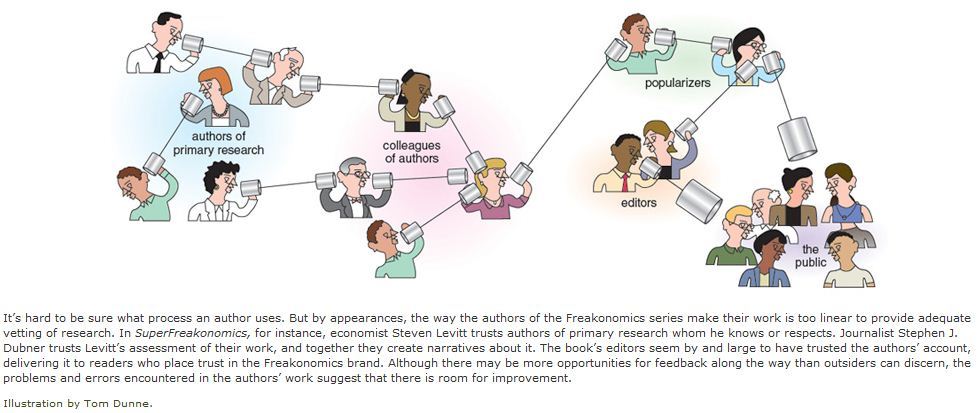
Here is the way that it goes (especially in SuperFreakonomics):

Capture

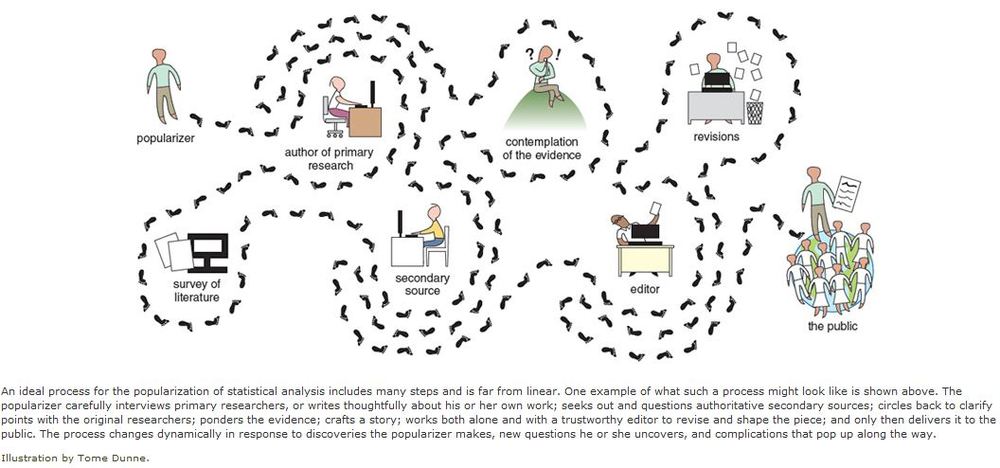
Here is how it might work better:

Capture

Jens Bartelson

Capture

Jens Bartelson is blowing my mind; his Critique of the state is a great book, and surprisingly concise.

What I like the most out of this book is that it manages to do what so many other books about the state do not or cannot, and that is that it links our conceptual ideas about states and statehood to the question of pondering an alternative to state authority or practical alternatives for the role of the state in contemporary society. Of course, the author shifts seamlessly between discussion of political theory, international relations, and even political philosophy, but the real value in this book (apart from being a great tour through the halls of state theory wherein Jens is its careful curator and our guide) is the shift from theory to pratical matters.

The closest thing to getting us to a theory on political performativity that I have seen…

Forthcoming book "Man, Agency, and Beyond" and a sneak peek…

Edited by Daniel Jacobi & Annette Freyberg???Inan, Man, Agency, and Beyond: The Evolution of Human Nature in International Relations will soon go to print at Cambridge. The editors have, in all honesty, willed this book along; they were able to provide two rounds of reviews in two months! The book is built from earlier discussions from a 2011 Catalytic Workshop, which even has some good notes available on-line — interesting stuff.

Jan and I are contributing a chapter that draws on our interests in state theory (mainly from social theory and political theory, but also, with encouragement from the editors, literature from international relations too).

We ask a deceptively simple question: during international relations, who or what acts?

Here is an excerpt:

TITLE: Acting in International Relations? Political Agency in State Theory and Actor-Networks  

AUTHORS: Jan-H. Passoth, Department of Sociology, Bielefeld University; Nicholas J. Rowland, Department of Sociology, Pennsylvania State University

Introduction

Who acts in international relations? From state theory generally, and the field of International Relations specifically, the readymade answer is: ‘states do’ – so long as we assume states to be the high-modern regime of nation-states that so dominantly sorted-out conceptual possibilities of political agency during the 20th century. An alternative approach to global politics, in contrast, searches for political power beyond the state. Contemporary shifts toward neo-liberal and other transnational regimes are reshaping the political landscape to enable entities beyond the state to gain importance in governance. We are, thus, left with two options: We see states as entities capable of acting on the stage of global politics, or we see states as one of many patterns through which political activity is enacted. This dichotomy neatly parallels how agency has been conceptualized in social theory: Either we swallow the bitter pill of essentializing a high-modern model of human nature to understand how actors establish, maintain, and transform political order, or we join the deconstruction camp and dissect the mechanisms, techniques, and discursive patterns that surround this model of human nature, which will then one day probably be ‘erased, like a face drawn in the sand at the edge of the sea.’[1] We develop this tension in our paper about who or what acts during international relations.


[1] Michel Foucault, The Order of Things (New York: Pantheon, 1970), p. 387.

Early draft of review: Gopakumar’s *Transforming Urban Water Supplies in India*

Review of: Gopakumar, Govind. 2012. Transforming Urban Water Supply in India The Role of Reform and Partnerships in Globalization (Routledge Contemporary South Asia Series). London/New York: Routledge; $140.00/£85.00 hrdbk.

10584661

Here are the introduction and conclusion:

                This is a book about infrastructure. Author of Water Resources (Raju et a. 2004), Govind Gopakumar’s new book Transforming Urban Water Supplies in India is a welcome title from the Routledge Contemporary South Asia Series, especially for science and technology studies because of its empirical and analytical emphasis on what I will call here the ‘state-infrastructure’ relationship. In introducing the core topic of the book, infrastructure, Gopakumar (2012: p, 1) invites nearly every discipline to the table, from ‘engineers and technologists’, ‘historians, geographers, sociologists, and anthropologists’ to ‘urban technological historians’, ‘sociologists of utility networks’, urban geographers’ and ‘technology studies scholars.’ And rightly so; infrastructures studies are complex and complicated precisely because they defy straightforward explanation by any disciplinary jurisdiction; in infrastructure, geographic issues are political, social issues are technical, and so on. And yet, infrastructure often drifts from our conscious view as citizens. Building on Graham and Marvin’s (2001:181) works, Gopakumar shows us that infrastructures might be ‘banal constructions’ that fade into taken-for-grantedness, but they tell us a lot about the formation and consequence of their governance, especially regarding public and private partnerships to enhance or expand infrastructure and the relationship between infrastructural development and states (as well as subnational states, in India’s case). In all, the book takes an historical-comparative approach with the unit of analysis being the city. Gopakumar expertly selects three cities to compare, and the selection process appears to be based on differing relationship between the subnational state, within which the city is embedded, and the broader Indian (federal) state and variations in how each city, responding to global and federal pressures, establishes public-private partnerships thus forming urban water supply regimes.

                <….>

                Where does this book land on the shelf? Certainly, it is a great fit with the Routledge Contemporary South Asia Series. The book is also a more cohesive statement replete with future directions for research, which is missing in Gopakumar’s (2011, 2010a, 2010b) individual research articles on water infrastructure. Patrick Carroll’s (2011) recent work on water infrastructure in California pairs nicely with where Gopakumar (2011) is going in his recent and future research wherein he more explicitly conceptualizes states, stateness, and governmentality, unsurprisingly, using some of Carroll’s (2006) previous research as a touch point and some of my work regarding an actor-network model of states (Passoth and Rowland 2010). In closing, Govind’s book is somewhat bigger than it appears; literally, as the book is only 176 pages long, but also theoretically and empirically because the long-term potential of studying state-infrastructure relations seems so promising.

Busch on "Standards"

Lawrence Busch’s new book Standards has just been added to the list competing for the Merton book award!

9780262016384-f30

Standards are the means by which we construct realities. There are established standards for professional accreditation, the environment, consumer products, animal welfare, the acceptable stress for highway bridges, healthcare, education–for almost everything. We are surrounded by a vast array of standards, many of which we take for granted but each of which has been and continues to be the subject of intense negotiation. In this book, Lawrence Busch investigates standards as “recipes for reality.” Standards, he argues, shape not only the physical world around us but also our social lives and even our selves.  

Busch shows how standards are intimately connected to power–that they often serve to empower some and disempower others. He outlines the history of formal standards and describes how modern science came to be associated with the moral-technical project of standardization of both people and things. He examines the use of standards to differentiate and how this affects our perceptions; he discusses the creation of a global system of audits, certifications, and accreditations; and he considers issues of trust, honesty, and risk. After exploring the troubled coexistence of standards and democracy, Busch suggests guidelines for developing fair, equitable, and effective standards. Taking a uniquely integrated and comprehensive view of the subject, Busch shows how standards for people and things are inextricably linked, how standards are always layered (even if often addressed serially), and how standards are simultaneously technical, social, moral, legal, and ontological devices.

Relevance of Theory in STS

On friday and saturday I participated at a small, well organised STS-workshop on „(In)Stabilities – Processuality in STS“ in Darmstadt/Germany. Participants came from cultural anthropology and ethnology, sociology, English and American Studies. The papers presented were all really interesting, but in my opinion most of them shared one crucial problem: a lack of theory or, at least, they lacked a connection of empirical research with theory. One of the papers even addressed the question, if it is even helpful to ‘superimpose’ theoretical terms and concepts on empirical research/findings. And that really made me think: What relevance has theory in/for STS? What function does theory have in STS? Is STS more about „thick descriptions“ than on theorizing about empirical phenomena? And how do you get a description of empirical findings that is more than just renarration, without using theoretical terms and concepts? What is the additional benefit of renarrating? So, once again: A naive newcomer to STS ‘lost in translation’…Please help.

More on water infrastructure in India

This is a follow-up on the review of Govind Gopakumar‘s new book on water infrastructure in India named Transforming Urban Water Supply in India.

I am now convinced, after reading the first few chapters, that India is a near perfect setting to study water infrastructure as it matters for states (both federal and subnational) — in a post-colonial period, deep democratic roots were fashioned from a doctrine of subnational state autonomy and a federal polity; water, thus, becomes a state and federal issue, but states are mainly left to the task of organizating, implementing, and maintaining water supplies, cleanliness, etc. All this complexity withstanding, urban infrastructure reform is beset by relatively low levels of urbanization, neoliberal urban reform policies, and genearlized global pressures and opportunities.

Using a multi-method and multi-site approach, Gopakumar takes us to three metropolitan areas in three subnational states: the city of Bengaluru in Karnataka, the city of Chennai in Tamil Nadu, and the city of Kochi in Kerala. Each case is carefully selected for their differing response to reform, mainly, in the form of resistance or acquiescence, and the relative autonomy of the subnational state from the federalized state of India.

If that were not enough, the case of India is a great one for state theory, and Gopakumar covers a lot of this territory in his review of the literature. India is presented as both a strong and weak state; strong enough to keep boarders and avoid decay, but weak enough that it failed to promote massive economic and social development. Additionally, even as India began to fortify its infrastructure, social interests co-opted the state aparatus thus making it increasing an “embedded” state too soft to enforce regulation and became overly accomodating to its many and diverse state stake holders. In this way, India was overloaded by engaging in too many endeavors, without delegating enough of these responsibilities to local, subnational states. As Sinha (2005) argued, the developmental state suffers not just practically, but also conceptually, and Gopakumar (2012:18) suggests that we must transcend ‘inherited scholarly barriers and mental containers that have prevented disaggregation of the state in critical analysis”! The problem he identifies, echoing Sinha, is that the overarching theme of state action overwhelmingly adopt a state-as-an-actor metaphor, as either a benevolent state aiding in the development of the country or a malevolent state preying on its people and resources.

The role of states in infrastructure studies seems nearly unquestionable at this point in research.

Update on the Merton book award of the Science, Knowledge and Technology section of the ASA.

We are still accepting nominations   for the Merton book award of the Science, Knowledge and Technology section of the ASA.

What book(s) do you think might have a chance at the Merton award?

Write the Merton book award committee with your nomination, or just write me and I’ll pass it along to the committee.

So far, we have two strong nominations, which are:

  1. Gil Eyal, Brendan Hart, Emine Onculer, Neta Oren and Natasha Rossi, The Autism Matrix: The Social Origins of the Autism Epidemic. (Cambridge: Polity, 2010).
    Capture_1
  2. Cyrus C. M. Mody, Instrumental Community: Probe Microscopy and the Path to Nanotechnology. (Cambridge: MIT Press, 2011).
    Capture_2


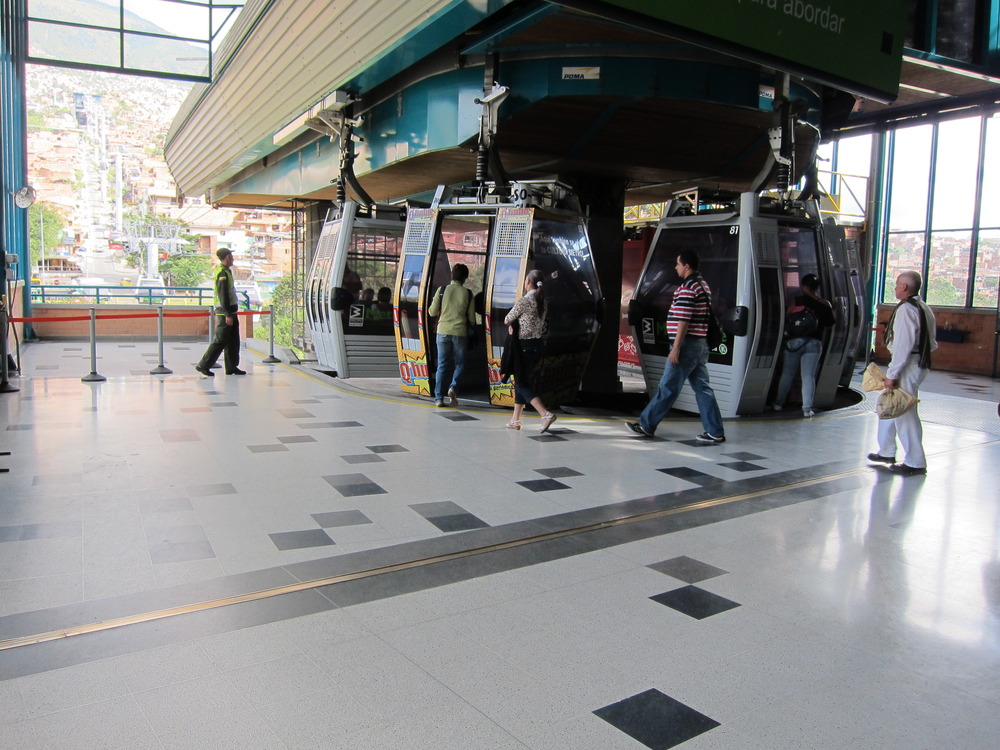
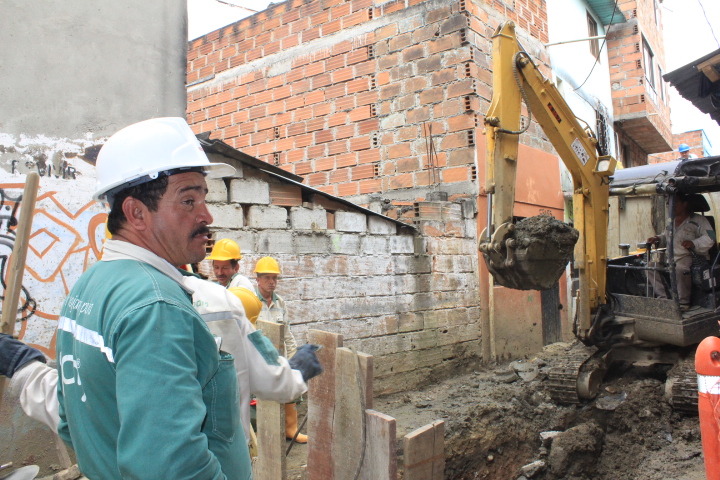
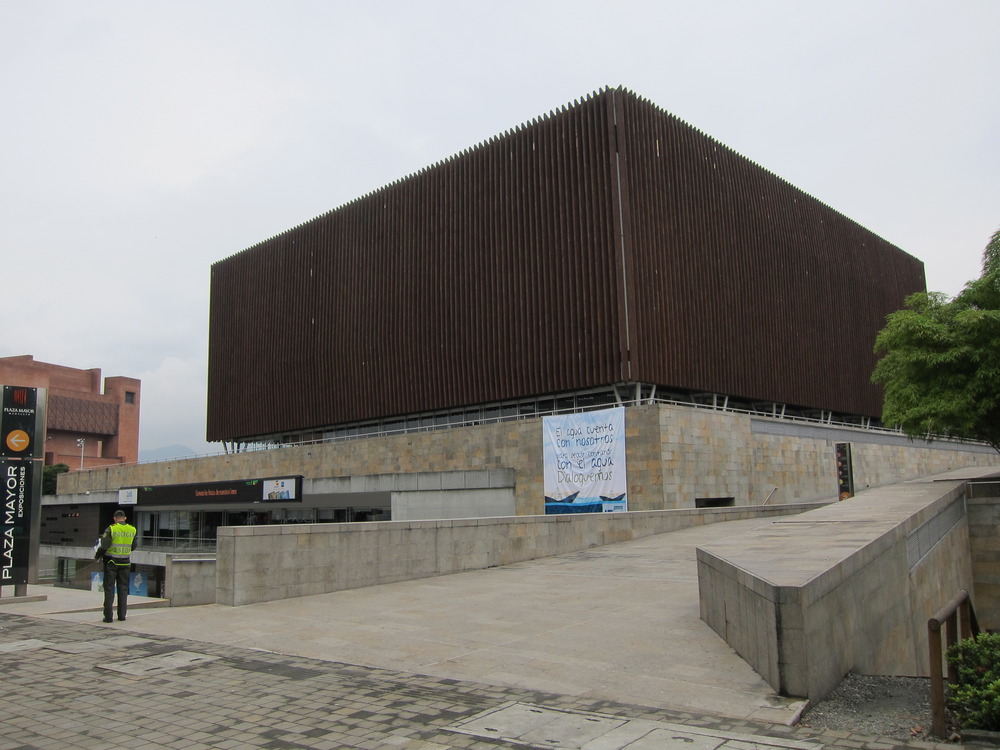
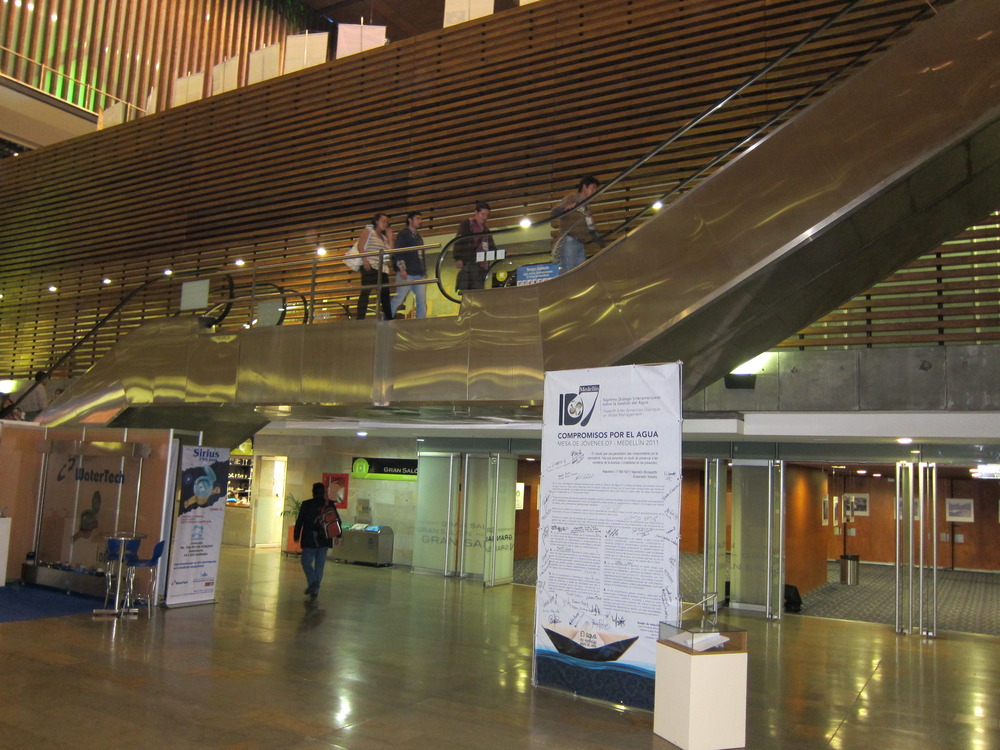
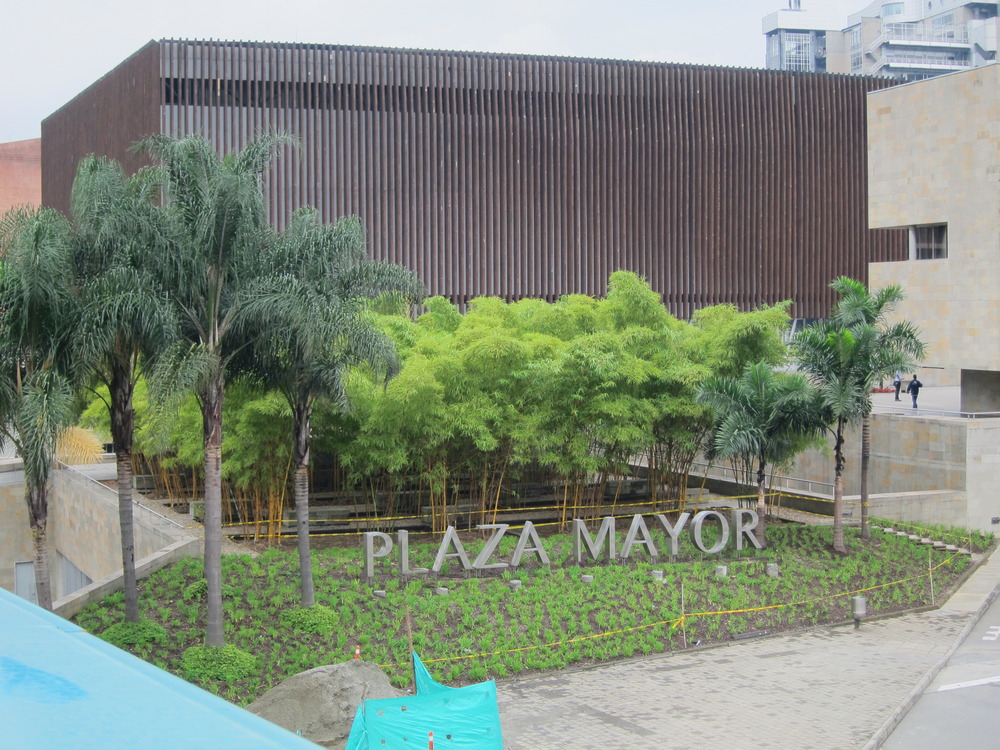
More notes from Medell??n, Colombia

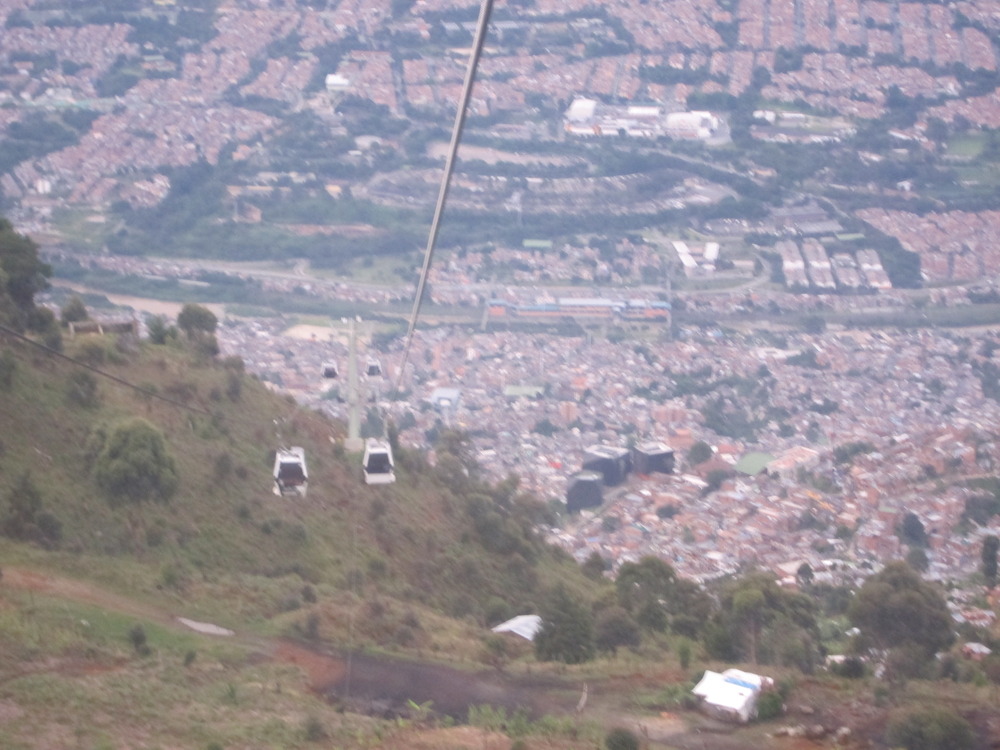
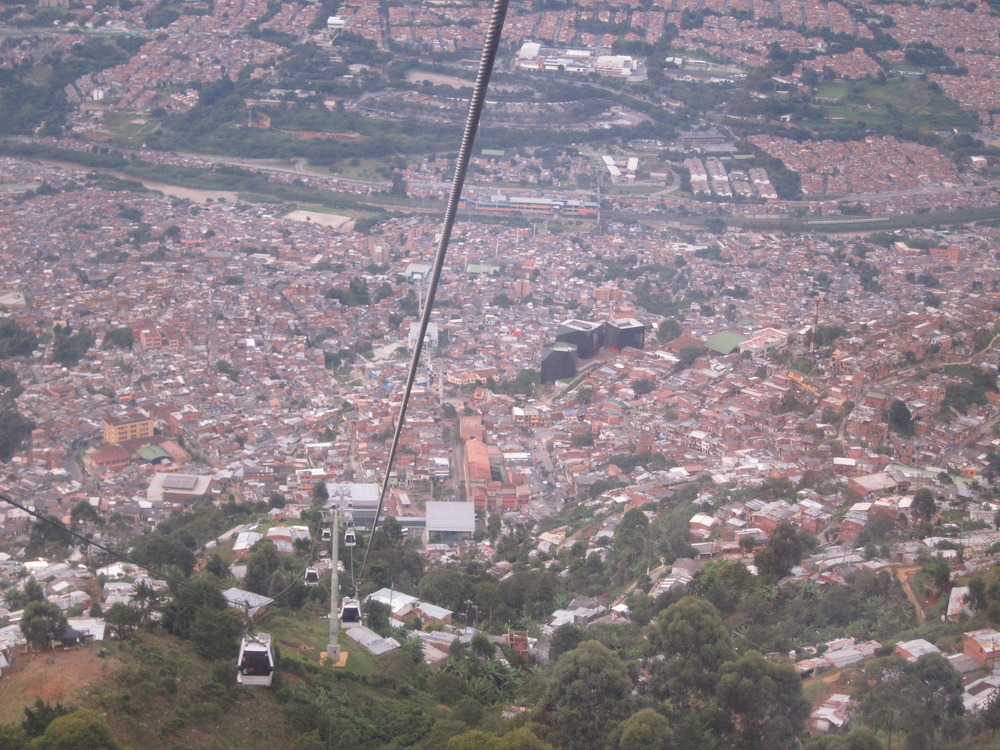
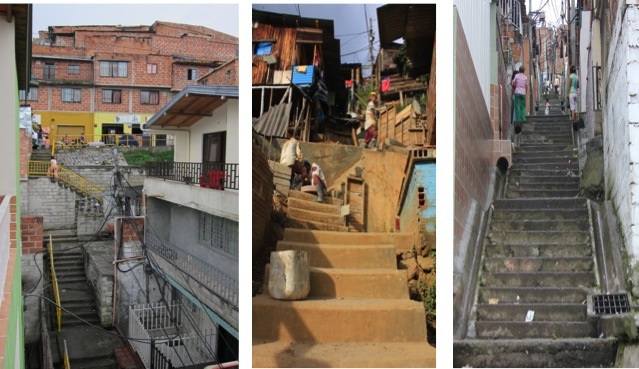
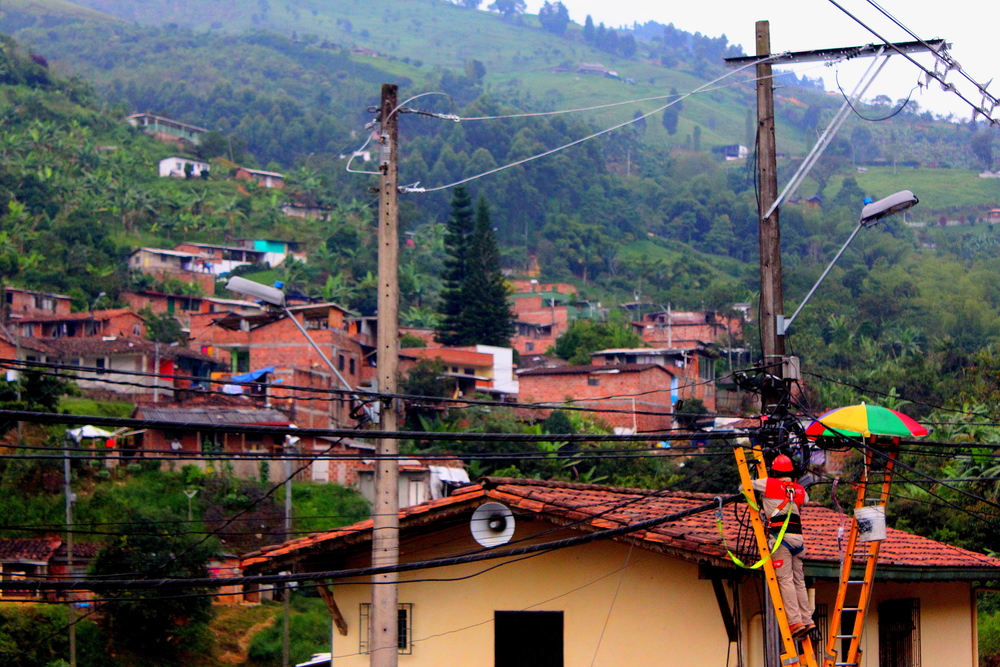
Img_5904Img_5905Img_5919Img_5921

The role of the City in Infrastructural Extension

An interesting aspect of the Medellín story in the last post is not just the enormous success of EPM, but also the role of the City.

Among key challenges with respect to the provision of municipal utility services today (in my opinion) is the strong current in the academic, practitioner, and donor agency literature that local government’s role in the provision of utility services is essentially to stay out of the way. The utility is to be as independent from municipal government as possible, and the municipal government should not interfere. I see a couple of problems with this: (1) ensuring access to and the consumption of services like water involves social action that is beyond the scope of utilities; and (2) the success of utilities cannot be made sustainable in municipalities that are not themselves stable, i.e. the health of municipalities has a direct baring of the health of local utilities. I will deal with point (1) below and point (2) in the next post on Canada.

In the case of Medellín, despite the fact that they have 100% coverage (or very close) in water, sewer, and electricity throughout the urban region, they have a significant problem with access to consumption. Due to high levels of poverty and displacement within and to the city, there are also high levels of disconnection from utility services. Several programs at the state, municipal, and utility level try to help to improve the economic access of poor households (as physical access already exists). On the state level, these include nation-wide cross-subsidy requirement from wealthy to poor neighborhoods and price regulation. On the municipal level, programs include a monthly water allowance of 2.5m3 per person per month for poor households (the “minimo vital”) that is paid for by the City, as well as a version of Contratación Social in which the city pays for the infrastructure extension done by EPM instead of the community taking on a loan from the company.

In addition, a probably more interestingly, the City has implemented a range of programs to help raise the standard of living in marginalized barrios. In a presentation on the “minimo vital” at last week’s Interamerican Dialogue on Water, Mauricio Valencia Correa, a municipal representative, discussed the relevance and potential impact of the “minimo vital” as one tool among a series aimed at improving the quality of life and reducing inequality in the City. The “minimo vital” was of no relevance without a host of other programs including, the construction of quality day cares, libraries and colleges in poor neighborhoods, programs to improve mobility and livability (like stairs on the steep paths, paved walkways etc.) and transportation access like the Metrocable (metro by cable car) to the marginalized neighborhoods (see pictures).

I think that this makes a very important point. This is that access to water services is not strictly a technical problem to be solved by utilities. Rather, it speaks to broader social problems that must involve local government in their resolution. These include improvements to social cohesion, social equity and mobility, education, opportunities for women (day care), and quality of life. Without these, access to a “minimo vital” in water means very little. For utility services to be accessible in a meaningful and sustainable way, a holistic approach to the municipality must be taken rather than one that seeks to separate utilities from municipalities and focus on services while ignoring broader social problems.


Respecifying infrastructures politically and economically

As the British government is getting ready to announce a commitment of £5bn of public funding to a massive investment plan in infrastructures over the next couple of days, I am wondering how infrastructures sometimes are respecified in the redistribution of collective resources. The British government has been cutting back on public sector expenditures in almost all areas, including many types of support that would, I think, be included in sociological notions of infrastructure (like subsidies in transport, communication, education etc.). Now the rationale appears to be that some of that spending has to be redirected in order to attract private investment in infrastructures – while most of the cuts of course have remain as they were (and one immediately suspects more cuts will be forthcoming in order to support the “infrastructure boost”).

This is obviously another demonstration of how the scope of what is deemed a collectively indispensable infrastructure is subject of political spin and generally, I suspect, in any case much narrower than an exploration of instructures in terms of hybrid assemblages (or more broadly in STS terms) would have it. In this case, roads and energy are apparently deemed more essential than the “soft” human infrastructures within the collective, even in a service econony like the UK. Still, there is some discretion taken by policy-makers apparent here in defining the scope of the collectively indispensable more or less broadly. It may be worthwhile in exploring states’ contribution to the maintenance of infrastructures to look specifically at the fringes or gray areas where infrastructure policies are regularly accommodated. Political respecifications are also visible in attempts by interested private actors (investors, entrepreneurs, lobbyists etc.) to accommodate this scope, e.g. in the areas of housing and water mentioned in recent postings, particularly in Kathryn’s Medellín reports.

Conversely, there is also the question of how infrastructures are respecified economically in creating something like an infrastructure sector (as mentioned in the article from the Guardian linked above), i.e. as a type of aggregate market.

What are we to make of such political or economic respecifications (or re-assemblings) of infrastructures? Is it a reasonable strategy of sociological exploration confronting such respecifications be to go for the broadest possible understanding of infrastructures in order to effectively re-frame these more specific remediations? At the moment I feel tempted to say yes – but such a strategy would really beg for at least some kind of respecification that is genuinely sociological – if that can (or should?) indeed be re-assembled.

More notes from Medell??n, Colombia

Figure1
Img_0202Img_9891
Img_0249Img_0260

The Empresas Públicas de Medellín and Habilitación de Viviendas

Medellín is Colombia’s second largest city with a population of approximately 2.3 million. Like many large cities in Latin America, a significant portion of its population lives in extreme poverty. According to Colombia’s most recent census, conducted in 2005, 12.4 percent of the then population could not meet their basic needs (DANE, 2005). Medellín’s Development Plan for 2008-2011, registered the number of informal housing units at 85,168, or nearly 17 percent of all homes in the city (González Zapata, 2009, 129). Surveys conducted in the informal settlements of La Cruz, La Honda and Esfuerzos de Paz Uno, show a high percentage of displaced among their inhabitants (up to 76%), a predominance of female headed households (up to 65%), dependence on work in the informal economy (up to 70%), and a majority of persons earning less than the minimum wage (up to 90%) (Associación Cambiemos, 2010, RIOCBACH, 2010).

 The Empresas Públicas de Medellín (EPM, The Public Utility Companies of Medellín) is a multi-utility corporation owned by the city of Medellín, its sole shareholder to which it pays a minimum annual dividend of 30 % of net revenue. EPM provides water, sewer, gas, and electricity services in Medellín and in a number of other municipalities in the Department of Antioquia and Colombia. EPM’s net profits in 2010 were US$ 773.4 million of which US$ 450 million was transferred to the City of Medellin (EPM, 2011a). It is among the City’s primary employers with 5,830 employees. EPM is also the majority shareholder in a range of affiliates across utility sectors; the “Grupo EPM” boasts over 10 million clients and 10,644 employees (Empresas Públicas de Medellín, 2011b).

Through a program called Habilitación de Viviendas (rehabilitation of homes), EPM has been extending utility networks to the city’s marginal inhabitants since 1964. This program provides long-term low-interest loans to marginal neighborhoods in order to enable them to pay for infrastructure extension. Today, 35 percent of EPM’s “clientes” have become so through this program.

In 1998, EPM modified the program to “Contratación Social” (social contracting). Instead of contracting to a private construction firm to do the work for Habilitación de Viviendas, EPM contracts to the local community leadership (the JAC), which hires all local labor. The program helps to generate employment, results in a variety of urban improvements (stair cases, reinforcement of walls, paved walkways etc), generates profits in the community, results in better infrastructure, and helps to build the JAC’s capacity to continue acting as a contractor for other projects in the City, thus generating more local employment and income.

Photos @Juan A. Aristizabal 2011

Greetings from the 7th Interamerican Dialogue on Water

Img_5494Img_5473Img_5492Img_5483

In Medellín this week (November 13 to 19), among a host of other events, is the 7th Interamerican Dialogue on Water (http://d7.rirh.org/). This conference takes place every three years. It is meant to act as a regional conference in order to prepare documents on five core themes as contributions to the World Water Forum in Marseille, France in February 2012. The themes included: water governance, a culture of water, financial sustainability, managing knowledge and information, and confronting challenges and needs.

The conference was organized try to get as much input from all the participants as possible. The first three days were organized along the “world cafe” model. A “mesa” or a round table was held for each core theme and participants (more than 1000) could pick which theme was on interest to them. Over two days the mesas met many times and in each, the group was broken up in nine further sub themes and in groups of 4 or 5 everyone circled the room to discuss themes, come up with key issues, later strategies, and later commitments. The leaders of each mesa worked long hours to develop a synthesis document on the core theme that was presented to large assembly on the last day of the conference.

There were also side working groups according to interest group (utility operators, transboundary issues, governance, rotary…) as well as panel presentations on issues such as water and energy, ecosystems etc.

The model of the conference was extraordinary for facilitating the development of relationships between people within such a large group by given everyone a chance to work together. This was very fruitful.

One of the things that struck me though was the overlap between the outcomes of the working groups on the key themes. Many issues kept popping up that could be said to fall into the governance category (bringing us back to questions of the breadth and utility of the concept). People were often concerned with oversight, accountability and transparency, and the human right to water came up again and again.

One interesting intervention that I heard on this point was from the head of the water division of Medellin’s public utility EPM. In his presentation, he underscored the point that without a definition of what the human right means, it is rather inconsequential. For example does it mean free water in every home? Free water within a reasonable distance (say 100 m)? Does it mean water within a reasonable distance at an affordable price for each socio-economic group? He also made the point that the human right to water must involve the state. That reaching such a goal largely depends on improving people’s lives and socio-economic opportunities, it cannot default to utilities. A final thing he noted was the confusion between 100% infrastructural coverage and the right to water; without the ability to pay, access to infrastructure does not mean access to water.

I think these points deserve some attention. I have attached some pictures of the conference venue (including a concert given by a local band). In the next post, I will attach some pictures from the infrastructure extension projects in the disadvantaged barrios.

On "re-assembling" more than just the social…

Jan and I, and student of mine, Alexander B. Kinney, wrote a book review of Latour’s “introduction that is not an introduction” to ANT, Reassembling the Social, for Spontaneous Generations.

I was reminded of this earlier today, about reassembling more than just the social, and so I reread this passage:

Even with these newly crafted tools fresh from the ANT workshop, Latour
has still not gone far enough. If we have to Reassemble the Social, then why
not Politics or Economics too? Why not the Law or the State or other modes of
existence Latour simply allows to stand un-reassembled? As an analytical strategy,
dropping the Social as a category of things is a good idea. But if we decide to take
Latour seriously, then we must be equally suspicious of the “political arena” or
“economic climate” too, and it surely does not mean that we empirically ignore
the onto-politics of Law, Politics, Economics, etc., if these are all just ways to
“arrange the collective.” What is missing is an idea of how to draw distinctions
between them analytically without reifying them in the process. The way that
“modes of existences” and “arrange the collective” are introduced in this book
leaves an aftertaste of bitter reification. How are we to distinguish between ways
of juridical, economic or scientific assembling? We are left without an answer,
just with the hint that this would need another book to reassemble each (Latour,
forthcoming). It is a good thing that the book ends trying to be constructive
and not merely de(con)structive; however, if we buy the ticket (the book) and
take the ride (read it), then we deserve more—we must either deconstruct more
in order to rebuild everything as a mere matter of associations or we must
say that anything made of “invisible” “matter” like markets, lawsuits, incentives,
management techniques, etc. is just as guilty as “the social” created by sociologists.

If sociology is now about tracing association, which I consider quite fun, then what is, for example, Political Science about, if properly reassembled?

I am really racking my brain about this and am not sure that reassembling gets us very far outside of sociology. Still, I refuse to say that Geography, for example, is not in need of some reassembling. The key might be “the social” versus sociology in general, hence, “the political” is what is in need of reassembling, or perhaps “the geographic” … hmmm, this is quite messy.

Networked infrastructure and the black box

Greetings from Montreal, soon Medellín… some thoughts on opening the “black box”.

In the recent article Small technologies, big change (PHG 2011) that Nicolas drew your attention to, I was trying to bring geographical and STS approaches to networked infrastructure into interaction for the specific purpose of moving away from the “black box” metaphor of networked infrastructure.

In the geography literature, a variety of metaphors about infrastructure (e.g. exoskeleton, cyborg urbanism…) place networked infrastructure as stabilized and isolated from users. It supports their daily lives, but they do not interact with it or influence it. Similarly, in the large technical systems literature, LTS are taken as black boxed, and purposefully so. They are built for durability and immunity from users.

However, what I found in my research was that many utility managers actually seek to engage a variety of user groups in the management of the infrastructural network through the introduction of relatively simple technologies into homes and businesses. These technologies, which I dub mediating technologies, can have a significant impact of the network. For example, they can reduce the strain on network capacity and on the environment. The technologies that I examined included a variety of home and business retrofits to improve water efficiency (reduce consumption) as well as different types of software to assist homeowners and large industrial consumers to detect leakage beyond the property line, encouraging them to fix problems themselves.

So, not only was the LTS (in my case, water and sewer infrastructure) malleable rather than rigid, managers actively sought to open up the black box and integrate users into its management, rather than striving for invisibility. All this could be accomplished, not through a gargantuan unearthing and remodeling of the system, but through the addition of relative simple technologies to its peripheral nodes.

Here, STS theory on the interaction of users becomes very important because it tells us that users can interact with technology in a variety of unintended ways, producing results that were not the intention of the developers of that technology. Thus, with the purposeful integration of users into the management of LTS, they become both more malleable and less predictable.

Such a shift, from stabilized black box to malleable and interactive, has the potential to generate a variety of progressive benefits. In Montreal, where I live, for example, there is no water metering and thus very little user information about their relationship to the system. The black box is retained, as are high levels of consumption and leakage. In other communities in Canada, utility managers found that by increasing user information, through metering, and giving users the tools to manage their consumption (e.g. low flow devices), a variety of positive effects resulted. These included reduced consumption (and sewage outflows) and delayed infrastructure expansion.

In Medellín, where I’m heading, users are integrated into the system in a variety of ways. Beyond, the standard mediating technologies that I discuss in the article, users are integrated directly into the construction of the infrastructure. In order to create jobs in Medellín’s low-income barrios, in 1998, the local utility EPM began contracting to the barrio councils (the JACs) to build needed infrastructure. EPM guides the JACs through the process and the JACs hire all local labor. Both residents and EPM staff find that by employing local people to build the infrastructure, it is built to a much higher standard than when the utility contracted the work to private construction firms. The process also develops the capacity in the JAC and the community to monitor the new systems and alert EPM of any problems. Thus, the black box can be opened up in a variety of ways with a variety of interesting consequences.

A good case, and the role of compatibility in theory selection

All, as promised, I would reveal some early review document about Govind Gopakumar‘s new book on water infrastructure in India named Transforming Urban Water Supply in India.

First, the book’s case selection is quite smart. India has a historical legacy of democratic social involvement of the public (a promise perhaps, between state and society) during the post-independence period. This context emerges, however, beset by global opportunities for growth and supra-state pressures for change. Infrastructure, fittingly, is stuck in the middle, especially when it comes to developing it, expanding it, and restructuring it. The case selection, therefore, becomes a good case to estimate, per the insights gathered by geographers and others interested in the expansion of neoliberal globalizaiton, whether or not the changes taking place in Indian urban infrastructure follow the trend toward “pervasive depoliticalization of public life” (Gopakumar 2012:4). Or, put another way,

Do global efforts erase existing political underpinnings and re-inscribe a fundamentally new political basis, or does the existing social and political environment continue to influence infrastructures in the face of global pressures? (Gopakumar 2012:5).

The question fits quite nicely with what Jan and I were thinking about as the new infrastructuralism. Govind’s research hints in many places, perhaps intentionally or perhaps he’s just feeling his way toward this or another new idea, of a broader theoretical contribution than is presented in the book. In this way, Govind’s book is somewhat bigger than it appears, both theoretically, but also literally, as the book is only 124 pages long.

Second, and here is a little more critique and a little less review, the book draws on David Harvey’s work, the Marxist geographer, Feenberg’s insights about technologies being designed to promote the interests of the powerful/influential, and Winner’s old (but still good) insight that technology shapes political life/reality in a way akin to how legislation does. What is sort of odd is that Pinch and Bijker’s piece on the social construction of technology (SCOT) plays a pivotal role in the theoretical build-up, especially insights about “relevant groups.” Now, SCOT has often been criticized for being apolitical or for ignoring issues related to power and politics (mainly, who is powerful enough to be “relevant,” if we must use the term power). For Govind, SCOT is nice because it allows him to distance himself from explaining infrastructural development and revision as merely moves toward purely technological or economic efficiency. However, this become a bridge to Winner, and wasn’t it Winner who wrote, famously, about the third step in SCOT analysis, of “opening the black and finding it empty” …

Govind Gopakumar on Water Infrastructure

At the 4S meeting, Jan and I met Govind Gopakumar, who recently published a book on water infrastructure in India named Transforming Urban Water Supply in India.

The abstract:

The absence of water supply infrastructure is a critical issue that affects the sustainability of cities in the developing world and the quality of life of millions of people living in these cities. Urban India has probably the largest concentration of people in the world lacking safe access to these infrastructures.

This book is a unique study of the politics of water supply infrastructures in three metropolitan cities in contemporary India – Bangalore, Chennai and Kochi. It examines the process of change in water supply infrastructure initiated by notable Public Private Partnership’s efforts in these three cities to reveal the complexity of state-society relations in India at multiple levels – at the state, city and neighbourhood levels. Using a comparative methodology, the book develops as understanding of the changes in the production of reform water policy in contemporary India and its reception at the sub-national (state) level. It goes on to examine the governance of regimes of water supply in Bangalore, Chennai and Kochi, and evaluates the role of the partnerships in reforming water supply. The book is a useful contribution to studies on Urban Development and South Asian Politics.

I’ve made arrangements to review the book for the Social Studies of Science, and I’ll post some preliminary comments here on the blog. Welcome aboard, Govind…

Hello from Montreal!

Thank-you Nicolas for the introduction and thanks to Endre for his interesting posts over the last month. I like the idea of following a theme. So, taking my inspiration Endre, I’m going to focus not parliaments but on underground infrastructure. Given that this is admittedly a very broad topic, I’m going to try to hone in on a couple of themes that Nicolas has suggested are of interests to followers of Installing (Social) Order.

So, in short, over the next few weeks, I will endeavor to get us into a conversation on the following issues related to how we conceive of infrastructure as people who study it, who use it, who build it and who manage it.  First, following up on Nicolas’ poste regarding the Small technologies, big change article, I will take another look at the concept of the black box and the relationship of the users to infrastructure. In subsequent posts, I will look at scale and the role of municipalities in questions of infrastructure management, users and the politics of infrastructure, the idea of “differentiated” infrastructures for low-income users, and infrastructure as “sunk cost” versus infrastructure as a “base” for community investment. Having, focused mostly on the municipal scale, in my final posts at the end of the month, I would like to take a look at other scales (including different kinds of scale not based on administrative boundaries) in thinking about infrastructure.  

I’m looking forward to your reactions and feedback on these issues.

Before, getting started, I think that it would be great to try to keep in mind some of the ideas that are being discussed on the blog as we think through questions related to infrastructure. Following up on the Endre’s statement with respect to parliaments that “the legislative machine should operate smoothly, but not too smoothly” and the recent posts on Foucault, I would draw your intention to the work of James Ferguson. In his book The Anti-Politics Machine (1994), he asks us not to focus on why development projects don’t work, but why they do work the way they do, i.e. whose or what purposes does it serve? Ferguson, draws this notion from Foucault’s analysis of the prison. On page 254 of his book he writes:

 In a situation in which “failure is the norm”, there is no reason to think that the Thaba-Tseka [a development project in Lesotho] was an especially badly run or poorly thought out project. … But it may be that what is most important about a “development” project is not so much what it fails to do but what it does do; it may be that its real importance in the end lies in the “side effects” … Foucault, speaking of the prison, suggests that dwelling on the ‘failure’ of the prison may be asking the wrong question. Perhaps, he suggests,”one should reverse the problem and ask oneself what is served by the failure of the prison; what is the use of these different phenomena that are continually being criticized; the maintenance of delinquency, the encouragement of recidivism, the transformation of the occasional offender into a habitual delinquent, the organization of a closed milieu of delinquency.” (Foucault 1979: 272).

These ideas have a lot of resonance in infrastructure, the management of which has been heavily criticized leading to a host of solutions which themselves seem to create other types of problems, but also other types of benefits. Good ideas to keep in mind.


What behaviorism might tell us about Post-Foucauldian or "New" Suveillance Studies

I once asked what the “knowledge myth” might mean for STS, but this was really just a ploy to raise the issue of what it would take to generate a post-humanist form of behaviorism in STS.

How might we talk about the behavior of humans and non-humans parsimoniously without getting too bogged-down with endless debates of “who/what is congizant?” and “what role do intentions play?” This well-drodden issue was raised once again during our 4S sessions on the state.

One of the primary issues in behaviorism regarding the knowledge myth is “do you need to know how to do something to do it?” with the important follow-up that “if you do it, then you have shown (a) that you know how to do it, by benefit of doing it, or, if not that, (b) then knowing and doing are not nearly as related as we might otherwise demand in our social science accounts.”

Gary Marx, who wrote a great paper in Surveillance & Society, insists that surveillance in our high-tech age is different in non-trivial ways from traditional Foucauldian imagery of the somewhat distant past of “white hot pincers” during torture or the grand Panopticon. In particular, Marx’s analysis focuses on “unintended” data collection that is likely to be amassed by automated machines; think: data about data, for example, the location of a purchase, or the time stamp of a facebook post (Marx 2002:15). He goes into a, upon first glance, cool example: there is suspicion that a university building was going to fall prey to arson after a gatorade bottle full of explosive material was found on site. By cross-listing the keycard entry registries and the shipping code on the gatorade bottle, the culprit was found, and upon being found, s/he confessed. This seems like a straightforward case where data was collected and then used to capture a miscreant, but these data were never collected with the direct and explicit intention to be used for the purpose of catching criminals or criminal acts. These data were not intended to result in this end (I’d prefer a different term than “unintended,” but that will be another post).

Drawing on these materials liberally is Michalis Lianos (2003:412), in another paper in the same journal about Post-Foucauldian studies, who adopts and develops the idea that diverse technologies at “points of use” (let’s call them) result in data, which then contributes to what is referred to as “unintended control” which is not really intended to promote any values in particular, but that can be used in matters of control after collected.

The technologies so often utilized in Post-Foucauldian analyses are many and diffuse, but they rarely have any intentional politics, according to Lianos.This was quite a surprise, as I had always read these Post-Foucauldians as having an almost unanimous position that armies of little technologies were “out there” doing the dirty work of making neoliberalism a reality.

Back to Lianos: The data these automated machines collect might be used in political ways, big and small, but in a shrewd move, Lianos demands that in studies of control and surveillance, we must “break this correspondence between motive and outcome” or, put more exactly, “the intention to control is not a necessary precondition for effectively producing serious consequences for the sphere of control” (424). And, thus, we are left with an odd behaviorial post-humanist vision of technology where the “intentions” of the designer or user drift from primacy in analysis, and instead we observe what is collected or made, what is done with it, and what this contributes to  local levels and beyond.

Bravo, Lianos.

For us in STS, I have always been concerned that Foucauldians place so much emphasis on dispotif and governmentality when their analyses so often hinge on diffuse, micro-levels of technological use for the purpose of voluntary self-regulation. I am not referring to micro-physics or the art of government either. Instead, we get a nuanced view from Lianos of how the, to borrow a beloved phrase from Bruno, the “missing masses” do all the hard work in Post-Foucauldian Governmentality studies … although not intentionally.

Thank you, Endre Dányi Welcome Karthryn Furlong!

Endre Dányi, a student of Lucy Suchman and John Law at Lancaster University’s Department of Sociology, joined the blog for the month of October into November wherein he shared six great posts about what I suppose we could call “the Parliament multiple.” A real highlight for me was Endre’s point about Parliamentary efficiency: “There’s a double demand here: the legislative machine should operate smoothly, but not too smoothly.” That is an idea worth developing in this age of hyper-efficiency and transparency! Bravo!

So, from Installing (Social) Order, thank you for your detailed and throught-provoking posts, and we hope you stay engaged in the discussions here on the blog.

Kathryn Furlong is the project director the “Water, Urban, and Utility Goverance” and assistant professor in geography at University of Montreal. She was first mentioned on the blog as a “new scholar to watch” because of her paper “Small technologies, big change: Rethinking infrastructure through STS and geography” published in Progress in Human Geography. The paper illuminates a few ways that STS might learn from geography, and the inverse is also presented. After our meeting at 4S a few days back, I am not convinced that STS has a ton to learn from geography on the topic of infrastructure. She is currently attending a conference, and will hopefully tell us a little about it and other topics over the next month or so.

Karthryn, welcome aboard!

Endre’s sixth (and last) post

This is the last post, and as I promised in the beginning it’s about political subjects, but before addressing the topic let me very quickly summarise what I’ve done so far. In the second post I argued that focusing on the construction of the Hungarian Parliament in the end of the 19th century is a good entry point to examine liberal democracy as a historically and culturally specific political reality. Although this political reality was challenged and transformed in numerous ways in the 20th century, the Hungarian case nicely illustrates that we’re still (or once again) inhabiting the ruins of the Gründerzeit. At least this is what I claimed in the third post. One of the main characteristics of this less-than-two-hundred-year-old political reality is that it consists of multiple modes of doing politics — if it seems to be singular, then it’s an ongoing achievement in which the parliament building plays a crucial role. Not only does this peculiar place help to define the boundaries of a political community, regulate the ways in which that community handles political issues, and establish certain connections among those issues, but it also maintains that the material practices associated with these very different processes are simply different aspects or components of the same model of governance.

This is when things get complicated. If a parliament effaces multiplicity, then — following John Law & Annemarie Mol’s train of thought — revealing this multiplicity, making it visible, is a political act. But how does such an ontological political exercise relate to other ways of doing politics? How does it relate to other ways of being political?

It took me a long time to realise that it’s actually possible to think about the Hungarian Parliament as a disciplinary apparatus — a device that produces both political objects (symbols, laws, ideologies) and political subjects (citizens). Based on the three modes of doing politics outlined above, the political subject of a liberal democracy could thus be defined as an individual who belongs to a political community (the Republic of Hungary), who is well-informed about a wide range of political issues (from animal rights protection to trade agreements with New Zealand), and who knows how to participate in politics (voting). To be sure, this figure is as fictional as that of the rational consumer, but the work it does should not be underestimated. Here’s why.

In the beginning of my fieldwork, I decided to follow the tried-and-tested STS strategy and research representation practices as if I knew absolutely nothing about the technologies, persons and places that were involved in those practices. This, I thought, was a terrific way to problematise taken-for-granted concepts and open up seemingly natural procedures associated with liberal democracy. However, as I soon discovered, even this strategy had its limits. While it would have been perfectly fine for me as a researcher from Lancaster not to have a clue how the Hungarian Parliament worked, it was not at all fine for me as a Hungarian citizen. Asking basic questions about history, constitutional law, party politics in the legislature turned me not into a curious analyst but an ignorant member of the political community. An idiot, as Isabelle Stengers would put it.

My initial response to this strange situation was rather panicky. Whenever I stumbled upon something interesting, I had the horrible feeling that I ought to have known it from school, the newspaper, or my friends and family. But after a while I realised it wasn’t the lack of knowledge that was causing me trouble. It was the clash of different kinds of knowledges — the clash of histories with personal memories; of abstract regulations with everyday encounters; of sophisticated analyses with emotional readings of recent political developments. To use Helen Verran’s words, what I experienced were moments of disconcertment, which had to be privileged and nurtured, valued and expanded upon. But how?

I could have possibly written something about this — a chapter on the genealogy of citizenship in Hungary, for instance. But that would have been too impersonal. For, and this is my point, I as a political subject was as much implicated in the production of a particular political reality as the Holy Crown or the Parliament’s Information System. And if I wanted to interfere with this reality, I had to find ways to perform things differently. To perform the Hungarian Parliament differently. So, in my dissertation I decided to juxtapose the empirical chapters with semi-fictional texts called Walks, which aimed to show (rather than explain) multiple orderings at work. (Major sources of inspiration were W.G. Sebald’s books, especially Austerlitz and The Rings of Saturn) What’s more, by exposing the limits of these orderings, they aimed to create some space for being political without fixing the categories of politics. It’s difficult to tell whether I was successful or not, but if you’re interested, you can have a look at an earlier version of these Walks here:
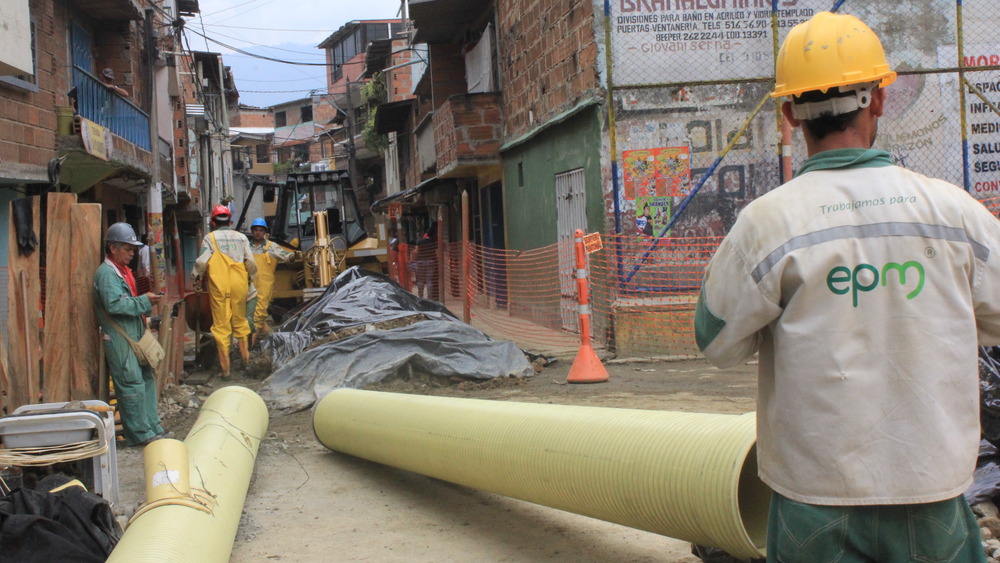
Walk 1: http://dl.dropbox.com/u/4496011/danyi_walk1.pdf
Walk 2: http://dl.dropbox.com/u/4496011/danyi_walk2.pdf
Walk 3: http://dl.dropbox.com/u/4496011/danyi_walk3.pdf
Walk 4: http://dl.dropbox.com/u/4496011/danyi_walk4.pdf
Walk 5: http://dl.dropbox.com/u/4496011/danyi_walk5.pdf

(Please do not cite or circulate them without permission!)


***

I really hope you enjoyed reading these posts about the Hungarian Parliament as much as I enjoyed writing them. Many thanks to Jan-Hendrik, Nicholas, Hendrik and Antonia for inviting me — I’m looking forward to continuing our conversations on this blog, and hopefully in person.