What Does It Mean To Become An Open Access Journal?

Per our previous discussion about open-access journals and the high pay-wall of too many otherwise good scientific communications …

Pablo K's avatarThe Disorder Of Things

Following an earlier interview with Eva Erman on editing the open access journal Ethics & Global Politics, another set of enlightening responses on academic publishing. This time with Professor Brad Weiss of the College of William & Mary and President of the Society for Cultural Anthropology, which publishes Cultural Anthropology, the premier journal of the American Anthropological Association (AAA). It is a major journal by other metrics too (take your pick of GoogleScholar or Impact Factor). All of which is as preamble to the point: Cultural Anthropology will be a fully open access journal from 2014. Not just that. It has a web presence and offers a set of connected resources that are without compare (at least in my experience). Brad was kind enough to offer his time to answer some questions on taking a learned society journal of prestige open access.


Cultural Anthropology Cover Trimmed

1. How did the decision…

View original post 1,536 more words

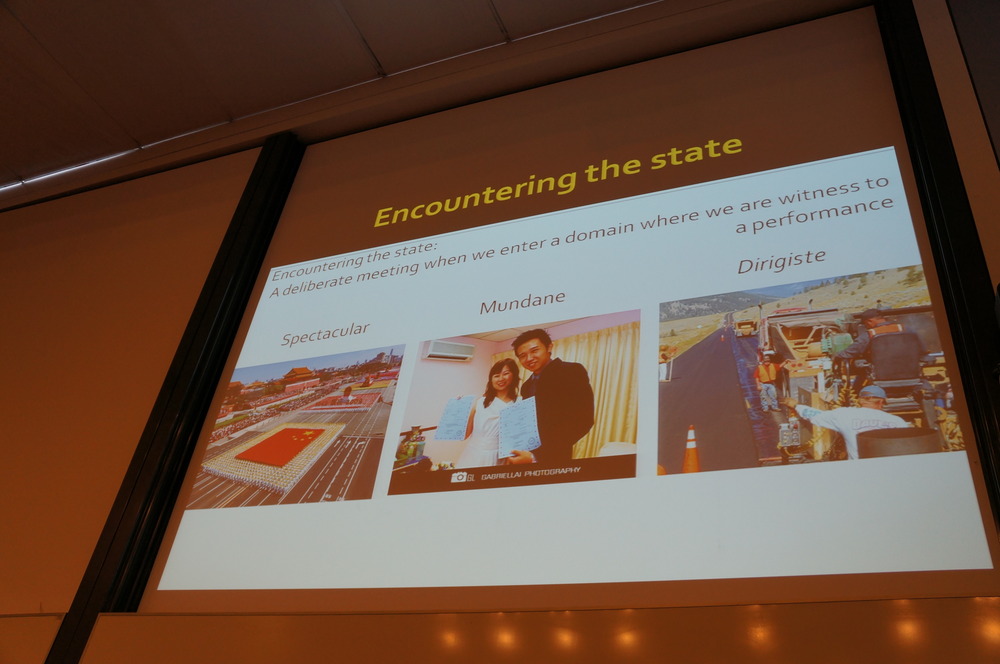
Reports from 4S this week

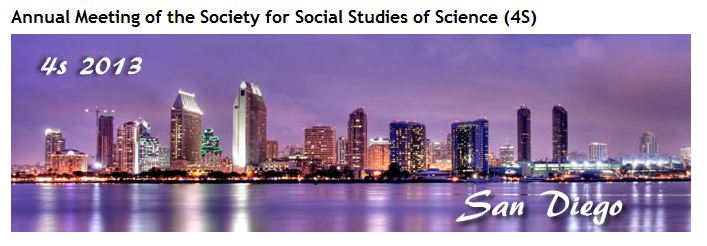
During the 4S meeting later this week, Jan and I will be blogging from the conference about the presentations we oversee.

Capture

We will be chairing three sessions, back-to-back-to-back, on State Multiplicity in STS.

If you want to join us, please do:

I: State Multiplicity, Performativity and Materiality: Current STS Research on State and Stateness: I

Scheduled Time: Fri Oct 11 2013, 10:30 to 12:00pm, Building/Room: Town and Country / Hampton

II: State Multiplicity, Performativity and Materiality: Current STS Research on State and Stateness: II

Scheduled Time: Fri Oct 11 2013, 2:00 to 3:30pm, Building/Room: Town and Country / Hampton

III: State Multiplicity, Performativity and Materiality: Current STS Research on State and Stateness: III

Scheduled Time: Fri Oct 11 2013, 4:00 to 5:30pm, Building/Room: Town and Country / Hampton

The first session will include: *Anna West (Stanford University); *Olga Restrepo Forero (Universidad Nacional de Colombia), *Malcolm Ashmore (Loughborough University); *Kevin Donovan (University of Cape Town); *Luisa Farah Schwartzman (University of Toronto), *Jennifer Elrick (University of Toronto); and  *Govind Gopakumar (Concordia University).

The second session will include: *Huub Dijstelbloem (University of Amsterdam); *Evelyn Ruppert (Goldsmiths, University of London); *Keith Guzik (Bloomfield College); and Vincenzo Pavone (CSIC – Consejo Superior Investigaciones Cientícas), *Elvira Santiago (Consejo Superior Investigaciones Científicas)

The third and final session will include: *Nicholas J Rowland (Pennsylvania State University), *Jan-Hendrik Passoth (Technische Universität Berlin); *Manuel Tironi (Pontificia Unversidad Catolica de Chile), Rafael Crisosto (Pontificia Universidad Catolica de Chile); *Andrzej Wojciech Nowak (Adam Mickiewicz University, Poznan); *Steffen Dalsgaard (IT University of Copenhagen), *Christopher Gad (IT-University of Copenhagen); *Patrick Carroll (University of California, Davis)

Writing Reflexively: Lessons from ANT

Qualitative Sociology is producing a special issue about using ANT to write-up qualitative results.

old-typewriter

Original from “Acting Man” at http://www.acting-man.com/?p=24647

One of the papers in now available on-line first, which is our paper about writing reflexive accounts from an actor-network approach (not actor-network theory). We had fun writing it, and, once you get toward the end, you’ll see that this paper is somewhat unorthodox …

Our title:

Beware of Allies! Notes on Analytical Hygiene in Actor-Network Account-making

Our abstract:

In science and technology studies (STS), reflexivity is not the foremost political or ethical concern that it is for some postmodernists, feminists, anthropologists, or those earnest students of Bourdieu. For us, reflexivity is a practical methodological concern. When reflexivity is raised in our scholarly communications it is, without irony, about crafting scientific communication (i.e., scholarly accounts like articles or books) reflexively. This paper therefore is an actor-network account of making reflexive actor-network accounts, specifically, in the process of writing-up qualitative research findings. It is a paper about research. It is a paper about the research process. As our empirical contribution, we report on research we previously conducted and about the subsequent steps we took toward a (publishable) way of reporting it. We are trying to honestly disclose how the process of preparing a reflexive account is more than merely a matter of cleaning upthe messiness of data, but also, and perhaps foremost, a process of finding, aligning, and occasionally distancing our accounts from our allies – in our case, actor-network theory (ANT) and reflexivity.

One paragraph with something of a hook:

As we transformed a presentation from the microcosm of professional conferences into a working manuscript for academic, peer-reviewed publishing, we encountered remarks about how reflexive we needed to be during our account-making, in particular, in our methods section. After delving into the reflexivity literature, we concluded that no “amount” of reflexivity could have made our account more reflexive because, in addition to reflexivity being part of the intransigent character of all forms of account-making, overt pleas for the epistemic virtue of adding or subtracting any form of reflexivity is an immediate dead-end for the analysts and a long-term dead-end for whatever (inter)disciplinary homes they inhabit (Ashmore 1989; Latour 1988; Lynch 2000). Our empirical analysis confirmed each of these insights.

Still, the question, “how much reflexivity was enough?” seemed all too real as we accepted critiques of our presentation(s) and received reviews of our paper. For us,
the practical problem was, how do we settle this obviously irresolvable suggestion-turned-
requirement?

Thus, the oddity that we poke-at in our paper is this: in theory, we know that nothing can be added to a paper to make it qualitatively more reflexive (no additional forms of looping-back or self-referential claims); however, that is precisely what we learn when we review our own experience: it is precisely because, in theory, nothing can make a paper more reflexive that critiques claiming that we are too reflexive or not reflexive enough are so difficult to overcome. These comments are, in theory, incomprehensible, but, in a practical sense, unavoidable if you want to present or publish your work in these academic circles where reflexivity lives…

What Would Wallace Write? (if he were an ethnographer)

David Foster Wallace and Installing (Social) Order on ‘Being Reflexive’ … we wrote this after blogging about these issues for a while regarding excessive hygiene, actor-network attitudes and ethnography, and about style in STS.

Jan's avatarEthnography Matters

Editor’s Note: Jan-Hendrik Passoth ( @janpassoth) is a Post Doc at the Technische Universität Berlin interested in Sociological Theory and Science and Technology Studies. His fellow writer, Nicholas J. Rowland, is an associate professor of Sociology at Pennsylvania State University, as well as a visiting scholar at Technische Universität Berlin. Both work on the sociology of infrastructures, about which they blog at installing (social) order, exploring the sociotechnical nerves of contemporary society.

In this other piece of our “ethnography and fiction” edition, these two researchers give an interesting follow-up to the contribution by Anne Galloway by focusing on a well-known fiction writer: David Foster-Wallace. They compare his work with ethnographic field report and use that as a starting point for a discussion about the importance of reflexivity.

____________________________________________________________________________

Comparing David Foster Wallace and an average ethnographic field report seems unfair at first. And, it does not get better…

View original post 2,206 more words

Reflections on Health Infrastructure

Image

Screen capture from NYT: http://www.nytimes.com/pages/health/index.html

The role of infrastructure in the current controversy about the Affordable Care Act.

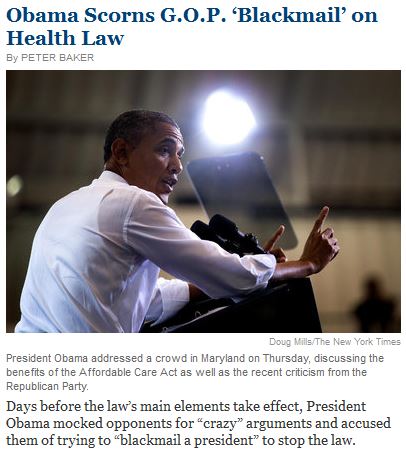
As is well documented in national newspapers, America is finally trying to create a national health care insurance program. However, the bill is being hotly contested on the hill and some are even calling resistance to the program blackmail on a national level because every effort to fund the government for another year has been made contingent on defunding the national health care program that some call “Obama Care.”

The twin issues of policy battle and the introduction of national health insurance are further complicated by infrastructural concerns. They are two fold:

1. The race by tech companies and the government to use information technology infrastructure to support one of the bill’s primary objectives: offering citizens a platform for researching, selecting, and then purchasing health care insurance programs. The goal is to reduce cost and make program costs competitive, all of which will hypothetically benefit the citizen. However, support — in this case, the support of information technology infrastructure, not political support — has been slow to come into existence.

The Affordable Care Act has been contentious, confusing and abstract, but that might change on October 1 when states are required to launch websites where people can chose among different health plans.

In addition to the basic support of the program other technologies are being added to this melange of health technologies such as biometric bracelets to let your employer know how you’re doing at any given moment.

2. The prototype for the online support of the health exchange network mentioned in 1 is not friendly to non-English speakers. Apparently, the government is so worried about rolling-out the website on-time that they have not been able to offer the service in Spanish.

On Thursday, the Obama administration announced two new delays in the implementation of the Affordable Care Act, saying small business and Spanish-language online enrollment services in federally run exchanges would not begin on Oct. 1 as planned, Reuters reports (Morgan, Reuters, 9/26).

This has happened even though, as is even posted on the White House website:

Today, an op-ed from President Obama is running in major Spanish-language newspapers across the country. The op-ed discusses the benefits of the Affordable Care Act for Latinos and announces the release of a new Spanish-language version of HealthCare.gov – www.CuidadoDeSalud.gov.

The op-ed is running in ImpreMedia’s print publications (including La Opinión in Los Angeles and El Diario La Prensa in New York) and online properties, all of which have a monthly reach of 9.3 million adults and monthly distribution of nearly 11 million.

Obama’s op-ed is, in contrast, available en español.

These two issues remind students of infrastructure that Law and Latour were correct all those years ago in saying that technology is “politics by other means,” although in a slightly different light. Routinely, the implementation of political aims is contingent on technological infrastructure, its development, and maintenance over time.

Sexy Infrastructure?

For an academic blog writer, a story like this might come once in a lifetime.

Listening to the radio on the way home from a day at the University, I heard a phrase that had never occurred to me before: “sexy infrastructure.”

Image

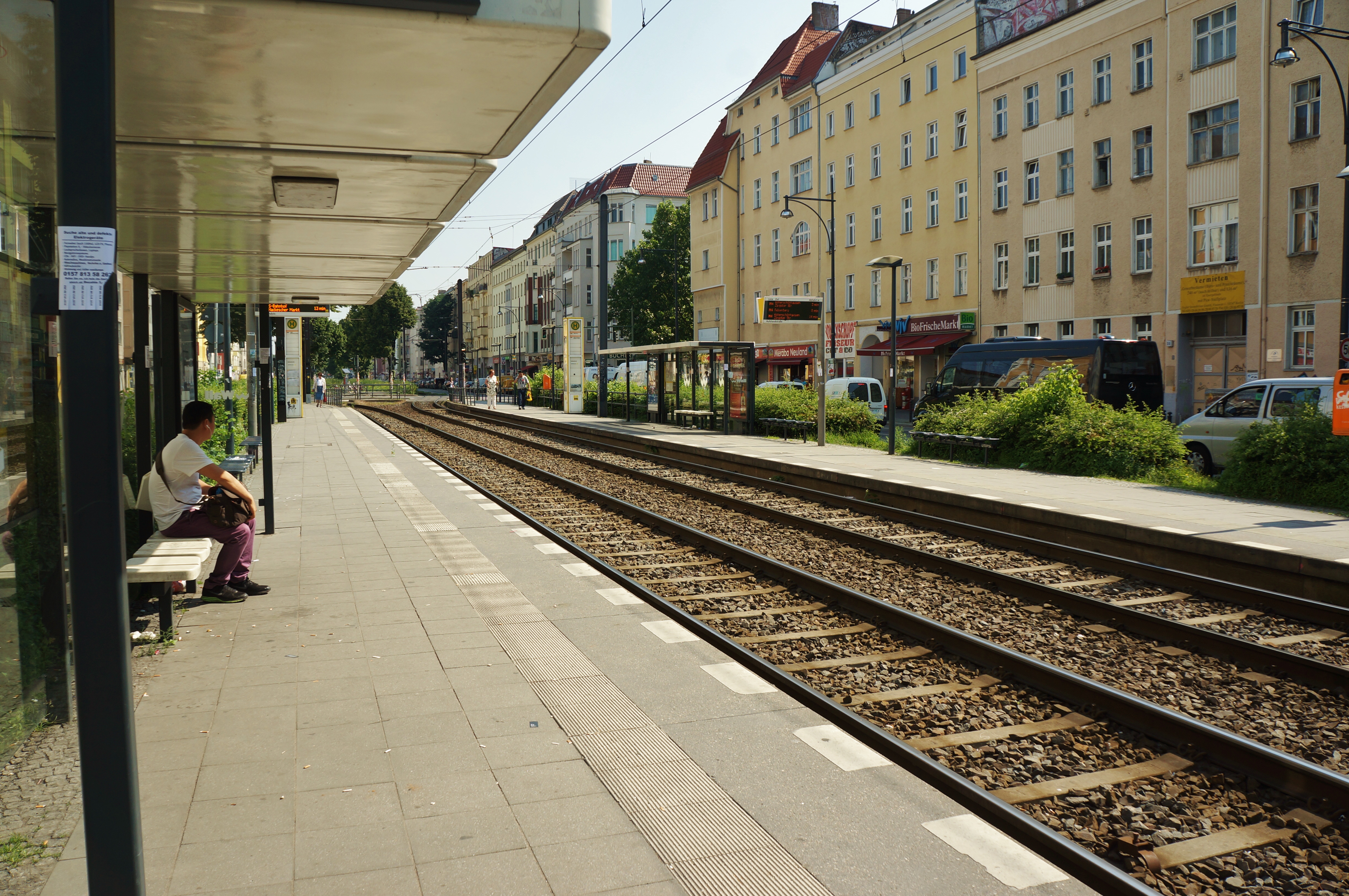
Feast your eyes on this; Griefswalder Straße looks so great from the rail stop.

Jim Rose, American journalist and novelist, is responsible for “Governors Want Federal Funds For Infrastructure” which features the following comments:

Governor ED RENDELL (Democrat, Pennsylvania): We have a legitimate crisis with these bridges. They’re not sexy. People can’t see them. Almost nobody driving on I-95 saw the crack in that pier. Most of you did. And it was pretty darn frightening. And we have got to get about doing this.

Excuse me? Sexy infrastructure? Bridges, by candle light? Watch your language, Ed, there might be children around. The idea of sexy infrastructure really got me thinking…

However, there is more to this than one might, at first, imagine.

Infrastructure assets such as utilities, toll roads and airports are attractive to financial bidders like banks and pension funds because of their stable cash flow despite having lower growth rates than other private equity opportunities.

However, not everyone agrees on the general level of sexiness with regard to infrastructure. Long time proponent of seeing infrastructure as anything but attractive, anti-sexy infrastructure writer Cheri Rae from the Santa Barbara View calls infrastructure the “not-so-sexy part of government work.”

At any rate, I’ll never take questions like “how’s your plumbing?” or comments like “you have nice roads in Pennsylvania” the same way ever again …

Image

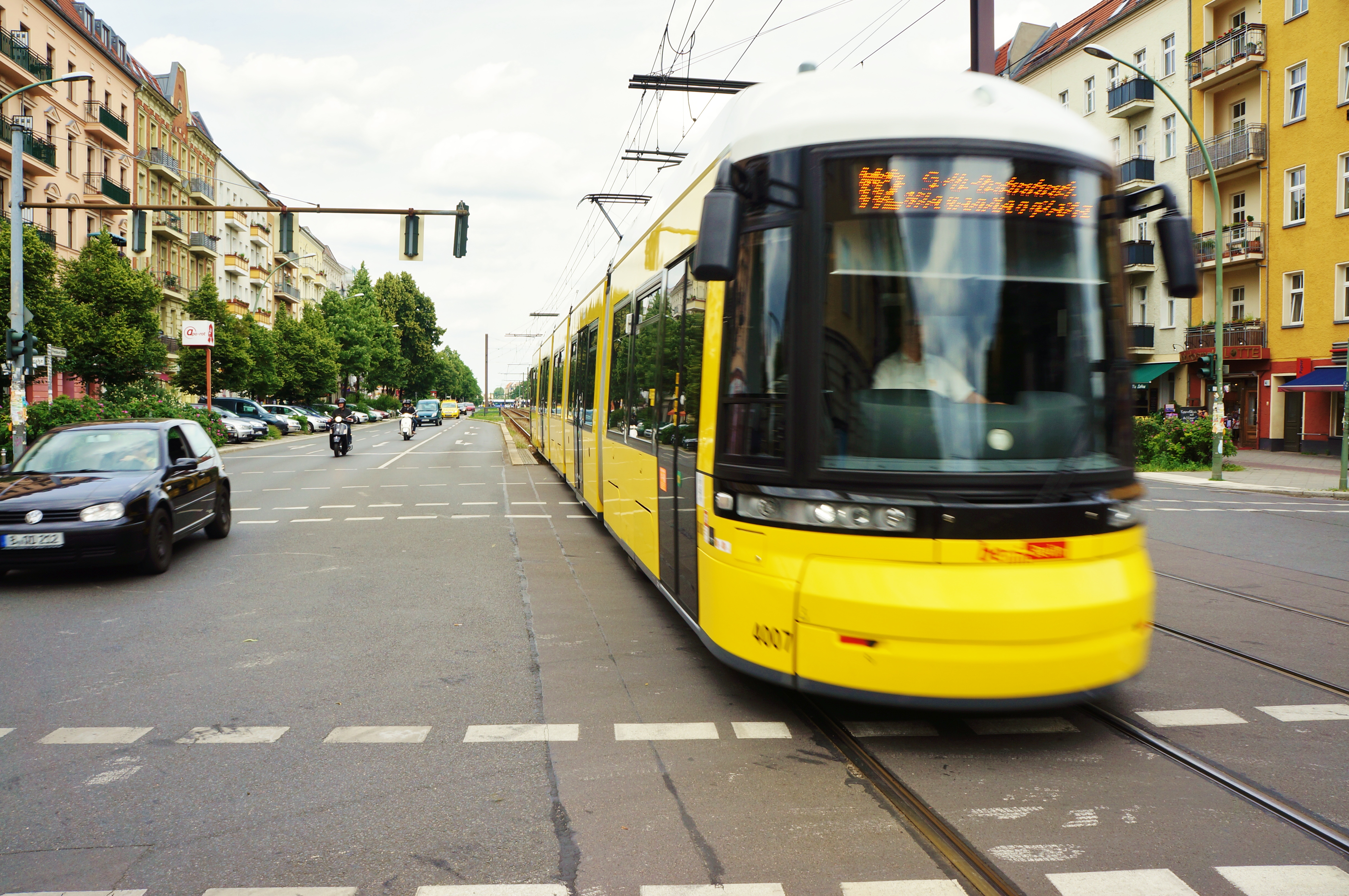
“Nice trains!” … “Are you flirting with my infrastructure, sir?”

Ethnographies from the Future: What can ethnographers learn from science fiction and speculative design?

Interesting series on fiction and science, especially social science.

laura4lano's avatarEthnography Matters

Editor’s Note: Laura Forlano (@laura4lano) is a tenure-track Assistant Professor of Design at the Institute of Design at Illinois Institute of Technology and she was a Visiting Scholar in the Comparative Media Studies program at Massachusetts Institute of Technology in 2012-2013. Her research is on emergent forms of organizing and urbanism enabled by mobile, wireless and ubiquitous computing technologies with an emphasis on the socio-technical practices and spaces of innovation. In her contribution, Laura describes the lessons ethnographers can learn from Science-Fiction and a sub-domain of design referred to as “speculative design”.

____________________________________________________________________________

In the recent science fiction film Elysium, by South-African-Canadian director Neill Blomkamp and Matt Damon, the world has descended into a dystopia in which the poor, non-white population must live in squalor on Earth working for a factory that makes robots while the wealthy have moved to a man-made country club in the sky. A recent

View original post 2,462 more words

good luck, sociological science!

Rethinking sociological science at Sociological Science!

fabiorojas's avatarorgtheory.net

The new journal, Sociological Science, is now up and running. The goal:

  • Open access: Accepted works are freely available, and authors retain copyright
  • Timely: Sociological Science will make editorial decisions within 30 days; accepted works appear online immediately upon receipt of final version
  • Evaluative, not developmental: Rather than focus on identifying potential areas for improvement in a submission, editors focus on judging whether the submission as written makes a rigorous and thoughtful contribution to sociological knowledge
  • Concise: Sociological Science encourages a high ratio of novel ideas and insights to written words
  • A community: The journal’s online presence is intended as a forum for commentary and debate aimed at advancing sociological knowledge and bringing into the open conversations that usually occur behind the scenes between authors and reviewers

I congratulate them for doing this. This takes some courage to do. We need many different types of journals. And, sadly, we are lacking…

View original post 36 more words

Bogost and “Doing Things with Video Games”

What do video games do?

Image

After our friend, Dmfant, posted about Ian Bogost who keynotes the 10th Anniversary Games for Change Festival.

I have recently reviewed How to do things with Videogames  (by Ian Bogost (Professor of Digital Media, Georgia Institute of Technology) Minneapolis / London: University of Minnesota Press, 2011, 180 pages, ISBN 081667647X). There is a copy of the book on-line here.

Here are some excerpts if you’re curious about the topic or the book.

One the one hand, it was oddly satisfying to read research about video games that was not mired in the woefully lame “do they cause violence?” trope. In contrast, Ian Bogost in How to Do Things with VideoGames shows how videogames have transformed society, arguing that games have shaped, in meaningful ways, essential facets of social life, ranging from exercise and relaxation to politics, travel, and photography.

            On the other hand, we all had the nagging feeling, while reading this otherwise fine book, that games – not videogames, specifically, but just games, generally, of which videogames are just one branch – are nothing at all new. When we step back and consider whether or not games have changed art or relaxation – or, more realistically, how games and society are a dynamic mutually shaping state of co-constitution – the question seems … well, silly. No doubt, games shape society and society shapes games … of course.

In general, the book was a fun and quick read; much like a video game itself. For scholars, however, here is the bottom-line:

where does this book fit on the library shelf? His past and future works hold together nicely. In Bogost’s 2006 Unit Operations, he shows us that games should be analyzed using the same techniques we would use to criticize architecture, a poem, or a sunset as a means to keep “game studies” from being ghettoized in the larger academic discussion of the role of games in our information society. His 2007 book Persuasive Games offers us an example of exactly what games can do: persuade; Bogost shows that games contain all manner of persuasive rhetoric, which has long-term potential to change the shape of society. Those two titles laid a solid groundwork for How To Do Things With Videogames and make the title more understandable once put in the context of his previous work. The shift in grammar – from “doing” to “how to do” – is anything but subtle, but rather than talk about video games – critiquing or lauding – this book is about what to do with them, and where, and the answer to the “where” question is, more or less, “anywhere and everywhere.” If Bogost gets his way, terms like “gamers” will be so ubiquitous as to hardly capture anything at all meaningful, and, instead, video games will take their rightful place at the center of popular culture (so long as Bogost is there to hold them up). In Bogost’s 2012 Alien Phenomenology, or What It’s Like to Be a Thing – his most intense work to date –shifts readers away from doing things with games and toward trying to understand how things, such as games, are.


The Language of Things by Akiko Busch

“Using language as a more complete partner for thinking things (through)” … wow.

dmf's avatarANTHEM

“Atmosphere of Objects,” a close examination of the way objects in space inform inhabitation, influence perception and create social dynamics.
Akiko Busch writes about design, culture, and nature for a variety of publications. She is the author of Geography of Home: Writings on Where We Live, The Uncommon Life of Common Objects: Essays on Design and the Everyday, and Nine Ways to Cross a River. The Incidental Steward, her essays about citizen science and stewardship, will be published by Yale University Press in 2013

View original post

call for papers on poltics and the later Latour

Latour-lovers unite!

doctorzamalek's avatarObject-Oriented Philosophy

My own view is clear: if you’re not assimilating Bruno Latour into your work in some way, then you’re probably stuck in some form of pseudo-novel modernism that wants to use ostensibly dark scientific or mathematical results to club other people over the head.

That’s one version of contemporary continental philosophy. But it’s not too late to go back and take the other fork in the road.

***

Call for Papers

 Politics and the Later Latour


Global Discourse:

An Interdisciplinary Journal of Current Affairs and Applied Contemporary Thought


Volume 4: Issue 4

November 2014


This August sees the publication of the English translation of Bruno Latour’s ‘An Inquiry into Modes of Existence’ (AIME), marking both a landmark in the long-collaborative AIME project and a significant development in Latour’s thought. This issue of Global Discourse will examine the political significance of Latour’s later work, which has seen important…

View original post 372 more words

Thank you, guest blogger Stefanie Fishel

A thank you, which is long overdue(!), to guest blogger Stefanie Fishel.

754px-Musei_Wormiani_Historia

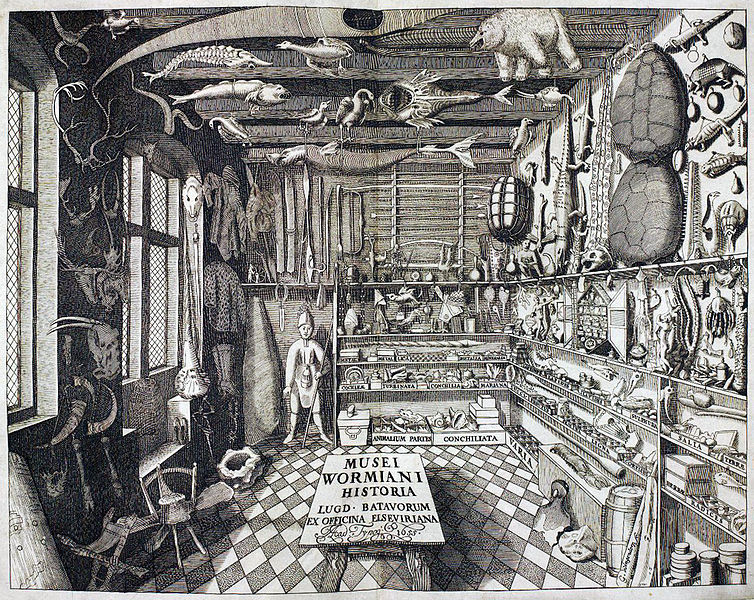
Looking back, her great posts on “thinking with the body,” which played with a comment that Jan and I made at the Millennium conference about STS being a “cabinet of curiosities,” is a favorite for me, along with “The Bodies Politic,” are all good reminders of the rich interface possible between international relations and science and technology studies.

Stefanie also a fresh new article out: “Theorizing violence in the Responsibility to Protect” (Critical Studies on Security, Volume 1, Issue 2, 2013, Special Issue: Late Warfare), check it out!

A quick plug for Stefanie from when we introduced her earlier this year:

Stefanie Fishel received her doctorate in Political Science from Johns Hopkins University and a Master’s degree in International Relations from the University of Victoria. Dr. Fishel approaches International Relations using techniques and inspirations from Science, Technology, and Society (STS) studies, the philosophy of science, and biology. She is currently at Colgate University in their Peace and Conflict Studies area.

I met Stefanie at the 2012 Millennium Conference at the London School of Economics during a post-conference workshop about how actor-network theory and international relations might fit together (if at all). Andrew Barry was the keynote speaker. In all, it was great.

In her LSE talk, “Lively Vessels and Contaminated States: Biological Metaphor and Global Politics” Stephanie described … well, I’ll let her fill you in over the next month.

Join us in welcoming Stefanie to the blog!

Resisting infrastructural development in China

In the New York Times this morning (September 9, 2013), a terrific article (written September 8, 2013) explores a development in China’s plans for urban development and the displacement of rural inhabitant.

Capture

“Leaving the Land” is a new series in NYT, and “Articles in this series look at how China’s government-driven effort to push the population to towns and cities is reshaping a nation that for millenniums has been defined by its rural life”, which can also be read in Chinese, fittingly).

The third piece, “Picking Death Over Eviction,” explores rural resistance to government-based programs to urbanize rural citizens, including a graphic opening passage about a young woman who refuses to have her small shop removed by a demolition crew set to level it, drenches herself in diesel fuel and lights a match. According to the journalist, “Besides the self-immolations, farmers have killed themselves by other means to protest land expropriation.”

For STS scholars, the link between infrastructural expansion/transformation and social protest, the bread-and-butter of traditional/conventional sociology, seems like an obviously good research site for mutually beneficial scholarship, potentially even for those individuals being displaced through the advanced justification of infrastructural expansion … after all, it appears that this change is not poised to slow for many years: “In China, the timeline for moving 250 million rural residents into cities by 2025 is so rapid and far-reaching that it is raising concerns that some people will be left behind” … so, it is a sad, unfortunate case, but one rich for considering “infrastructural controversies” (controversies being a mainstay in STS) and “social protest” (protest being a mainstay in sociology).

We are back.

After a long summer hiatus wherein Jan-H and I were hard at work on a few new publications, we have returned to blogging for the (in the US, anyways) fall semester. We will share excerpts from our new work and invite a few new guest bloggers to share the stage with us as we consider the role of infrastructure in supporting (or up-ending) (social) order.


Infrastructure Humor from The Onion

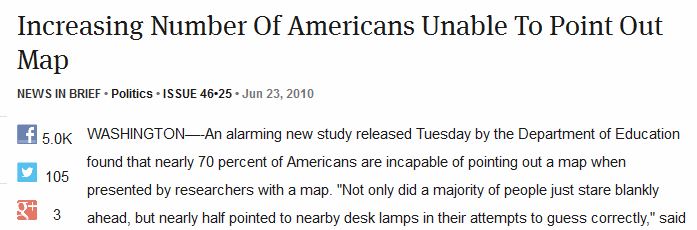
Maps and map-making and the like have played a powerful role in shaping states and shaping states up, in STS research and elsewhere; however, a shocking and not-at-all-new statistic indicates that map literacy may be fading.

Image

The Onion Reports: “Increasing Number Of Americans Unable To Point Out Map”

WASHINGTON—-An alarming new study released Tuesday by the Department of Education found that nearly 70 percent of Americans are incapable of pointing out a map when presented by researchers with a map. “Not only did a majority of people just stare blankly ahead, but nearly half pointed to nearby desk lamps in their attempts to guess correctly,” said Secretary of Education Arne Duncan, who called the findings endemic of the nation’s failing school system.

At least as concerning:

“In fact, 14 percent of all Americans claimed they had never ‘even heard of no map,’ and asked if being prompted to locate one was some kind of trick question.” According to Duncan, the Department of Education has suspended all further studies and will instead be spending the next six months just screaming into a pillow.

America’s Infrastructure Report Card

The American Society for Civil Engineering has created a nifty interactive website about the state of infrastructure in America at http://www.infrastructurereportcard.org/.

The website is appealing to look at and intuitive to use if you’re curious about, in this case, how poor American infrastructure really is in the late 2000s and early 2010s. Bottom-line: America gets a failing grade, but only-just-failing at a D+.

Capture

For STS scholars, this might be one of those great cases in the rough that could bring the “assessment” or “accounting” literature together with infrastructure studies given that the infrastructures must be defined in order to be counted and compared, and, as such, provides a right backdrop upon with some solid STS-oriented research could start from … and STSers will no doubt love this “grading rubric” available at the sight to legitimize and justify the grading standards. Also, of particular interest to scholars like Jan-Hendrik and I (along with our friends Stefanie Fishel (guest blogger emeritus), Govind Gopakumar, Kathryn Furlong (also guest blogger emeritus), and Patrick Carroll, there is a section that breaks-up scores according to states … nice, no?

In all, this is one of the places where an STS orientation might just be of serious government interest again …

Cataloguing our microbial roommates

On the NYT site this morning I ran across an interesting video entitled “The Jungle Indoors” and a companion article “Mapping the Great Indoors.” Subtitled “Getting to Know Our Microbial Roommates,” the article and video discuss the ecology of our homes.  Humans are an indoor species spending as much as 90% of our time indoors, and ecologists have become interested in learning about these intimate relationships that have gone unnoticed thus far.  How do humans “colonize” the places we live and how can understanding these relationships lead to better health are the main questions behind this study.  What I find infinitely intriguing is that this study (and studies on the microbiome in our guts and skin) are generally reported with a sense of wonder and even awe at the magic of these relationships:

“But as humdrum as a home might first appear, it is a veritable wonderland. Ecology does not stop at the front door; a home to you is also home to an incredible array of wildlife.”

If, as Weber wrote, we have lost our sense of enchantment with the modern world, these morsels remind us that this may not be entirely the case.  Plus, it opens up discussions about our built environments and structures, along with what it might mean to live together with all kinds of “roommates.”

Visualization Infrastructure

*This is, in some ways, Stefanie‘s post, because she found it. Here goes, anyways:

One of our longstanding understandings of infrastructure is that it facilitates and supports something else, but, in these discussions, we almost never discuss music (even though Jan has written extensively on the topic). When I think of music infrastructure, I typically think like a sociologist and come-up with ideas like those in this website about linking together musicians, studio owners, and show venues or infrastructure as constituting the business and legal environment music is embedded in.

However, composer, pianist and software engineer Stephen Malinowski has me thinking another way about music infrastructure, in particular, about visualization infrastructure for audio stuff. Now, music visualizers are nothing new. In fact, off-the-shelf software installed on most computers is capable of it.

Capture

National Public Radio in the states covered this story about music visualization infrastructure featuring Malinowski. The title, “Watch A Mind-Blowing Visualization Of ‘The Rite Of Spring'” is pretty accurate in my opinion. Similar to overcoming the problem of getting pseudo-instruments into the hands of millions (a la Guitar Hero and MIT’s Media Lab),

Stephen Malinowski has created one brilliant solution to an age-old problem: how to communicate and understand what’s going on in a piece of music, particularly if you don’t know standard musical notation.

The visualization infrastructure is fairly basic at this point, and, as Malinowski admits, he is only at the beginning of his ability to render music (with his imagination being one of the only limitations). Still, his “music animation machine” is a pretty fascinating case of infrastructural development. Enjoy!

Homeopathy, Autopoiesis, and Global Complexity (with Walt Whitman)

Nick’s previous post about Machiavelli and the homeopathic state got me thinking about different approaches and sources that can inspire and provoke new ways of thinking about old problems or stagnant institutions.

As you know from the last post I wrote, one of the ways I do this in International Relations is by drawing on STS and biology. Microbes, nations, parasites, guts, and bodies became lively containers and contaminated states to better capture the flows, immersions, circuits, and heterogeneities between and amongst a plurality of actors. These are new models of affectivity to provoke and invoke new forms of intelligibility in politics and social life.

To bring this affect based in material entanglement and poetic critique of the status quo to the fore, another place I draw inspiration from is Leaves of Grass, Walt Whitman’s collection of poetry. They provide a productive subtext to the analysis of IR. I draw the insights garnered from Whitman and his poetry into the text and practice of international relations. Whitman penned that poets were best suited to “strengthen and enrich mankind with free flights in all directions not tolerated by ordinary society.” Poets know no laws but the laws of themselves, and are beholden to “mere etiquette.” Whitman said “Often the best service that can be done to the race, is to lift the veil, at least for a time, from these rules and fossil-etiquettes.”

Walt Whitman project’s was one of cultural and literary revision against the prevailing notions of the body and its relation to politics and sociality. Whitman produced texts that extended his reader’s conceptions of the body and the literary, and especially how these categories interact to exceed or overrule the cultural constraints of the time. Through Leaves of Grass, and its many revisions, Whitman joyfully supported the body as a fluid self struggling to negotiate identity and difference while committed to being responsive to as much of the world as possible.

Whitman can speak directly to my conceit of the contaminated state as I defined it my first post. When pondering the strength of America in regards to its relationship to wealth and poverty, Whitman cautions the rich to maintain strong stomachs as the wealth of the civilized world was built from “rapine, murder, outrages, treachery, hoggishness, or hundreds of years ago, and later, so in America.” He continues that it is the working- people, “vast crops of the poor, desperate, dissatisfied, nomadic, and miserably waged populations” that can truly offer a cure to the ills of American democracy.

“Curious as it may seem, it is in what we’d call the poorest, lowest characters you will sometimes, nay, generally find glints of the most sublime virtues, eligibilities, heroisms. Then it is doubtful whether the State is to be saved, either in the monotonous long run, or in tremendous special crises, by its good people only. When the storm is deadliest, and the disease most imminent, help often comes from strange quarters—(the homeopathic motto, you remember, cure the bite with the hair of the same dog.)”

He wrote that the true prosperity of a nation was not demonstrated by the wealth of a special class, or a “vulgar aristocracy,” but by having the bulk of people provided with homes and a fair proportion of the profits. It is this bulk of people denied these where the “glints of the most sublime virtues” will be found in a country. Simonson, a Whitman scholar, writes that Whitman “calls us to develop a democratic ethos directed toward recognizing and finding place for the world’s variety—not just its obvious beauty, but its “terrible rude, forms” as well (2003, 370).

With Whitman as poetic counsel, I approach the global with humbleness and care, but with a conviction that seeing possible alternative global orders is of the utmost importance. I hope to refresh a belief in the importance of plurality and respect for life in International Relations knowing full well that there is no one option that makes right that which is wrong with the world, but nonetheless we must respond. For this, Whitman offers a model for a cosmopolitan and pluralistic society based on complex individualism not dominated by rational choice. This response may not be as an actor who identifies a problem and then “fixes” that problem, but it creates awareness that humans are part of the problem itself, and as individuals we are likely to be party to many of the crises we are responding to globally and locally. Therefore, an ethos of care for the world is crucial.

To nurture this ethos, it remains important to offer creative and disciplined thinking about the relation of life to politics in the international. Too often the discussion in IR theory centers on negative instantiations of biopower, or a “becoming corpse” as Rosi Bradiotti writes. I take life as a creative intensity that can offer new solutions, and new ways of engaging with the world. Placing an idea of life as vital at the center of politics leads to two important implications: a rethinking of ethics and responsibility leading to a, said so beautifully by Bradiotti, “diffuse sort of ontological gratitude is needed in the post-human era, towards the multitude of nonhuman agents” that support us (2006, 270). This diffusing, or flattening, of social action and ties into a continuum of dynamic object interactions, or translations, between humans and nonhumans, states, bacteria, biomes and parasites, made the nested and imbricated nature of politics in the body politic more visible.

Another implication is explicitly political: we will need to organize collectivities and political organizations that reflect these “dreams” of nested subjectivities. As Latour queries, “Once the task of exploring the multiplicity of agencies is completed, another question can be raised: What are the assemblies of those assemblages?” (2005, 260). These discussions should be open, inclusive, and careful to reflect the values and ethics we feel are necessary in creating mutual public space.

Peer Schouten, at it again!

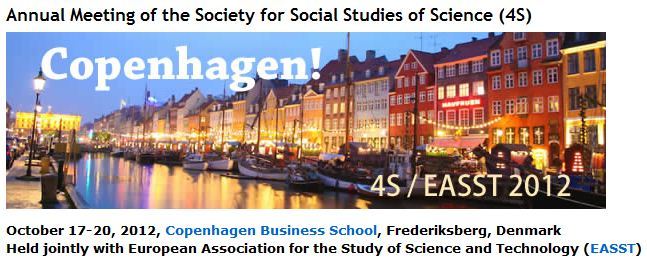
We introduced Peer back in March … well, his paper presented in last year’s 4S meeting at the Copenhagen Business School (and subsequent ISA meeting at London School of Economics) is now in press!

Check it out; its an alternative answer to traditional interpretations of “failed states” in conventional IR research, and, of course, the alternative to orthodox social contract theory appears to be ANT (or, at minimum, ANT can draw our attention to alternative explanations … or, better yet, help us to understand the infrastructural underpinnings that make explanations possible, like those used by our friends in social contract theory [although their friendships seem oddly contractual]).

Image

Cheers, Peer!

Oh, he even mentions as much in the acknowledgements:

Further thanks to the following people for comments on a previous draft of this article:the editors Graham Harman, Maximilian Mayer, the participants in the panelOn States, Stateness,and STS: government(ality) with a small “g”?, Society for Social Studies of Science & European Association for the Study of Science and Technology Annual Conference, Copenhagen, October17-20 2012, and participants in the Millennium/Theory Talks workshop at the Millennium Annual Conference, London, October 20–22 2012.

Homeopathic Infrastructure: Machiavelli on Infrastructure

Recently, an old dissertation fell into my lap and I’d like to tell you about it. I asked my work study to find basically anything about the state and state theory for Jan and I’s book “The State Multiple,” which we are writing now. Well, the dissertation was from 1988 by Michael Soupios, now a storied professor at Long Island University here in the states, where he’s being teaching for three decades and more. His 1988 dissertation from Fordham *(he has multiple PhDs) is titled “Human Nature and Machiavelli’s Homeopathic Theory of State” wherein he tackles the basic quandary set forth by Machiavelli.

Capture

Quoting the dissertation:

The terms “homopathic” or “homeotherapy” are of medical origin and refer to a form of treatment in which an element similar to the causative agent of a disease is itself used in attempting a cure. It is precisely this approach that we find offered in Machiavelli’s political formula.

The dissertation goes on to explain how Machiavelli’s vision of humans was basically that we are a bunch of decrepit liars and thieves and, thus, deserved to be treated with as much manipulation and self-service as we would impart on others. Call this, let’s say, a Hobbsian antidote to the crisis of the commons and the natural order of man, although Michael Soupios refrains from the comment (good to stay on topic in a dissertation!). We are not to be ruled and governed by a force that helps us to repress our baser instincts and then choose to be together non-violently as a form of supra-self-interest (sort of like a dynamic where we cooperate just long enough to compete, like children playing nearly any game), and, instead, we see Machiavelli’s view that you treat like with like, or his homeopathic view of states. Michael Soupios tackles fear and force, fraud as an instrument of the state, and creative conflict within the state before setting his sights on how this approach could even be instantiated as a model for International Relations.

The dissertation is fascinating and essentially well-written. Now, this view of politics is politics by political means, if you will. Since this writing, STS has entered the discussion of the state, perhaps foremost by my friend and ally in state theory, Patrick Carroll, who, in his many written works, shows how the state, as we know it (i.e., as an actor, a macro entity capable of action, etc.) is a falsehood of sorts and instead the state is made-up of all things stately such as people, bogs, trees, and all the measurement techniques used to make the state’s ‘self’ register in formal documents of statehood and statecraft. For Patrick, the state is constructed and environmental rather than iconic and abstract; material rather than conceptual.

So, with enough force, could Michael Soupios and Patrick Carroll be collided with enough force to make the argument: if one model for the state is homeopathic (i.e., Mach’s), and if one model for the state is material, then could we have a hybrid theory, a homeopathic-material theory of the state?

If that is the case: what would the infrastructural equivalent of homeopathic statecraft look like? I don’t yet know, as I’ve only just completed the dissertation read, but it seems like a viable option forward if one wants to engage the cocktail of normative and empirical claims-making that is contemporary political theory.

Infrastructuring the City (and its Leftovers)

A few months ago we had a discussion (here and here) about olympic stadiums and the fact that they are the products of large infrastructuring projects that remain long after the project is over. That was an eye opener — at least for me: it seems as if our (STS) focus on stability and material durability is biased; we tend to think that by building buildings we build a world of things that stand for us, our wishes, dreams, prejudices or our moral classifications. The whole “politics by other means is going into that direction. And the ruins of the olympic stadium in Athens (the 2006 one, not the antique one turned into a soccer stadium) reminded me that durability sometimes is a burden: what is build in steel and concrete is going to stay unless we “deconstruct” it. And even then the marks of it stay, leftovers are hard to avoid. Two days ago now I saw this:

A city divided by light

A city divided by light (Photo by Chris Hadfield, Source: http://www.telegraph.co.uk/news/worldnews/europe/germany/10003467/Berlin-satellite-image-reveals-stark-east-west-divisions.html)

After 23 years,the city of Berlin is still divided — infrastructurally. On the one hand, a lot of the western part of the city still has gas lights: a relict of the cold war era where gas was easier to manage because it can be made from coal and storing or even delivering that was easier than providing electricity in times of a lock-down of the city surrounded by the GDR. But that is not the reason for that: To increase efficiency (and officially to avoid “capitalist/imperialist wastefulness”, I suppose) the GDR changed their preferred system of electric lighting to Sodium-vapor lamps (with a warmer and darker light), the FRG continued to use Mercury-vapor lamps (with that bluish lucid light). So: leftovers of projects of infrastructural politics, but not disturbing ones like politically incorrect street names, memorizing ones like memorials, problematic ones like the Athens olympic stadium. But mundane ones. There in every corner, unnoticed. What do they tell us?

The Bodies Politic

Image

Political theory and philosophy often speak of the body politic as multiple, or as a composite being.  Thomas Hobbes’ Leviathan is, for IR, our most familiar image and idea of how multiple bodies form into larger bodies.  As Latour points out in the introduction to Making Things Public,  Hobbes Leviathan always included more than human bodies:

But in addition to the visual puzzle of assembling composite bodies, another puzzle should strike us in those engravings. A simple look at them clearly proves that the “Body Politik” is not only made of people! They are thick with things: clothes, a huge sword, immense castles, large cultivated fields, crowns, ships, cities and an immensely complex technology of gathering, meeting, cohabiting, enlarging, reducing, and focusing. In addition to the throng of little people summed up in the crowned head of the Leviathan, there are objects everywhere.

As Latour stresses, this political body is filled with actants (Latour’s word that blends and loses the so-called modern distinction between a subject and object).  Actants have varying degrees of “agency,”  but more importantly, it is the connections, or translations between actants and what assemblages these connections form, that shows the unfolding story of communal life.

To add to this busy and complex assemblages of actants, I throw in the human body itself as a microcosm of these same connections and entanglements.  The human microbiome, studied and understood anew through metagenomics, systems biology, and epigenetics, becomes a body multiple, too.

By way of example, bacteroides are commonly found in the human intestine where they have a symbiotic, or commensal, relationship with humans.  They aid in breaking down polysaccharides that the human body would not otherwise be able to process.  Fifteen to twenty percent of our daily caloric intake is absorbed in this manner.   There are new studies that suggest that gut microbiota both cause and can be the cure for autoimmune disorders like allergies and irritable bowel syndrome and, according to the Committee on Metagenomics,   “[T]hese functions are conducted within complex communities—intricate, balanced, and integrated entities that adapt swiftly and flexibly to environmental change.”.

Consider, again,  that the DNA of other life forms in our body outnumber us 10 to 1–many of these invisible to us up until recently. To take metagenomics and the microbiomes of the human body seriously means the human body becomes a community, not only a container–a “mutualistic human-microbial”  series of interactions.  Not only are we embedded in our environment, but our bodies are home to our own communities of micro flora and fauna.

If we extrapolate this to the macro level and the idea of the body politic, what can these commensal, host-guest relations teach us about human communities?  Writ large: The State as Person (the body politic) based on these lively human containers becomes dynamic, pluralistic, permeable, heterogeneous. This idea of composite bodies is nothing new, as we spoke above about Hobbes’ Leviathan, humans have imagined, and tried to create societies that respect diversity while securing freedom, but these diverse bodies may need decidedly different security regimes. Regimes that flow, and understand complex systems–both emergence and other perturbations in the system (noise, as Serres, said)– differently. The body and the body politic as a hybrid forum, a nested sets of complex permeable, rather than autonomous bodies need different security assemblages.  It certainly puts a different spin on issues such as immigration (immigrants and diseases are often linked), for example.  We always already are immigrants and guests and aliens, necessarily.  This is health, not sickness, in a body as multiplicity. Purity and isolation will slowly poison this body from the center out, like a closed petri dish.

The preservation of the body and the body politic has had multiple figurations–the state and nation, of course, looming the largest in this horizon of politics, but these figurations have never quite worked because few have quite captured the extent to which we are blended and imbricated with each other–both between and across species boundaries.  These leakages, or how these problems exceed the capacity of the sovereign state and the system of sovereign states,  are the problems of modern politics.  We can see them reflected in current debates in international politics like immigration, refugees, predator states, and climate change, to name but a few.  These may be more aptly defined as symptoms of a larger misunderstandings about how relationships are formed with multiple bodies coexisting in a mutual biosphere.

I have tried, from the perspective of the human body as understood through metagenomics, to show the similarities between relationships in the internal relations between members of microbiotic communities in the human gut and the relations between members of a political society. If, through research like this, we can no longer uphold the fiction of autonomous selfhood–a hard shelled container body that collides with other bodies and has clearly defined and rational interests (bring up biology and physics); what must that mean for institutions we “create in our own image?”

Another Turn After ANT: An Interview with Bruno Latour:

Is a Post-Post-ANT Era about to begin (again)?

dmf's avatarANTHEM

Another Turn After ANT: An Interview with Bruno Latour:

Latour Interviewed About His New Book

by Adam Robbert

Another Turn After ANT: An Interview with Bruno Latour: ”This is a review, or preview, in the form of an interview, of Bruno Latour’s forthcoming book, An Inquiry into Modes of Existence. We discuss his intellectual trajectory leading up to actor–network theory and the pluralistic philosophy underlying his new, ‘positive’ anthropology of modernity.”

View original post

Abstracts are in for 4S 2013 San Diego!!!

Capture

Submissions in! Jan and I (Nicholas) proposed an open session for this year’s Society for the Social Studies of Science meeting in San Diego this fall. We already have 18 submissions for the one session, which — at least I think — is the highest level of interest we’ve had in the state/stateness area of STS in the last few years of organizing these panels/sessions. Obviously, this is very cool, and we are stoked. If you sent us an abstract, thank you; they look great. Looks like we’ve got a month to put the abstracts into order. We are being allotted 15 total spots to spread over 3 sessions, which will also be the biggest set of sessions we’ve been allowed to host.

Timing: According to the webpage about the conference, by 12 May 2013 abstract submitters should learn of their acceptance notification and the placement of their respective papers (the day afterward, early registration starts, coincidentally).

Capture

Also, for those unfamiliar with the sessions we promote: We called the proposed session “State Multiplicity, Performativity and Materiality: Current STS Research on State and Stateness,” and our brief description reads:

Annual Meeting of the Society for Social Studies of Science (4S), October 9 – 12, 2013 — San Diego, California


Open Session 43. State Multiplicity, Performativity and Materiality: Current STS Research on State and Stateness


Organizers: Jan-Hendrik Passoth; Nicholas J. Rowland


Currently, science and technology studies is rich with opportunity to conceptualize the state and comment on its consequences for global living. While long under the conceptual jurisdiction of traditional political science, political sociology, and political history, scholars in science and technology studies have, with their own concepts and style, taken to rethinking the state and, with renewed nuance, capture its many and multiple influences in our (decidedly) material world. Similar to the move made by scholars in the social studies of finance, when they showed us how to rethink economic sociology, recent work on the machinery and infrastructure of governing is growing in significance. We see large empirical studies of water infrastructure in India, Columbia, and US states such as California, research on public transportation systems and global logistics, work about census creation and population data gathering as well as growing and genuine theoretical contributions to state theory and theories of stateness have all been published in recent years.

The upshot: Conceptual lens such as multiplicity, performativity, and materiality, which are central to contemporary science and technology studies, provide one such direction toward an explicitly science and technology studies perspective on the state. We believe that this line of thinking, if properly developed in-house by science and technology studies scholars, has the potential to produce discourse-changing research even among our friends in traditional political science, sociology, and history. This open panel will consist of two or three sessions. We invite empirical and theoretical contributions on a wide variety of topics, regions, and theoretical approaches. We encourage work-in-progress as well as more mature projects to the session. We especially invite papers on the multiple ontologies of political entities such as states, the performativity of social and political theory, and the materialities of governing modern states and their environs.

The Cabinet of Curiosity and the Levels of Analysis Problem in International Relations (IR)

Last October during the Millennium conference, Materialism and World Politics, STS and IR theorists met on the last day to discuss potential collaborations and resonances between the two discourses.  “Materialism” as a theory and as a methodology made a helpful facilitator for this conversation. One of the main points the discussion centered on during the conference was what “subjects” could be “objects” of study in each discourse.

It came down to this: STS likened choosing its subjects and objects of interest to looking into a “cabinet of curiosities.”  IR is decidedly wedded to its levels of analysis. The sovereign state and the international system of states, and–to a lesser degree–the sovereign individual. These are the legitimate subjects/objects of study in IR.  Of course, these levels are being pushed and questioned, as is evidenced by the conversation we had in London, but they figure large in the epistemology of IR.

To return to the subject of “bodies,” there is something puzzling about how IR, as a discourse and a practice, speaks of the body, or, more specifically how IR theorizes and and understands the human body in this tripartite schema of system, state, and individual.

In other disciplines, there has been an increased interest in the study of the body as a social and material phenomenon beyond a scientific or medical perspective, but, until recently, IR has never much about the human body. Conversations and analysis have focused on the state, and on the individual as connected to states.

But, how is this “individual” understood beyond the civil and legal terms that dominate our field?  Not just as a voter or a rational actor, but as an actual, material body that can be fragile, leaky, diseased, sold, colonized, male, female, multiple?

This body is a powerful body, one that cannot be fully securitized or regulated, but its seductive power to IR theorists is unmistakable.  Folllowing in the footsteps of Machiavelli, Hobbes, Kant, and other precursors that IR has adopted as its own, IR theorists have understood or likened the state to a person (Wendt and constructivism), or used body metaphors to describe it (organs of government, for example).

This “state as a person” debate and bodily metaphors show that the body never really disappeared (as sociologists and social theorists already said in the 1980s and on), it was just less visible. A variety of recent literature in IR, and the conference in London, can attest to a new (renewed?) interest in concerns of the flesh, so to speak.  This may be due, in part, to a concomitant questioning the sovereign state as the legitimate subject of study, and most relevant actor in IR in a complex, interconnected, and globalized world with diverse actors and multiple relations of power and accountability.

This is certainly where STS has the most to offer IR–some promiscuity, as Deleuze would insist upon, in methods and subjects/objects of study. Cabinets of curiosities rather than hierarchies and levels.

Image

Technology for Everyday Sharing and Caring

Last night at Colgate University, we brought in a speaker for our Global Engagements program.  His name is David Crawford, and he is an anthropologist at Fairfield University.  It was a really terrific talk–he works in rural Morocco–about experience of globalization in urban and rural places.  During the talk, he spoke of hearing an Amish farmer speak at the Yale Cooperative Ag School.  At the beginning of the talk, the farmer told the audience that his community had no tractors, but they did have a washing machine.  Dr. Crawford joked that this distracted him through the entire talk: why a washer and not a tractor?  The answer: Tractors make it possible for one man to use too much land, and to be able to work the land by himself.  Horses and plows put each community member into a place where he has to ask for help and to recognize his communal relations.  The amount of land that can be tilled is less, therefore leaving more for future generations.  All the hay harvested in day needs to be collected before it gets wet.  This is more than one man and one horse can do so he has to ask for help from the neighbors.

This is a much different idea of technology: this Amish community deliberately integrates their choices about what is important into the technology they choose to employ.  They have washers because laundry tends to be a solitary chore that, if done without a washing machine, is very time consuming and laborious.  The technology here frees up the women to pursue other chores and spend more time with their families and the wider community (I forgo a discussion of gender politics here, though I am sure one is warranted).

These choices deliberately bind the community together for the future.

This was one of those talks that get the gears turning in your own head. For my work, it directly ties into how we think about the technologies of the self and our bodies.  I asked in the last post: What kind of body politic is needed if we understand our bodies as “walking ecosystems,” “planets,” “superorganisms,” or “human-bacterial-hybrids?”  What choices about technology can we make that would bind us together rather than create “individuals”?  This may be radically different than the state form we currently have…

What about the technology in your life? What choices are integrated into your life because of the technology you use?

STS Program at Penn State

As a member of the University Faculty Senate serving on the Faculty Affairs Committee here at Penn State during the 2011-2012 academic year, I got a first-row seat to witness the de-commissioning of the University’s STS program, which closed, formally, on July 01, 2012. This was a challenging thing to observe, given my commitments teaching STS courses to our engineering students; however, it seemed that no faculty push-back could reverse what was ultimately deemed an administrative dis-continuation of the program (which had considerable academic implications even if relatively little consultation with non-administrative faculty took place). A commonly heard comment was that Penn State was ending STS at the precise moment that Harvard initiated their program.

Be that as it may, I have often pondered why STS was de-institutionalized at Penn State … and so, when this landed on my desk, from a colleague and reformed STSer, Gary Weisel, I think I found a significant part of the story that I simply did not fully realize prior to reading it.

Image

So, Lehigh University published a curricular newsletter for their STS program. This is the cover of this issue I am referring to, which documents (like a miniature case study) the history of the STS program at Penn State. Interestingly enough, the program was “low church”, and I think this contributed to its failure to fully embed in the University. Long time STSers, no doubt, you recognize that high-church/low-church distinction. For new comers, this harkens back to old discussion from 1992 by Juan Ilerbaig, which could be summarized nicely as the following:

… [programs] with a problem-centered, social activist bent (e.g., Penn State) and ones with a discipline-centered, scholarly bent [constitute] … as a Low Church-High Church distinction (see June 1992 Science Technology and Society Curriculum Newsletter “The Two STS Subcultures and the Sociological Revolution” pgs. 1-6)

Thus,

The issue here reminds one of the contrast between high church (Roman Catholic) views of the religious life as a profession of it own versus the low church (Protestant) rejection of such religious specialization in the name of taking religion to the world, into all secular professions (see above image for source).

Somewhat unsurprisingly, the origins of the STS program at Penn State come from the fall of 1969 in the wake of student protest. The program has had, ever since, an enduring character of rebellion and resistance. At first, the program was going to have three components, a graduate minor, undergraduate course offerings, and “research and continuing education components” (see above). As it happens, then-President Walker granted only the course offerings to undergraduates, which constitutes the first step on a path toward the low church, or, put more plainly, a step toward advancing undergraduates and non-advanced degree seeking students and a step away from a department that produces top-quality research. During the 1978-1979 academic year, the program was evaluated and concluded that funding was too low, faculty typically volunteered to contribute the courses (and were not standing faculty), and that teaching and research were not well integrated (which, I assume, meant that the teaching mission took priority over the research mission of the program). However, Rustum Roy, who headed-up the program, pushed forward gaining some external funding (NSF) for the program and its educational initiatives. For Roy, the STS program was foremost about “technological literacy” which he saw as:

… a [1] good dose of science education, approach from the perspective of practical problems and technology, and some [2] critical awareness of the social interface.

This is somewhat perplexing for the university because the program aligned with pro-science and pro-engineering faculty, but also aligned with those faculty critical of science and engineering, which ultimately made of an uneasy relationship among faculty who generally taught STS voluntarily or as an overload. The STS newsletter called his program “bi-polar”, and loosely indicate that these unsettling relations did not bode well for the STS program in the historical context of the science wars. The program grew under Roy’s leadership, but, in 1989, when Roy retired, the STS program shifted its administrative home to the College of Engineering under the new direction of Carl Mitcham. External support for STS-oriented science education floundered (and this detail is unclear; either Mitcham did not pursue external funding, failed when he did pursue it, or whether or not the NSF grew tired of supporting STS educational endeavors.). Mitcham consolidated the program, and, upon external evaluation, the same set of concerns appears to have endured. The mission was:

… to broaden scientific and technological literacy outside the scientific and technical community, and … to deepen ethical, political, and social sensitivity within the scientific and technical community.

During the early 1990s, the program taught about 800 students per year, but “resisted creating an undergraduate major or graduate program.” At this time, the shift toward enhancing interdisciplinarity on many campuses across the U.S. was brewing, but interdiscipinarity and the joint-appointments they create for faculty did not embed well in the university setting (perhaps because of old entrenched reasons).

The entire analysis reminds me of Fabio Rojas‘s book about how black studies departments were similarly born of 1960s social/political protest. The programs that have sustained themselves over the years tended to be, to use the language we used above to describe STS programs, high church (i.e., academically-oriented research departments) rather than low church (i.e., student-oriented or community-oriented teaching departments).

The bottom-line: it appears that if you want to embed a department/program within the context of a large, research university, then even those departments born of radical social/political protest much make accommodations with the university in question by joining the research mission of the college. Whether or not universities are unresponsive to education-only or community-oriented programs is less clear to me, but in the case of STS, the programs that last may very well be the programs that publish.

Fabio writes for orgtheory.net, a great blog about organizational studies. Also, on black studies, one of my top undergraduate students looked into the historical roots of the Black Studies program here at Penn State and recently presented his findings at the Eastern Psychological Association’s annual meeting. He pretty much found the same things described above; if research is not the first priority of the department, then it seems that the department is destined to struggle over the long run, even if it satisfies important demands from the student body (like enhanced course offerings in black history, for example).

Greetings, with a broad introduction

Image

Over the next month, I will share research from my book in progress, New Metaphors for Global Living. This research, through the hermeneutic potential of the life sciences and the theoretical insights of science, technology and society studies (STS) and new materialism, gestures toward an idea of connectedness of diverse bodies that broadens understandings of relationality, both as bodies in states, and as states in the international community. Specifically, I borrow genomic and immunological theory, as understood by new scientific research, to argue that heterogeneity is the condition of possibility for the production of new subjectivities and communities.  This is applied through metaphorical frames like the body politic and biomimicry.

A specific and central aim of this research is to apply sustained critical pressure to the individual and the state as currently defined in International Relations.  To aid in this critique, I create an analytical structure able to identify and celebrate plurality without erasing internal diversity, or coding the external as strange and dangerous to a perceived unity within.  I propose a pair of novel metaphorical framings to build a different conception of humanity’s myriad ties to world: Lively vessels and contaminated states provide new metaphors named for the processes that intertwine multiple bodies into composite ones.   These metaphorical conceits recognize that human agency is part of an assemblage of multiple actors, and called attention to the nonhuman beings that aid in keeping the human body, and its biosphere, alive.

International Relations joins in the dialogue between bodies and science by bringing the latter half its title to bear on the discussion: “relations” trumps the “inter-national” through the body politic as a nested set of permeable bodies rather than hard-shelled nation-states competing in anarchical conditions ruled by fear and exclusion. These metaphorical techniques, aided by STS and new materialism, create a language to discuss the processes that intertwine multiple bodies, both the social and the political.  It is crucial to rethink the politics that follow from these entanglements. The question then becomes: What kind of life is possible—what kind of body politic is neededif we think about “nestedness” and symbiosis rather than exclusion, competition, and purity?

Guest Blogger for April: Stefanie Fishel

Stefanie Fishel received her doctorate in Political Science from Johns Hopkins University and a Master’s degree in International Relations from the University of Victoria. Dr. Fishel approaches International Relations using techniques and inspirations from Science, Technology, and Society (STS) studies, the philosophy of science, and biology. She is currently at Colgate University in their Peace and Conflict Studies area.

I met Stefanie at the 2012 Millennium Conference at the London School of Economics during a post-conference workshop about how actor-network theory and international relations might fit together (if at all). Andrew Barry was the keynote speaker. In all, it was great.

In her LSE talk, “Lively Vessels and Contaminated States: Biological Metaphor and Global Politics” Stephanie described … well, I’ll let her fill you in over the next month.

Join us in welcoming Stefanie to the blog!

Postdoctoral Fellow in Infrastructure Studies, University of Michigan

Postdoctoral Fellow in Infrastructure Studies, University of Michigan

The University of Michigan announces an eleven-month postdoctoral fellowship position. The position will start September 1, 2013.

Salary: $50-60,000 per year (depending on negotiated duties), plus a competitive benefits package, $5,000 in discretionary funding, and the opportunity to appoint and supervise one or more paid undergraduate research assistants to work on projects of your choice.

To apply:

Candidates should submit the following materials electronically to Prof. Christian Sandvig

Email one PDF file which includes:

  • A statement of interest describing your relevant background and skills
  • A current curriculum vitae
  • The name and contact information for three references. (One reference should be your doctoral advisor.) Letters of recommendation will only be solicited from finalists.
  • Two publications or other writing samples
  • Review of applications will begin immediately and continue until the position is filled.


Position Description

The Department of Communication Studies (in the College of Literature, Science, and the Arts) and the School of Information are jointly offering a postdoctoral fellow position in the multidisciplinary area of “infrastructure studies.”

The addition of information technology is transforming the way society provides important infrastructures, including those that support media, telecommunications, power, and transport, but also those that support knowledge, culture, and scientific data. Thanks to new capabilities in computing and control, every year our infrastructures claim to be “smarter,” with new capacities for distributed processing, analysis, sensing, adapting, and autonomous self-improvement. This radical transformation is well underway, but the assessment of its consequences is still in its infancy. For example, infrastructure unevenly distributes benefits and capabilities, with complex and sometimes unforeseen implications for politics, economics, knowledge, and social justice (to name just a few domains). This position will fund a researcher who will have the opportunity to work alongside senior collaborators to define and shape this new area of scholarship.

Qualifications:

The successful applicant will have completed the Ph.D. in a related area by the start date with a dissertation related to information and/or media infrastructures, broadly defined. The ideal candidate may be trained in science & technology studies, information science, media theory, computer-supported collaborative work, and/or human-computer interaction. Applicants should have some familiarity with qualitative research methods. Applicants who also have some technical background related to the infrastructure(s) they study are of particular interest, but this is not required.

This position is jointly sponsored by two academic units located on adjacent floors of the same building. The postdoctoral fellow will have office space in the Department of Communication Studies and may have the opportunity to teach one course in the School of Information (to be negotiated). The postdoctoral fellow will pursue his or her own independent research agenda, but will also be expected to collaborate with the faculty on the convening committee (listed below).

The postdoctoral fellow will be an equal member of the research group. S/he will be expected not only to conduct independent research, but also to collaborate actively in joint research projects with faculty, graduate students, and undergraduate research assistants. This responsibility includes regular communication and coordination with the project team. The postdoc will also be expected to contribute substantially to publications related to “infrastructure studies,” acting as first author on some and as a secondary author on others.

Convening committee:

Prof. Christian Sandvig (chair)
Prof. Carl Lagoze
Prof. Paul N. Edwards

Please feel free to contact any member of the convening committee with questions about this position. As mentioned above, please send application materials to the search committee and not to individual committee members.

Non-Discrimination Policy Notice

The University of Michigan, as an equal opportunity/affirmative action employer, complies with all applicable federal and state laws regarding nondiscrimination and affirmative action. The University of Michigan is committed to a policy of equal opportunity for all persons and does not discriminate on the basis of race, color, national origin, age, marital status, sex, sexual orientation, gender identity, gender expression, disability, religion, height, weight, or veteran status in employment, educational programs and activities, and admissions. Inquiries or complaints may be addressed to the Senior Director for Institutional Equity, and Title IX/Section 504/ADA Coordinator, Office of Institutional Equity, 2072 Administrative Services Building, Ann Arbor, Michigan 48109-1432, 734-763-0235, TTY 734-647-1388. For other University of Michigan information call 734-764-1817.

Teaching STS: Windmill Farms and Windfall (the documentary)

Visit to a windmill farm followed by a viewing of “Windfall,” the only anti-windmill documentary that is available; the juxtaposed experiences should provide more than adequate resources for a rousing discussion about people, wind, energy, and the environment.

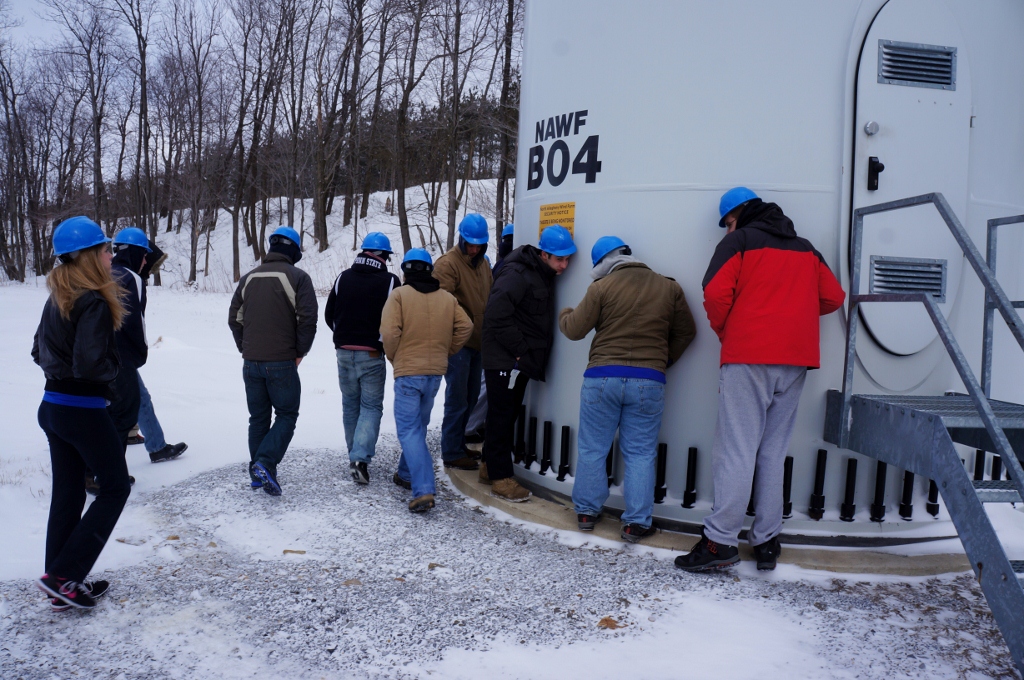
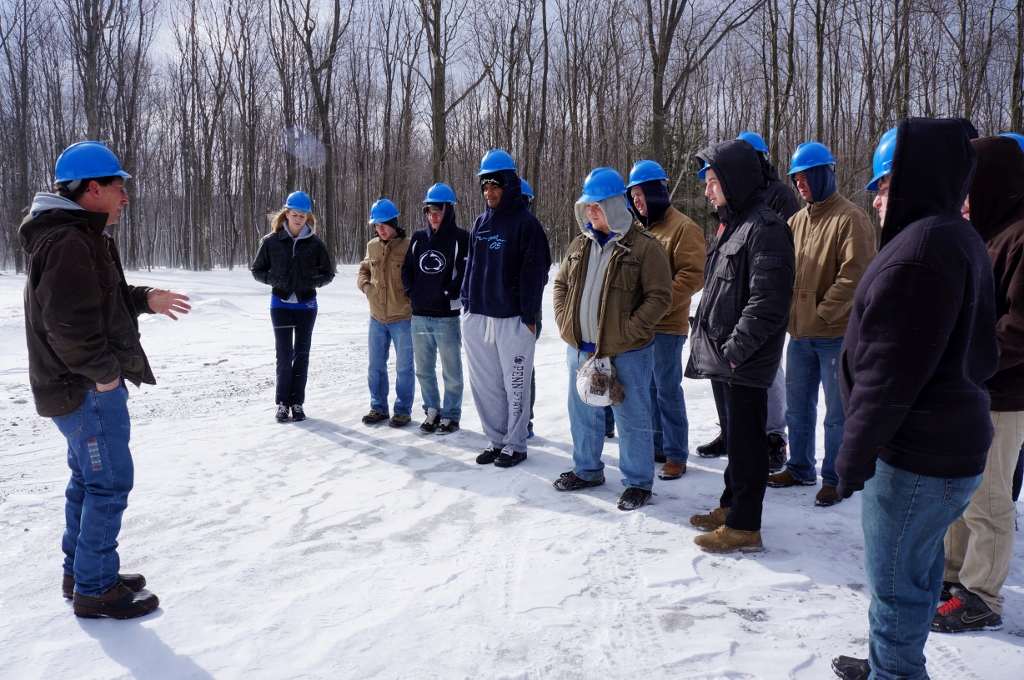
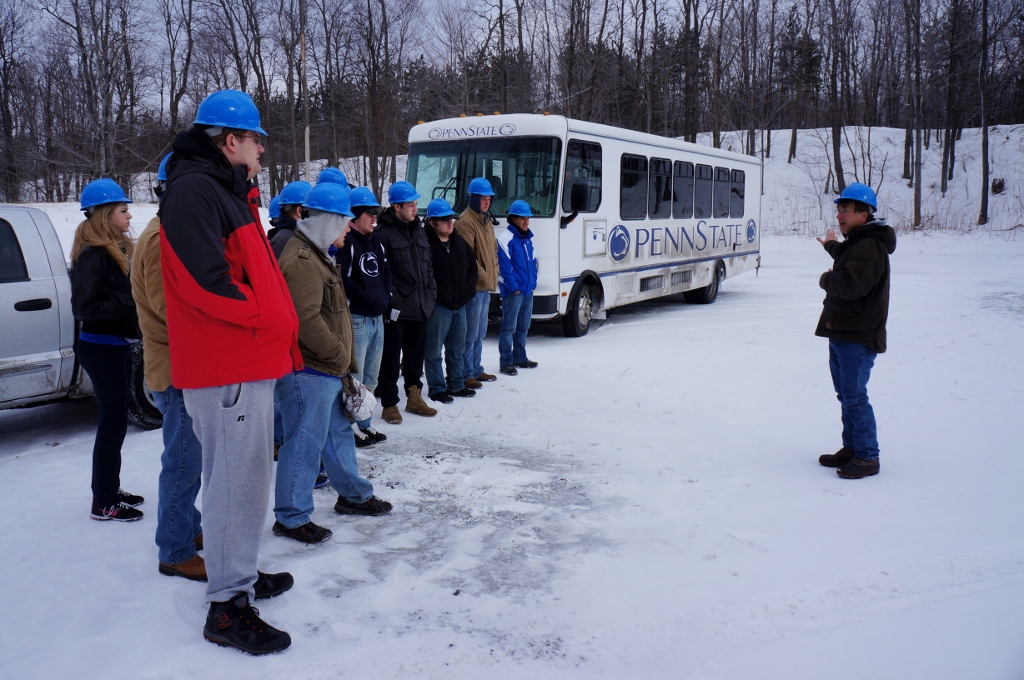
Today, Friday, March 22, my STS class (Topics in Science, Technology, and Society) went to the windmill farm in Cresson, PA, which was built by Gamesa and is currently Pennsylvania’s largest operating windmill farm (more about Allegheny Ridge Wind Farm).

Image

At 22 degrees Fahrenheit being the warm part of the morning, we enjoyed a windy and snowy experience. This is unsurprising, though, given that the mountain ridge we visited was specifically selected for its high winds. These windmills were truly impressive up close, and the students were, despite the cold, the wind, and the snow, full of questions. While the oscillation of the blades did make an audible sound, even at some distance, we were all surprised by how violent the blades seemed to rotate as compared to how quiet and motion-less the bases were … it was almost tranquil, we agreed.

Image

The ridge, which is expansive, hosts 40 turbines, which are 2MW generators. While the return on investment for a free-standing windmill like the ones pictures is about 5 years, the ones we viewed had an ROI of nearly 20 years because of early quality control issues with the blades (they were splitting apart like bananas). According the farm’s website, “Estimated annual production: 200 GW.h (for an equivalent of 2,500 hours of full load/year)” which is impressive.

Our guide was great; his name was Michael Barton, a local forester and wind expert.

Image

About Michael Barton:

He earned a Bachelor of Science Degree in Forest Science (Forestry) from Penn State University in 1983. … In 2007, he received the “Sustainable Energy Education Award” in Pennsylvania sponsored by Gamesa Energy, USA. In 2008, Michael was the co-chairman of the Society of American Foresters (SAF) – Allegheny Section summer meeting entitled “Forest Land Issues Related to Wind Energy.” For that effort Mike was presented with the SAF Award for “outstanding service, dedication and effort for a successful Allegheny Society summer meeting.” (available here).

He told us today that this was his 248th tour of the wind farm, all of which he has done as a volunteer. I have taken students on these trips for half a decade, and will continue to. As a forester and environmental consultant, it is quite important to show students the significance of water quality on these ridge-lines. Of significance, the spot we are standing in this next photo is on the ridge that splits one-way to the Ohio Valley, and, thus, the water ends-up in the Mississippi River, and the other way to the Chesapeake Bay. Contamination on this site would pollute both directions. Barton helped oversee the environmentally safe work that went on here … also of note, this spot, it is perhaps 4FT from where a 35FT wide 1 million pound crane would have passed; cranes which are necessary to assemble the turbines). The water on site, was crystal clear.

Image

A final point of interest is that we would not have been able to take the tour earlier in the week because of the ice, rain, and snow. But not for reasons of travel. Instead, as Barton told the students, windmills of this caliber throw ice.

Image

“I’ve seen a sheet of ice as thick as my hand embed itself into the driver’s seat of a pick-up truck,” then Barton said, “if you had been sitting there, it would have probably cut you in half.” I noted the silent pause…

In all, it was a great experience. We are all in Barton’s debt for his good work.

Image

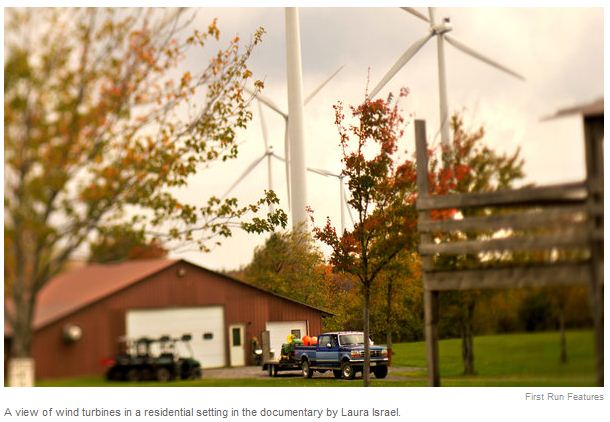
That said, later today we are going to starting viewing the only anti-windmill documentary that I have been able to find.

Image

The film is about:

Wind power… it’s sustainable … it burns no fossil fuels…it produces no air pollution. What’s more, it cuts down dependency on foreign oil. That’s what the people of Meredith, in upstate New York first thought when a wind developer looked to supplement the rural farm town’s failing economy with a farm of their own — that of 40 industrial wind turbines. WINDFALL, a beautifully photographed feature length film, documents how this proposal divides Meredith’s residents as they fight over the future of their community. Attracted at first to the financial incentives that would seemingly boost their dying economy, a group of townspeople grow increasingly alarmed as they discover the impacts that the 400-foot high windmills slated for Meredith could bring to their community as well as the potential for financial scams. With wind development in the United States growing annually at 39 percent, WINDFALL is an eye-opener that should be required viewing for anyone concerned about the environment and the future of renewable energy.

We will see how it goes.

Image

Liquid Infrastructure

I’m not sure if it is fair to say this, but … we all know that Zygmunt Bauman is a considerable force in contemporary social theory. I was first turned onto his work when reading his small tome on globalization. I was impressed by his ability, at times, to tackle seemingly insurmountable issues such as the space/time relationship and so on.

Today I got a promotional e-mail from Polity Press celebrating Bauman’s work on liquidity. This was part of the advertisement.

Capture A

So, Bauman has been developing this notion of liquidity for more than a decade (although, from what I can gather the quality of writing, the tone, and the style change little between the books). Bauman published Liquid Modernity in 2000, Liquid Love in 2003, Liquid Life in 2005, Liquid Times in 2006, and Culture in a Liquid Modern World in 2011. These pieces should be lauded for developing the same concept so slowly over such a long period of time. Obviously, there is some repetition within the titles, which will undoubtedly annoy some readers. I grabbed the titles from our library here at Penn State and started to page through them …

  • In Liquid Love, Bauman decries increasingly unfixed relational ties that bond us together, leaving the average person to connect to others with whatever resources they have at their disposal.
  • In Liquid Life, Bauman describes how we live in a world of stubborn uncertainty, perpetual self-re-creation, and which is marked by a need to rid ourselves of the worthless junk we accumulate.
  • In Liquid Modernity, Bauman in the years following the Second World War, a period of expanding wealth and commercialization in the West,
  • In Culture in a Liquid Modern World, which, while containing the liquid metaphor in the title of the book, seems not to develop the concept further within the book … at any rate, Bauman describes the history of the term culture and its failure to help or aid those cultures it was supposed designed to describe.

In the end, it is Bauman’s Liquid Times, the 4th title he published in the ‘liquid series’ that has the most insight about what a ‘liquid infrastructure’. The dust jacket reads:

Zygmunt Bauman’s brilliant writings on liquid modernity have altered the way we think about the contemporary world. In this short book he explores the sources of the endemic uncertainty which shapes our lives today and, in so doing, he provides the reader with a brief and accessible introduction to his highly original account, developed at greater length in his previous books, of life in our liquid modern times.

In Liquid Times, Bauman goes on to describe the un-fixity of social institutions, which he sees as too fluid to count and a poor base on which to plan for the future, which leaves individuals to scrape along the best they can to find alternative or innovative ways to organize themselves, their lives, and our times. Indidividuals, living under such conditions mirror them; uncertain times and unstable institutions require individuals to flexible and reactive; consequently, ever-readiness for change and personal adaptability become the hallmark of this liquidity Bauman uses to describe many facets of contemporary living.

This is perhaps the point to harvest to get some leverage on liquid infrastructure; hybrid-infrastructure, custom infrastructure, adaptable infrastructure … all seems like directions I’ve seen developed over the last few years. For example, Kathryn Furlong’s work on hybrid infrastructures or Govind Gopakumar’s work on flexible water and transportation infrastructure, both of these scholars are already dealing, to some extent, with many of the notions that Bauman is working with. My intuition is that ‘liquid infrastructure’ would be a fitting umbrella term to bring together these lines of thought. Might also make a snazzy book title.

(Installing) Order restored

ReconstructionWe are back to normal, at least in technical terms. It is a strange thing to notice, but even a blog on infrastructure can have infrastructure issues. Posterous, our old home, has announced that after being acquired by Twitter they are shutting down at the end of April. Unfortunately the rats were leaving the sinking ship, producing all kinds of hickups  and dropouts, forcing us to leave in a hurry.

But we are glad to announce that we managed the transition! Thanks to Nicholas for carrying each post individually to its new home — and that from today on we are accessible again both via our temporary URL https://installingsocialorder.wordpress.com and our beloved old URL http://www.installingorder.org. We will keep both up as long as we see traffic coming in through them.

Some issues are still to be dealed with — author mapping for example, but that is work for the following weeks. While we are fixing these issues and tweaking the new design as well as the new machine: Are there any features, any functionalities that you as readers and commenters missed on the old installing (social) order? If so, please let us know, we will try to make them a part of the new installing (social) order!

Installing order in transportation: some intelligence about artificial intelligence in the making

Check out the following call for papers to see what our colleagues in artificial intelligence are currently up to with respect to installing order in transportation:

*******************************************************************************
              ARTIFICIAL INTELLIGENCE IN TRANSPORTATION SYSTEMS

                               AITS @ EPIA2013

                            A Thematic Track of
     The 16th Portuguese Conference on Artificial Intelligence, EPIA2013
                 Azores, Portugal, September 9–13, 2013
                       http://www.epia2013.uac.pt/
*******************************************************************************

              PAPER SUBMISSION DEADLINE APPROACHING: March 15, 2013

ABOUT AITS'2013
-------------------------------------------------------------------------------
The Thematic Track on Artificial Intelligence in Transportation
Systems (AITS) within EPIA Conferences aims to promote an
interdisciplinary debate on current developments and advances of AI
techniques in a rather practical perspective, focusing on
transportation and mobility systems. This Thematic Track follows up
the first edition of the AIASTS Thematic Track, held at EPIA'2007, the
second edition of the AITUM Thematic Track, held at EPIA'2009, and the
third edition of the AITS Thematic Track, held at EPIA'2011. This
event will act as a unique platform gathering the AI community,
transportation engineers and practitioners, as well as social
scientists to discuss how cutting-edge AI technologies can be
effectively developed and applied to improve transportation
performance towards sustainable mobility settings. This forum is thus
an opportunity for the technical and scientific community to present
progresses made so far, and as a means to generate new ideas towards
building innovative applications of AI technologies into more
efficient transportation systems.

As from this 4th Edition of the AITS Thematic Track, the event will be
promoted by the Artificial Transportation Systems and Simulation
(ATSS) Technical Activity Sub-committee of IEEE Intelligent
Transportations Systems Society. The EPIA Conference Series has been
ranked by the Computing Research & Education initiative as a “CORE B”
Conference, whose proceedings are published by Springer in their LNAI
Series and traditionally indexed by Thomson Reuters’ ISI Web of
Knowledge.

SCOPE OF AITS'2013
-------------------------------------------------------------------------------
As in many multidisciplinary knowledge fields, much advance in AI is
fostered through challenges imposed by issues that scientists address
when applying theory to solve practical problems. Thus, the AITS
Thematic Track serves as a working platform to discuss current
developments and advances of AI techniques in a rather practical
perspective. It will stimulate a debate emphasising on how theory and
practice are effectively coupled to tackle problems in the specific
domain of transportation.

Besides its economical, social, and environmental importance,
transportation is a very challenging domain, especially due to its
inherent complexity. It is formed up by geographically and
functionally distributed heterogeneous elements, both artificial and
human, with different decision-making abilities, collective or
individual goals, making its dynamics rather uncertain. Also, mobility
plays a major role towards citizen’s quality of life. With resources
even scarcer and the imposition of uncountable constraints to
mobility, contemporary transportation has experienced a great
revolution and has become highly evolving. This means that a rational
use of transportation infrastructures and the way they interact with
the environment must be managed on a sustainable basis.

Within the last two decades, this scenario has witnessed the advent of
the concept of Intelligent Transportation Systems (ITS). Rather than
increasing service capacity, one underlying approach of ITS-based
solutions is to ensure productivity and mobility by making better use
of existing transportation infrastructure, featuring them with
smarter, greener, safer, and more efficient technologies. Indeed, much
advance verified in this field is due to AI that is a key ingredient
to ITS. The relationship between these two areas is certainly mutually
beneficial, suggesting a wide range of cross-fertilisation
opportunities and potential synergisms between the AI community that
devises theory and transport practitioners that use it. Therefore,
contemporary transportation systems are a natural ground to conceive,
develop, test and apply AI techniques.

TOPICS OF INTEREST
-------------------------------------------------------------------------------
The AITS Thematic Track welcomes and encourages contributions
reporting on original research, work under development and experiments
of different AI techniques, such as neural networks, biologically
inspired approaches, evolutionary algorithms, knowledge-based and
expert systems, case-based reasoning, fuzzy logics, intelligent agents
and multi-agent systems, support vector regression, data mining and
other pattern-recognition and optimisation techniques, as well as
concepts such as ambient intelligence and ubiquitous computing,
service-oriented architectures, and ontology, to address specific
issues in contemporary transportation, which would include (but are
not limited to):

• different modes of transport and their interactions (air, road, rail
and water transport);
• intelligent and real-time traffic management and control;
• design, operations, time-tabling and management of logistic systems
and freight transport;
• transport policy, planning, design and management;
• environmental issues, road pricing, security and safety;
• transport system operations;
• application and management of new technologies in transport;
• travel demand analysis, prediction and transport marketing;
• traveller information systems and services;
• ubiquitous transport technologies and ambient intelligence;
• pedestrian and crowd modelling, simulation and analysis;
• urban planning towards sustainable mobility;
• service oriented architectures for vehicle-to-vehicle and
vehicle-to-infrastructure communications;
• assessment and evaluation of intelligent transportation technologies;
• human factors in intelligent vehicles;
• autonomous driving;
• artificial transportation systems and simulation;
• surveillance and monitoring systems for transportation and pedestrians.

SUBMISSION INSTRUCTIONS AND PUBLICATION
-------------------------------------------------------------------------------
Contributions must be original and not published elsewhere. Papers
should strictly adhere to formatting instructions
(http://www.epia2013.uac.pt/?page_id=564) of the conference, and can
be of two types: regular (full-length) papers should not exceed twelve
(12) pages in length, whereas short papers should not exceed six (6)
pages. Each submission will be reviewed by at least three members of
the International Programme Committee of the AITS Thematic Track. This
process will follow a blind-review approach, so we kindly ask authors
to take reasonable care not to indirectly disclose their identity,
removing their names from the manuscript and any reference that might
explicitly identify them.

The best papers will be included in a volume of the Lecture Notes in
Artificial Intelligence (LNAI) Series, to be published by Springer
(proceedings indexed by the Thomson ISI Web of Knowledge). All other
accepted papers will be published in the local proceedings.
Publication of accepted papers is subject to at least one co-author
registering for the conference and presenting the paper during the
AITS session at the Conference.

Further and up-to-date information can be found on the official Web
site of the EPIA Conference at http://www.epia2013.uac.pt/

IMPORTANT DATES
-------------------------------------------------------------------------------
• Deadline for paper submission: March 15, 2013
• Notification of paper acceptance: April 30, 2013
• Camera-ready papers due: May 31, 2013
• Conference dates: September 9-13, 2013

ORGANISING COMMITTEE
-------------------------------------------------------------------------------
Rosaldo Rossetti
   LIACC, DEI/FEUP - University of Porto, Portugal (rossetti@fe.up.pt)

Matteo Vasirani
   École Polytechnique Fédérale de Lausanne, Switzerland
(matteo.vasirani@epfl.ch)

Cristina Olaverri Monreal
   Technische Universität München, Germany (olaverri@lfe.mw.tum.de)

INTERNATIONAL PROGRAMME COMMITTEE (to be extended)
-------------------------------------------------------------------------------
• Adriana Giret, U.P. Valencia, Spain
• Agachai Sumalee, The Hong Kong Polytechnic University, Hong Kong
• Alberto Fernandez, Rey Juan Carlos University, Spain
• Ana Almeida, Polytechnic Institute of Porto, Portugal
• Ana Bazzan, UFRGS, Brazil
• António Castro, University of Porto, Portugal
• Carlos Lisboa Bento, University of Coimbra, Portugal
• Constantinos Antoniou, National Technical University of Athens, Greece
• Danny Weyns, Katholieke Universiteit Leuven, Belgium
• Eduardo Camponogara, UFSC, Brazil
• Elisabete Arsénio, LNEC, Portugal
• Fausto Vieira, Instituto de Telecomunicações/FCUP, Portugal
• Federico Barber, U.P. Valencia, Spain
• Fei-Yue Wang, University of Arizona, USA
• Francisco Pereira, SMART/MIT, Singapore
• Geert Wets, University of Hasselt, Belgium
• Giuseppe Vizzari, University of Milan-Bicocca, Italy
• Harry Timmermans, Eindhoven University of Technology, The Netherlands
• Hilmi Berk Celikoglu, Technical University of Istanbul, Turkey
• Hussein Dia, AECOM, Australia
• Javier Sanchez Medina, Universidad de Las Palmas de Gran Canaria, Spain
• Jeffrey Miller, University of Anchorage, USA
• Jorge Lopes, BRISA S.A., Portugal
• José Manuel Menendez, Universidad Politécnica de Madrid, Spain
• José Telhada, University of Minho, Portugal
• Jürgen Sauer, University of Oldenburg, Germany
• Luís Nunes, ISCTE, Portugal
• Luís Paulo Reis, University of Minho, Portugal
• Maite López Sánchez, University of Barcelona, Spain
• Michael Rovatsos, University of Edinburgh, UK
• Miguel A. Salido, U.P. Valencia, Spain
• Paulo Leitão, Instituto Politécnico de Bragança, Portugal
• Ronghui Liu, ITS/University of Leeds, UK
• Sascha Ossowski, Rey Juan Carlos University, Spain
• Shuming Tang, Chinese Academy of Sciences, China
• Thomas Strang, DLR, Germany

From our friend Peer Schouten: IR and ANT at ISA

Last year, Jan-H. and I went to the Millennium conference at the London School of Economics. Following the conference, Peer and his peers put together an informal workshop to assess the relationship of International Relations with Actor-Network Theory (or just IR and ANT). It was a stunning success, in my estimation, and was quite interesting to see how the ideas in these different starting-points gelled (or failed to).

Image

Well, Peer is at it again, this year at the International Studies Association’s (ISA’s) annual meeting. ISA will meet in San Francisco, CA, and Peer is organizing another workshop.

Check it out here:

Dear all,
As we are looking forward to the great events and panels at the 2013 ISA we want to invite you for an informal (ANT) meeting. This meeting is meant to bring together the diverse group of people interested in (ANT and) IR. This should provide space for exchanging ideas on how to further the translation of ANT in IR, developing common projects including publications, future workshops or grant applications, as well as having a drink or two.
First of all the meeting is meant to stick together and to advance the drive of last ISA and the Millennium conference/workshop in London last year. The meeting is however open to everyone with an interest in ANT. We are planning to meet in the evening either towards the beginning of the conference or at the end. If you are aware of further persons interested in joining please do forward this email.
 bests,
Peer, Rocco, Maximilian, Julien and Christian

I think this direction has a lot of potential for growth over the upcoming years. So, please pass it along to any interested parties!

Reminder: March 17 is the deadline for 4S

As a reminder, the deadline for submitting abstracts to 4S this year is quickly approaching. As a break with years past, the leadership at 4S is getting a little bit stricter with each passing year so that submitting abstracts to session organizers informally is no longer been seen as an acceptable practice, and, instead, leadership would like all abstracts to flow through the formal system.

Annual Meeting of the Society for Social Studies of Science (4S)

Just a quick reminder: Only two weeks remain to submit paper and session proposals for the 4S Annual Meeting in San Diego. Deadline is March 17. Visit the meeting home page to begin. http://www.4sonline.org/meeting

October 9 – 12, 2013 — San Diego, California, Town and Country Resort and Convention Center. Meeting home page: http://www.4sonline.org/meeting

Jan-Hendrik and I (Nicholas Rowland) have organized Open Session 43, which we anticipate will host, with luck, two or three panels of presenters. Per usual, we are in pursuit of the infrastructure of the state in its multitudinous forms and incantations.

See our session proposal below:

43. State Multiplicity, Performativity and Materiality: Current STS Research on State and Stateness
Jan-Hendrik Passoth; Nicholas J. Rowland
Currently, science and technology studies is rich with opportunity to conceptualize the state and comment on its consequences for global living. While long under the conceptual jurisdiction of traditional political science, political sociology, and political history, scholars in science and technology studies have, with their own concepts and style, taken to rethinking the state and, with renewed nuance, capture its many and multiple influences in our (decidedly) material world. Similar to the move made by scholars in the social studies of finance, when they showed us how to rethink economic sociology, recent work on the machinery and infrastructure of governing is growing in significance. We see large empirical studies of water infrastructure in India, Columbia, and US states such as California, research on public transportation systems and global logistics, work about census creation and population data gathering as well as growing and genuine theoretical contributions to state theory and theories of stateness have all been published in recent years.

The upshot: Conceptual lens such as multiplicity, performativity, and materiality, which are central to contemporary science and technology studies, provide one such direction toward an explicitly science and technology studies perspective on the state. We believe that this line of thinking, if properly developed in-house by science and technology studies scholars, has the potential to produce discourse-changing research even among our friends in traditional political science, sociology, and history. This open panel will consist of two or three sessions. We invite empirical and theoretical contributions on a wide variety of topics, regions, and theoretical approaches. We encourage work-in-progress as well as more mature projects to the session. We especially invite papers on the multiple ontologies of political entities such as states, the performativity of social and political theory, and the materialities of governing modern states and their environs.

Please consider submitting to our session or writing us to inquire about whether or not your work would fit into the session’s framework.

Why are we using case studies?

One of the troubling features of STS for those in the “traditional” disciplines (in my case: sociology) is not so much its theoretical movements towards multiplicity, heterogeneity, symmetry and the like, but the fact that STS is doing theory not in specialized texts or on specialized conferences, but in the form of case studies. This is not my observation alone. John Law in his “On Sociology and STS” felt the urge to tell his fellow sociologists:

STS writing is not only highly theorised, but also works on and in theory. Its core concerns often have to do with epistemology (the theory of knowledge), and (more recently) ontology, the character of the real (I will come to the latter below). In theory it might make its arguments in an abstract manner (and there are some signs of movement in this direction), but its major mode of self-expression, discovery and exegesis has usually been through case-studies. (629)

John gives two reasons for this: It is because in STS theory and data are created simultaneously  and, more importantly, it is because STS works basically on the assumption that “abstraction is only possible by working through the concrete” (630). I am not sure if I agree: the masses of more illustrative than really empirical cases (for example: Portuguese vessels, keys in Berlin and keychains in Hotels in Paris, “Grooms” on strike or sleeping policemen) suggest that it might be the other way round sometimes and that in STS sometimes theory comes before there is data and sometimes data comes before theory.

But maybe there are other reasons for our love for case studies and I wonder if they are both the reason for STS´s success and for its incommensurability with traditional sociology:

  1. Case studies are hybrids: they allow the blend of empirical detail, conceptual work and methodological experiments in a single text. Take Aramis: a story about innovation in public transport (empirically), an argument for the temporal and relational coalescence of sociotechnical projects (conceputally) and a search (literally, remember, it is a mystery story) for interdisciplinary forms of reflexivity. Or take Aircraft Stories: a story about a failed military aircraft, about “fractional coherence” and about the impossibility to capture this with one method.
  2. Case studies are boundary objects: they allow heterogeneous cooperation between different disciplines and therefore interdisciplinary projects in STS because they are “weakly structured in common use, and becoming strongly structured in individual use” (Star & Griesemer 1989: 393). Cases allow a conversation about something very concrete (although it might be interesting for different reasons in different disciplines) while they are open enough to also allow very specific theoretical arguments (hidden in the empirical details and therefore not that bothersome for those not interested in them)
  3. Case studies are partial: their incompleteness (because one can always find out more about the case and tell its story differently) is a refexive argument. When science is a practice of turning matters of concern into matters of fact, there is no use of presenting ones own work as if it is part of a repertoire of STS-matters-of-fact.

Still I wonder: Can we find other ways? Do we have to stick with cases? What if we have a theoretical point to make — are we supposed to “make a case” then? Or are there other ways?

"Viewing the Technoscientific State through the Heteroscope"

“Viewing the Technoscientific State through the Heteroscope: The State, displaced or misplaced?” (could also be called “The Dancer and the Dance”) Alexander Stingl, European University Viadrina, Frankfurt/Ode.

Dsc01021

Alexander gave a dynmaic presentation in a style, for example, reminiscent of Deleuze. He opened with an interesting comment about governing and dancing, challenging audience members to rethink concepts they have happily taken for granted for decades. The high-watermark for me was hearing “The new State is, I argue, a nomadic entity that gazes at us just as heteroscopically as we gaze back at it.” The notion of a heteroscope implicates, in my best estimation, the idea of a complex state. Of course, actor-models of the state must be cast out in favor of a more diffuse and networked vision of the state. Put another way, it might imply what Patrick Carroll has been theorizing, namely, the state as a “complex gathering” or, as he sometimes says, “a thing” (the way that a party is a thing, both just one thing and also a thing made of other stuff like people and drinks and cake). The underlying theoretical justification for this ought to be found, and Alexander said as much during the talk, precisely where Patrick Carroll, Jan, and I find it … through the lens of actor-network theory.

I first met Alexander at 4S during the meeting in Copenhagen; however, I’ve seen his work, and he is quite prolific (see cv here).

I first read Alexander’s work in the American Sociologist. His paper, “Truth, Knowledge, Narratives of Selves,” is about:

Starting with a distinction of two types of discourse analysis—the analysis of a discourse and discursive analysis—the article discusses an analytical genealogy of truth and knowledge production, that can fulfill both empirical and archival requirements. The model’s main purpose lies in understanding diagnostic and therapeutic decision-making in doctor–patient interactions.

Stingl’s original abstract for 4S reads:

“How to govern?”, is a question that not only fazes governments, politicians and political parties but an increasing number of (world-)societal actors, enmeshed in the making of science policy and politics of science itself. They are subject to government while licensed to usurp governing positions over disbanded and unevenly organized societal collectivities, imbricated in regimes of governance that are post-legitimized, post-transparent, post-democratic procedures.

As STS scholars, we must critique the acceleration in dependence on techno-scientific practices of knowledge and management beyond the State: Citizens of nation-states and post-national conglomerates, and producers of techno-scientific knowledge demand legitimated representation, representative participation, and transparency, where post-democratic society and techno-scientific embeddedness of decision-making processes on the trans-local scale (trans-local meaning, broadly, that stake-holders and stock-holders do not share the same space of causes and effects) seem to suggest that people paradoxically proliferate and govern their existences in abandonment of the State, while transnational corporate entities rematerialize as quasi-state entities. STS critique demands suggestions for alternative forms of governance and novel conceptualizations of statehood: Does the techno-scientific state emerge naturally from the actual governance practices of actors such as corporations, NGOs and collective actors formed by interested private citizens as stakeholders? Will it redefine the boundaries of empirical and theoretical concepts in displacing or misplacing the State, and how does the state so placed see people and how do they look back? The new State is, I argue, a nomadic entity that gazes at us just as heteroscopically as we gaze back at it.

On imitation and isomorphism

Our friends at orgtheory discussed an interesting dilemma on institutional theory last week and this week that might be worth picking up to continue the discussion about institutionalism and the infrastructuralist agenda that we started last year: It seems that while institutional isomorphism (or more specific: mimetic isomorphism) is one of the most cited and most loved idea in institutionalism — although

If we look at various popular account of individual action in cultural sociology (e.g., toolkit theory), many don’t produce isomorphism. 
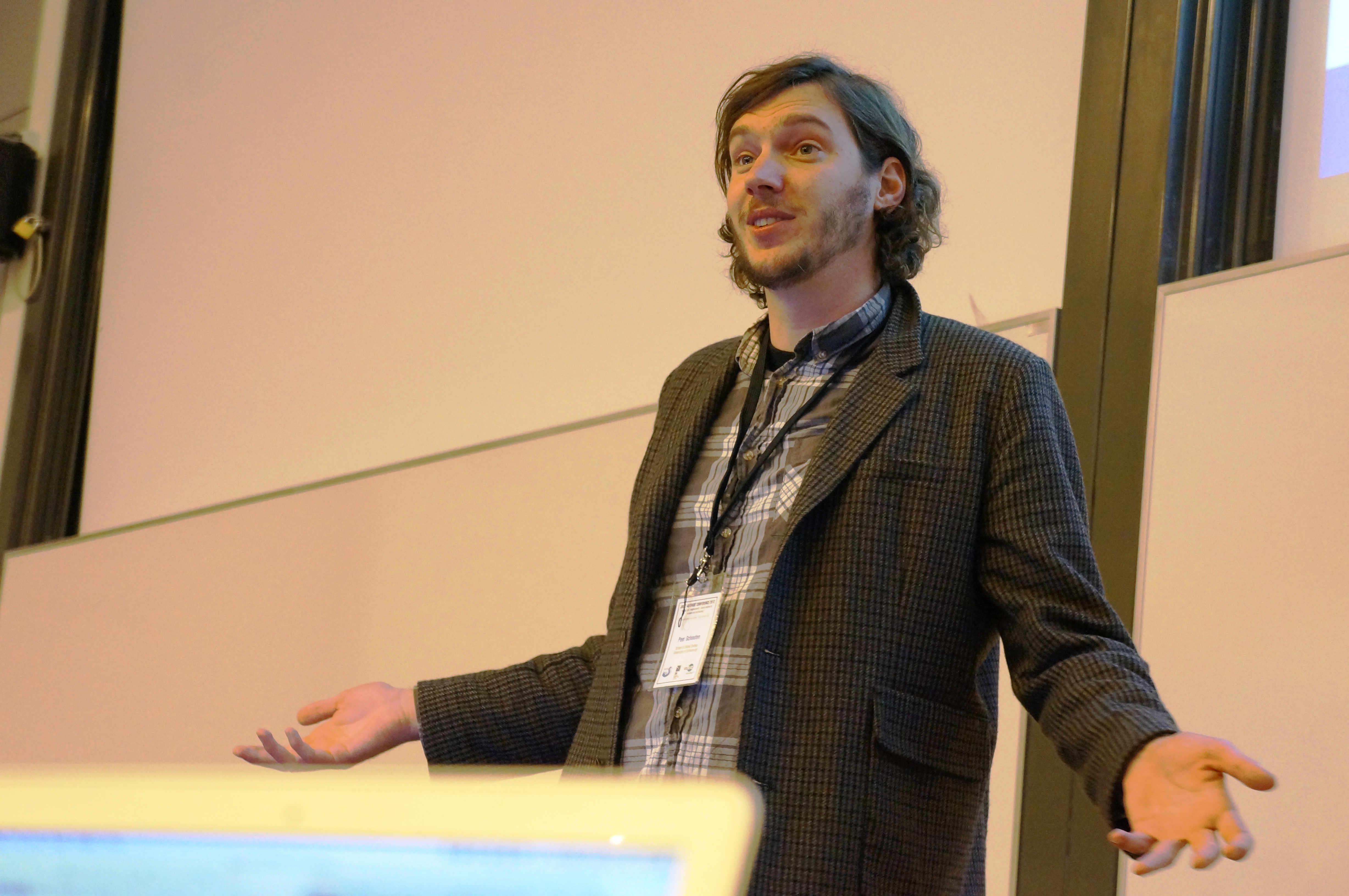
The way of putting the question might be a bit unfair: linking the “puzzle” directly to Colemans boat and to the debate on microfoundations of institutionalism sets the field for the struggle about the best microfoundation – as if the only task is to name a micro-theory that can explain institutional isomorphism. But the interesting question is: what is isomorphism in the first place and how on earth can we presuppose that practices of immitation will lead to isomorphisms? 

Maybe this is an entry point of bringing together institutional and infrastructuralist thinking again. When we look an infrastructural settings we are used to see entities that look similar but in fact are enacted in various, heterogenous forms.

Call for papers: Regulation of Infrastructure Industries in an Age of Convergence

The following call for papers just came out:

2nd Annual Conference on the
Regulation of Infrastructure Industries in an Age of Convergence
organized by the Florence School of Regulation (FSR), European University Institute
to be held in Florence, 7 June 2013

The main infrastructures ??? energy, transport, and communications ??? have experienced significant liberalization processes over the past 30 years. Liberalization has generally been accompanied by market dynamics, as evidenced by the emergence of new entrants. But we have also witnessed a reinforcement of the historical operators (incumbents), which have often diversified into adjacent industries and even beyond, raising the question of their regulation as well as the question of the regulation of converging industries, as in the case of postal services and telecommunications, electricity and gas, or intermodal transport for that matter.
This evolution constitutes as many challenges for regulation, regulatory bodies and regulatory policy more generally. This conference aims at exploring these challenges for regulation and regulators across the infrastructures and in an interdisciplinary manner, combining engineering, economics, law, and political science.
Interested academics and academically oriented practitioners are invited to submit a 600 to 1000 word proposal (word document) by 15th February 2013 to FSR.transport@eui.eu. Please indicate in the subject heading ???FSR Conference 2013???.

The proposals should be structured as follows:
??? Title of the paper
??? Name of the author(s) and full address of the corresponding author (postal, phone, fax and email)
??? The aim and methodology of the paper
??? Results obtained or expected
??? A few keywords

Acceptance (or rejection) will notified by March 15th 2013. Final paper submission will be May 15th 2013. Participants who do not submit their final paper by that date and are not registered to the Conference will not be allowed to present.
Paper proposals will be reviewed by:
??? Prof. Matthias Finger | EPFL and FSR Transport director
??? Prof. Jean-Michel Glachant | FSR Energy director
??? Prof. Pier-Luigi Parcu | FSR Telecommunications director

Locating the state? Kathryn Furlong

“Locating the state? Infrastructure, scale and the technologies of governing, a Colombian case.” Kathryn Furlong from Université de Montréal. Jan and I first learned about Kathryn’s work when discussing infrastructure, and in particular, the issue of scale, which was spurned by a discussion with Hendrik about flat infrastructure. Subsequently, we invited Kathryn to blog with us on installing order where we even saw a few precursors for the work she presented at 4S/EASST this year in a post from about a year ago.

Dsc01016

So, this year we saw a great presentation about understanding the relationship between scale and infrastructure. In her old published work, Kathryn Furlong in Progress in Human Geography titled “Small technologies, big change: Rethinking infrastructure through STS and geography“, we also saw the underpinnings of an understanding about scale. In the conclusion of that paper, which could have gone on at much greater length, there is an important Latourian twist included about “inversions” of scale (even if “large” and “small” are ultimately unsatisfactory with regard to measuring scale):

“This paper signals the need to look beyond infrastructure as a single unit, static in its physical state and social and environmental effects. Breaking infrastructure down into assemblages of small technologies that matter enables one to see the possibility to employ small change to mediate large problems.”

One of the ways that she ‘makes good’ on her previous claims about getting away from seeing infrastructure as ‘a single unit’ is to get at the idea that technologies might be hybrid (per the picture below) or, using my lens in ANT, seeing more of the multiplicity in water was a gathering point for many visions of water … in Kathryn’s case, this is a slide about comparing city wanter and rainwater. For example, her data collection shows that citizens consider rain water ‘more clean’ or ‘higher quality’ as compared to city water piped in from afar, but this importantly depends on the location of the person and the water.

Dsc01015

This all becomes even more interesting when applied to some of the central questions of state theory (e.g., what is a state? how do we make them? what can they do? can they do anything? etc.). Kathryn presents a commonplace distinction between the “North” and the “South”, but only for a moment, in order to get at the notion that in the Global South, the combination of government and infrastructure (which are otherwise imbricated in the Global North, comprising much of what is thought to represent ‘the state’) does not appear to operate in similar ways. Of particular importance, I think, is the idea that when a government attempts to impose a ‘unified infrastructure’ they will for sure end-up creating some sort of non-uniform thing variously composed of  especially in areas, and Kathryn contends, where infrastructure has not played a significant role in the previous years or decades (what she calls ‘omnipresent infrastructure’).

Dsc01014

Kathryn’s original abstract:

In the North, many authors have noted the passage from government to governance; that is from centralized and hierarchical to more diffuse and inclusive forms of decision-making (Jessop 1998; Peters and Savoie 1995). Infrastructure networks have experienced similar shifts, from the exclusive “black box” to more malleable and participatory systems (Furlong 2011). Yet, in many contexts in the Global South, including Colombia, neither the government, nor infrastructure managed to cover the whole of the state territory. By examining such a case, this essay seeks to add relief to some broadly held conceptualizations about the state, infrastructure and governmentality. One of these is in relation to scale. Drawing on critiques of scale (e.g. Marston et al. 2005), the essay questions where to locate the state in relation to issues of infrastructure and governing. Where the state has clearly not been omnipresent, it is easier to see how the assumed hierarchy of state scale breaks down. This is exemplified through the case of regulatory attempts to create a uniform infrastructure sector, which have yielded perhaps as much change in regulation as they have in service delivery. Moreover, where infrastructure has not been omnipresent, rather than imposing a new “black box”, managers may have to compete with a variety of pre-existing technical and social practices resulting in new forms of hybrid infrastructures. As such, just as new technologies create shifts in governing (e.g. the internet), the introduction of absent technology can yield shifts in both governing and how the technology is traditionally conceived.

Govind’s abstract

Dsc01009

The abstract for Govind’s project reads:

How do states act or exert their presence from a distance, especially when targets of action are separated by diverse and nested milieus of stateness? In addressing this question, the paper will draw centrally upon scholarship in three domains – governance of science and technology, anthropology of the state especially in postcolonial environments, and actor network theorizing of the state – to develop a conceptually grounded explanation. While a common concern across these domains has been to interpret the co-production of science/technology, society and state through concepts such as “boundary organization,” “state spatiality,” and “scaling devices,” one related theme that has attracted far less attention within these fields has been to understand how states act and make their presence felt at a distance across scale and space. This direction of inquiry is particularly intriguing when such actions intersect multiple and imbricated ontologies of stateness that exist at national, regional, provincial, and urban levels. Drawing from these literatures, in this paper I will use the example of a recent policy project in India as a case. NURM (or the Jawaharlal Nehru National Urban Renewal Mission) is a vast national policy exercise launched in 2005 that seeks to transform governance of technical infrastructures in 65 major cities in India by emplacing a host of new mechanisms, venues and devices to reconfigure state-society relations. Empirically investigating NURM, this study will situate and extend our understanding of how postcolonial states operate at a distance and across different scales from the national to the urban.

"Acting from a distance: States, scales, spatiality and STS." Govind Gopakumar

“Acting from a distance: States, scales, spatiality and STS” was presented by Govind Gopakumar of Concordia University in Canada. Govind is Associate Chair and Assistant Professor at the Centre for Engineering in Society.

Dsc01010

I first met Govind at last year’s 4S conference in Cleveland, OH, where he gave a terrific presentation on infrastructure and the Indian state. See below (CV available here):

“Knotty and Naughty: Seeing the Indian State through a Technoscientific Lens,” Society for the Social Studies of Science (4S) Annual conference, Cleveland, November 4, 2011.

I was immediately impressed by the work, which draws largely on Patrick Carroll‘s incredible and longstanding research on the technoscientific state. In fact, Govind had a book coming out that I subsequently reviewed for the Social Studies of Science, which you can check out here and was featured in a special issue about water (because Govind’s book is about water infrastructure in Indian citites and states).

Keep in mind that our 2012 theme for the panels was “On states, stateness and STS: government(ality) with a small “g”?” Govind rose to the challenge of seeing governments and governmentality with a “small g” — the small g meaning that instead of answering big questions in sociology by referring the power of macro structures that (must exist but) are always just immediately beyond firsthand observation (such as ‘the state’), we instead go to the micro-machinery of their makings (or even their underpinnings). And so, Govind did.

He took up the case of literally building state capacity, in this case, of infrastructural reform especially of the transformation of transportation. In the end, and these were short presentations that we asked emphasize theoretical points of relevance, Govind comes to a great conclusion. The state is not just out there (the state being the high-modern understanding of states as omnipresent actors forcefully shaping domestic and international matters of interest), the state comes to us during what he called ‘encounters’.

Dsc01011

As if Erving Goffman and Theda Skocpol had been fused together into some hybrid-Franken-theorizers, Govind suggested that of course the state is not out there, but that we occasionally come into its tenacles in the minutae of our daily lives, during spectacles where the state’s proverbial ‘muscles’ appear and are subsequently flexed, but also during (and this was quite nice) periods of construction, reform, and maintenance where the ‘dirigiste’ state is obvious.

In this way, instead of seeing like the state (a reference to Scott’s book from the 2000s), we see the state. We see these points of encounter (my words) as moments or locationalities wherein the state can be penetrated or penetrates our lives as citizens. These “close encounters” of another kind might just prove to be a great way to conceptualize the issue of macro-states from a relational, irreductive vantage point.

Bravo, Govind!

Back from 4S: Insights and Directions

This year, the Society for the Social Studies of Science meet at the Copenhagen Business School in Copenhagen, Denmark.

Dsc01007

As mentioned previously, Jan-Hendrik and I are returning to blogging again (after a long hiatus), and we’d like to start by commenting on the sessions that we proposed and that were delivered at 4S a few days ago.

We’ll take each paper in order, and comment on the work of our colleagues and friends.

Our first set of papers comes from the first panel, which ended-up being:

023. (66) On states, stateness and STS: government(ality) with a small “g”? – I

 9:00 to 10:30 am at Solbjerg Plads: SP216

Chair: Jan-Hendrik Passoth, Bielefeld University

Participants:

“Designing the Sustainable State: the Small (g}overnance of China’s Big “Ecological Civilization.”” Erich W Schienke, Penn State (cancelled)

“Acting from a distance: States, scales, spatiality and STS.” Govind Gopakumar, Concordia University

“Locating the state? Infrastructure, scale and the technologies of governing, a Colombian case.” Kathryn Furlong, Université de Montréal

ADDED: “Viewing the Technoscientific State through the Heteroscope: The State, displaced or misplaced?” (could also be called “The Dancer and the Dance”) Alexander Stingl, European University Viadrina, Frankfurt/Oder (check out his blog here)

“Territorializing, Calculating and Governing.” Peter Miller, London School of Economics and Political Science (cancelled)

“”Towards a Common Future”: On How a Diplomatic Training Programme Socialises States into the International Society.” Tobias Wille, Goethe University Frankfurt

We will comment on each paper individually, and then provide some comments about the papers as a group afterward.

After a long hiatus, we return

Planning for the 4S/EASST meeting for this year has kept us all busy working over the last month to prepare our papers, presentations, and (as Jan and I are discussants for two sessions) comments for our presenters. We will post on the blog as the conference proceeds, and following 4S/EASST in Copenhagen, we will blog about the Millennium conference at the London School of Economics in the days following 4S/EASST.

Capture

According to the website, there are a record number of presentations this year. Our panels, unsurprisingly, deal with states, government(ality), and STS. Come check out our panels on state theory, which happen to be back-to-back, both in Solbjerg Plads SP216 (for full program with abstracts, see here.

Our first panel will be:

023. (66) On states, stateness and STS: government(ality) with a small “g”? – I

 9:00 to 10:30 am at Solbjerg Plads: SP216

Chair: Jan-Hendrik Passoth, Bielefeld University

Participants:

“Designing the Sustainable State: the Small (g}overnance of China’s Big “Ecological Civilization.”” Erich W Schienke, Penn State

“Locating the state? Infrastructure, scale and the technologies of governing, a Colombian case.” Kathryn Furlong, Université de Montréal

“Acting from a distance: States, scales, spatiality and STS.” Govind Gopakumar, Concordia University

“Territorializing, Calculating and Governing.” Peter Miller, London School of Economics and Political Science

“”Towards a Common Future”: On How a Diplomatic Training Programme Socialises States into the International Society.” Tobias Wille, Goethe University Frankfurt

Our second panel will be:

051. (66) On states, stateness and STS: government(ality) with a small “g”? – II

11:00 to 12:30 pm at Solbjerg Plads: SP216

Chair: Nicholas J Rowland, Pennsylvania State University

Participants:

“The Tractor and the Plow: Commercial Agriculture and Ethiopian Statemaking since 2002.” Sarah Stefanos, University of Wisconsin, Madison

“Inside/outside again? Private security companies and the formation of ‘modern’ assemblages in Eastern Congo.” Peer Schouten, School of Global Studies (University of
Gothenburg)

“Port(al)s: How infrastructure flattens the world we live in.” Jan-Hendrik Passoth, Bielefeld University; Nicholas J Rowland, Pennsylvania State University

“Governing the environment: Guidance documents and the ‘making up’ of environmental practitioners.” Matthew Cashmore, Aalborg University; Tim Richardson, Aalborg University

“Nature, Environment, and the Technoscientific Enviro-State.” Patrick Carroll, University of California, Davis


Response to Hendrik about (ir)reductionism

Recently, Hendrik responded to one of Jan’s posts about Neil Fligstein, regarding irreductionism. He wrote:

I guess I am a little less skeptical than the two of you. Maybe it comes down to not minding reductionism that much. Some reductionism has to be accepted, obviously, if we would like to explain anything. And I remember phrases from Latour’s “Irreductions” claiming that certain things  – for example, knowledge – do not exist. Is that not reductionist? It appears to be more a matter of which reductionism (materialist, idealist, institutionalist etc.) to pick.
What would a general irreductionist epistemology look like? And if it claimed that fields did not exist by their own devices, would that not be a reductionist claim?
Anyway, thanks for bringing the Fligstein book and the orgtheory-post to my attention. I am eager to read it.

His point is a good one, no? We are left to simply accept one reductionism or another, and he rightly points out that even Latour’s move to irreductionism was a form of reductionism (in a certain light). To this, I made the following comment, which I think is a new direction for irreductionist thinking. Let me know what you think…

I wrote:

Hendrik, Sure, that is one position to take; accept one reductionism or another, its more a matter of choice than real alternatives. That sounds fine, and as you say, many people simply do not mind reducing or essentializing some facets of society and so on.
.
However, there is something of an alternative available, however, and I’ve been writing about it on the blog for the last two weeks. The basic point falls like this: how do we reject (but not fully do away with) essentializing or reductive ideas?
.
For me, of course, the state comes to mind immediately. How can we sit around like smart little scholars saying “the state does not exist” (with a Foucauldian grin), meanwhile the rest of the Western world thinks about states as actors with quasi-interests and so on (as Hobbes might have had us believe in Leviathan)? How can so many people mistake this reductive idea for what’s actually happening on the ground? How can so many people think of the state as somehow set apart from what must be, in principle, its constitutive elements?
.
From this vantage point, reductionism is not so much something to assume (as you suggest, we must assume one way or the other) and becomes a new source of questions: how did this reduction happen and how is it supported?
.
That strikes me as quite interesting, and not really such a trap; provided we think of irreductionism as a source of questions rather than just another assumption, some new territory might be pioneered (that was a nice, American metaphor, eh!?)….

New paper on crowdsourcing

An interesting paper on crowdsourcing just came out in the “Computational & Mathematical Organization Theory” journal. “Maximizing benefits from crowdsourced data” by Geoffrey Barbier et al. explores how crowdsourcing can be used for purposes of collective action and problem-solving, for example, in disaster response and by relief organizations.
Here’s the abstract:

Crowds of people can solve some problems faster than individuals or small groups. A crowd can also rapidly generate data about circumstances affecting the crowd itself. This crowdsourced data can be leveraged to benefit the crowd by providing information or solutions faster than traditional means. However, the crowdsourced data can hardly be used directly to yield usable information. Intelligently analyzing and processing crowdsourced information can help prepare data to maximize the usable information, thus returning the benefit to the crowd. This article highlights challenges and investigates opportunities associated with mining crowdsourced data to yield useful information, as well as details how crowdsource information and technologies can be used for response-coordination when needed, and finally suggests related areas for future research.

Besides being a very useful reference piece by providing a state of coverage with respect to crowdsourced data – like where to find it and what to make of it -, the paper is also a nice illustration of how social scientists become more and more involved in leveraging “big data” from informational infrastructures and from web activity in general. Crowdsourced data but also initially a lot less directed, if not accidental, information flows appear to increasingly be data-mined for a variety of purposes, not at least by – oops – us.
Check out the paper here.